CM Bhajanlal directs Rajasthan admin to stay monsoon-ready
Synopsis
Chief Minister Bhajanlal Sharma's office directed the Rajasthan administration on 17 July 2026 to remain fully prepared for all monsoon contingencies. The alert, issued via the CMO's official X account, underscores the state's dual vulnerability to drought and flash floods and the government's focus on proactive disaster readiness.
Key Takeaways
The Chief Minister's Office of Rajasthan issued a monsoon preparedness directive on 17 July 2026 .
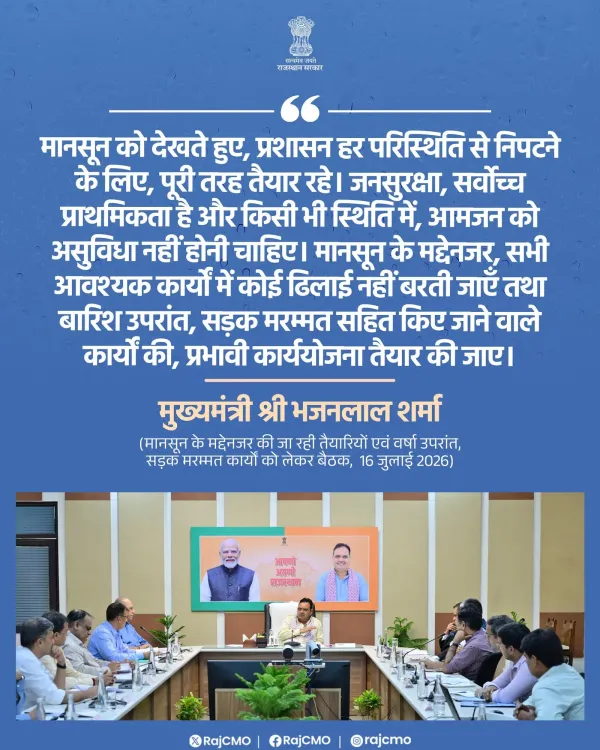
Chief Minister Bhajanlal Sharma directed the administration to be ready to handle 'every situation' arising from the monsoon.
The directive was posted publicly on the CMO's official X account under the hashtag #आपणो_अग्रणी_राजस्थान .
Rajasthan is prone to both drought and localised flooding due to its variable monsoon rainfall pattern.
The Disaster Management Act, 2005 requires state governments to maintain updated district-level monsoon response plans.
Key next steps include activation of control rooms, IMD coordination, and review of flood-prone infrastructure.
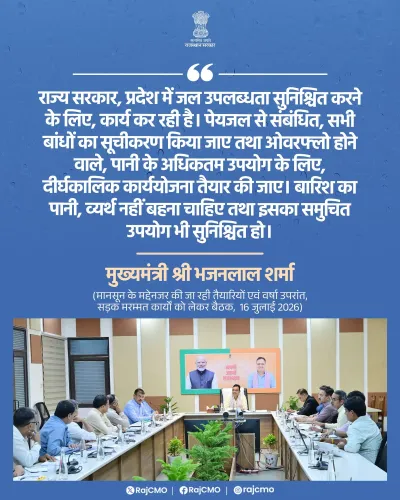
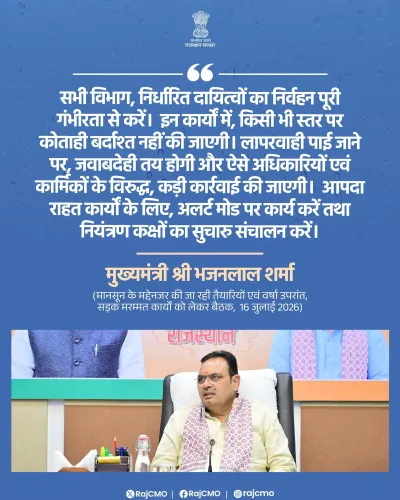
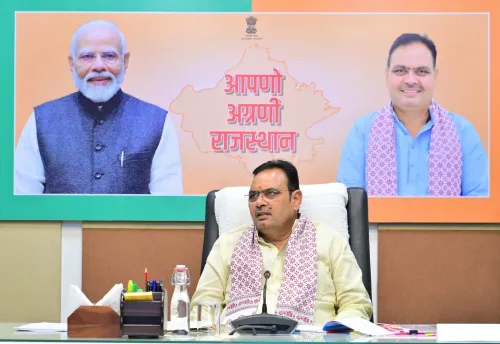
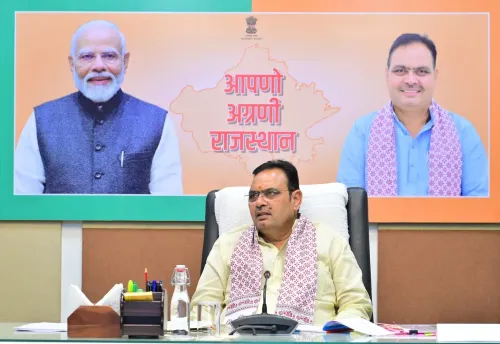
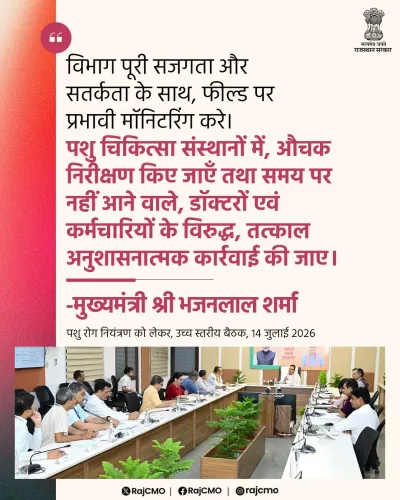
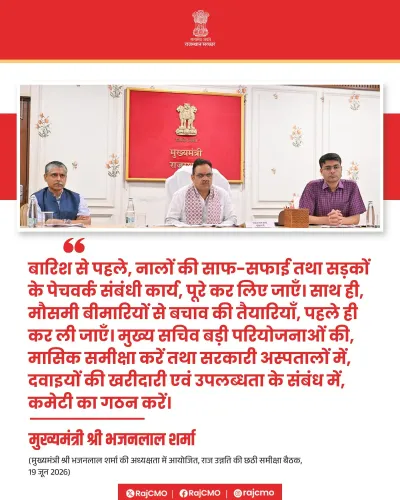
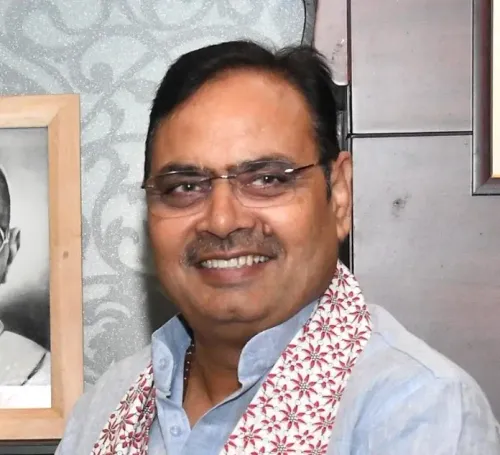
The Chief Minister's Office of Rajasthan on Friday, 17 July 2026, issued a public directive through Chief Minister Bhajanlal Sharma, instructing the state administration to remain fully prepared to handle every situation arising from the monsoon season.
The post, shared under the hashtag #आपणो_अग्रणी_राजस्थान ('Our Leading Rajasthan'), carried a direct message to the administration: 'Keeping the monsoon in view, the administration must remain fully prepared to deal with every situation.'
Context
Rajasthan spans arid and semi-arid zones that are historically vulnerable to both prolonged drought and sudden monsoon-induced flash floods. The state's variable rainfall pattern means district administrations must plan simultaneously for water scarcity and localised inundation, often within the same season. This dual exposure makes timely preparedness directives a critical governance function each year.
Chief Minister Bhajanlal Sharma, who assumed office in December 2023 following the BJP's victory in the state assembly elections, has used the CMO's official X account to communicate governance priorities directly to the public and administrative machinery.
Policy Backdrop
The Disaster Management Act, 2005 mandates that state governments maintain updated district disaster management plans with specific monsoon protocols. Rajasthan's Revenue and Disaster Management Department has issued pre-monsoon circulars and held review meetings each May-June since at least the early 2010s, making such alerts a well-established feature of the state's administrative calendar.
These directives typically cover activation of district-level control rooms, early warning dissemination in coordination with the India Meteorological Department (IMD), drainage clearance in urban areas, and stockpiling of relief materials in flood-prone river-basin zones.
Stakeholders and Impact
District collectors and disaster management units across Rajasthan's 50 districts are the primary recipients of such directives, as they are responsible for on-ground coordination during weather emergencies. Farmers in rain-fed agricultural zones and residents of low-lying areas near rivers and seasonal streams stand to benefit most directly from timely administrative action.
The public nature of the directive — posted on a high-visibility social media platform — also serves as a signal to citizens that the state government is monitoring conditions and expects its machinery to be accountable.
What's Next
Following such directives, the standard administrative response includes activation of state and district control rooms, coordination with IMD for real-time rainfall updates, and review of embankment and drainage infrastructure. Any subsequent announcements on relief fund allocations or emergency repair works will indicate how the administration translates this directive into operational action.
With the monsoon season running through September, the coming weeks will test whether the administration's preparedness posture translates into effective early response — particularly in historically flood-prone districts along the Chambal and Banas river basins.
Point of View
The post reinforces his personal ownership of disaster preparedness — a theme that BJP-led state governments have increasingly used to project proactive governance. In a state where monsoon failures and flood damage have historically shaped electoral sentiment, such visible alerts also serve a soft political purpose. The real measure, however, will be the operational response when weather events materialise.
NationPress
17 Jul 2026
Frequently Asked Questions
What did the Rajasthan CM say about monsoon preparedness?
Chief Minister Bhajanlal Sharma directed the Rajasthan administration on 17 July 2026 to remain fully prepared to deal with every situation arising from the monsoon season, according to a post from the official CMO X account.
Is Rajasthan prone to flooding during monsoon?
Yes. Despite being largely arid, Rajasthan experiences localised flash floods during heavy monsoon spells, particularly in river-basin areas along the Chambal and Banas rivers, making pre-monsoon preparedness critical.
What does the Disaster Management Act 2005 require of state governments?
The Disaster Management Act, 2005 mandates that state governments maintain updated district disaster management plans that include specific protocols for monsoon-related emergencies.
Who is Bhajanlal Sharma?
Bhajanlal Sharma is a BJP leader who has served as Chief Minister of Rajasthan since December 2023, following the party's victory in the state assembly elections held that year.
What steps does Rajasthan take for monsoon disaster management?
Standard steps include activating district-level control rooms, coordinating with the India Meteorological Department for rainfall forecasts, clearing drainage infrastructure, and stockpiling relief materials in vulnerable areas.