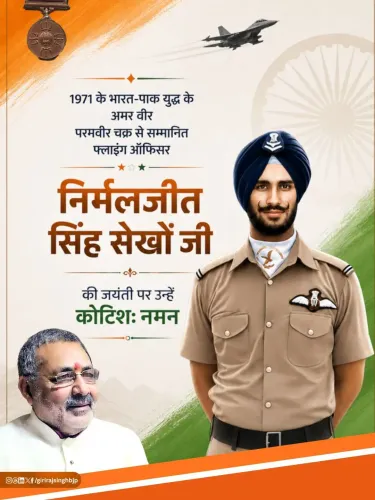
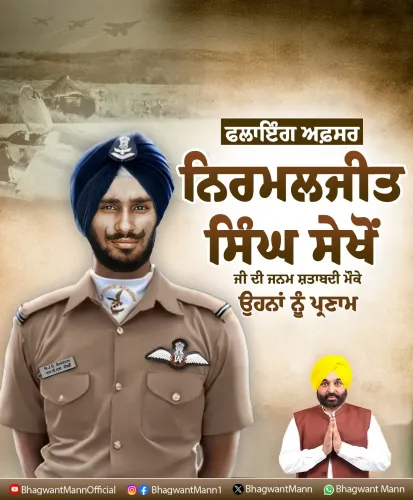
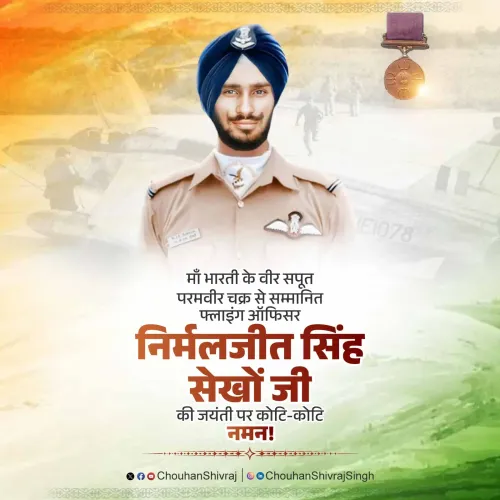
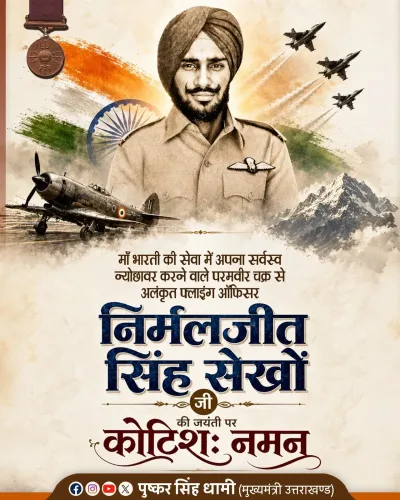
Shekhawat Pays Tribute to PVC Hero Nirmal Jeet Singh Sekhon
Synopsis
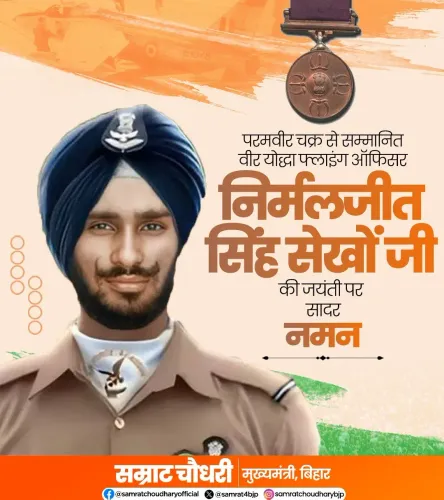
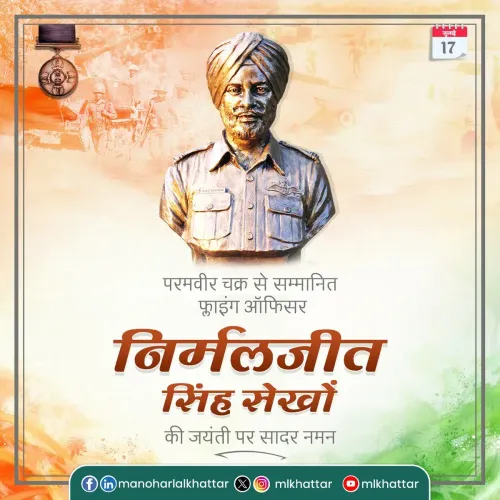
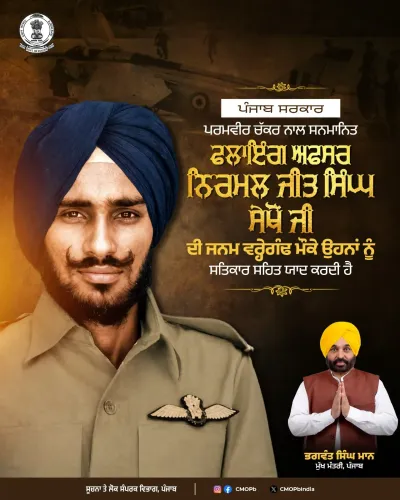
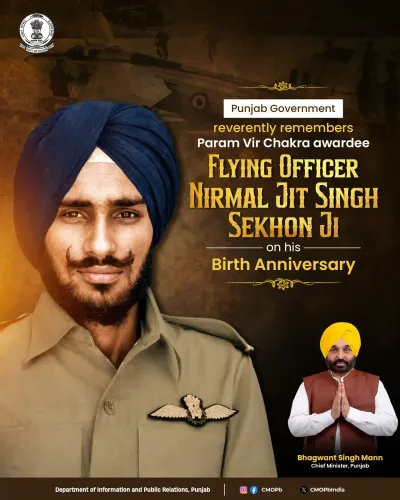
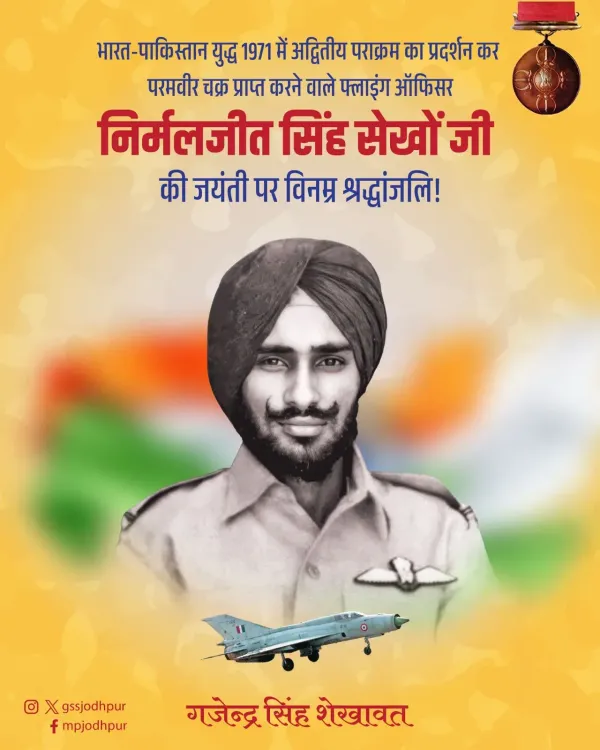
Union Culture and Tourism Minister Gajendra Singh Shekhawat honoured Flying Officer Nirmal Jeet Singh Sekhon, the sole Indian Air Force Param Vir Chakra recipient, on his birth anniversary, recalling how Sekhon single-handedly fought six Pakistani jets over Srinagar during the 1971 war before attaining martyrdom.
Key Takeaways
Union Minister Gajendra Singh Shekhawat posted a birth-anniversary tribute to Flying Officer Nirmal Jeet Singh Sekhon on 17 July 2026 .
Sekhon is the only Indian Air Force officer to have been awarded the Param Vir Chakra , India's highest wartime gallantry decoration.
During the 1971 Indo-Pakistani War , Sekhon single-handedly engaged six Pakistani F-86 Sabre jets attacking the Srinagar airfield .
He shot down one enemy aircraft , disabled a second, chased the remaining four, and attained martyrdom in the engagement.
The Param Vir Chakra was instituted in 1950 ; the 1971 war ended with the Instrument of Surrender in Dhaka on 16 December 1971 .
The next major commemoration milestone is Vijay Diwas, 16 December , when the government and armed forces mark the 1971 victory.
Union Culture and Tourism Minister Gajendra Singh Shekhawat on Friday, 17 July 2026, paid tribute to Flying Officer Nirmal Jeet Singh Sekhon, the only Indian Air Force officer to have been awarded the Param Vir Chakra, on the occasion of the gallantry hero's birth anniversary.
Context
Shekhawat's post, shared in Hindi, recalled Sekhon's extraordinary lone stand against six Pakistani F-86 Sabre jets that attacked the Srinagar airfield during the 1971 Indo-Pakistani War. In the minister's words: 'वे अकेले ही छह के छह पर भारी पड़ गए' ('He alone proved too much for all six of them'). Shekhawat noted that Sekhon shot down one enemy aircraft, disabled a second, and continued to chase the remaining four before attaining martyrdom.
The minister concluded with a salute to the fallen hero: 'परमवीर चक्र प्राप्त ऐसे महान योद्धा को जन्म जयंती पर कोटि-कोटि प्रणाम!' — 'A million salutes to this great warrior, a recipient of the Param Vir Chakra, on his birth anniversary!' He added that Sekhon 'will always remain an inspiration.'
Policy Backdrop
The Param Vir Chakra is India's highest wartime gallantry award, instituted in 1950 to honour extraordinary valour displayed in the face of the enemy. Flying Officer Sekhon remains the sole Indian Air Force recipient of the decoration, making his legacy singular in the history of Indian military aviation.
The 1971 war culminated in the Instrument of Surrender signed in Dhaka on 16 December 1971, leading to the creation of Bangladesh. Sekhon's action at Srinagar took place during the aerial campaign that accompanied that conflict. Official tributes to 1971 war gallantry recipients have become a recurring feature of public commemoration by Union ministers and the armed forces on key anniversaries.
Stakeholders and Impact
The tribute resonates with Indian Air Force veterans, serving personnel, and families of war heroes who regard Sekhon as a defining symbol of airborne courage. Civil society organisations focused on military history and the broader defence community have long championed wider public recognition of Sekhon's sacrifice.
A senior Union minister publicly honouring the birth anniversary of a Param Vir Chakra recipient amplifies institutional memory of the 1971 war at a time when the government has placed sustained emphasis on military heritage, war memorials, and the documentation of gallantry in official communications.
What's Next
The next major milestone in the commemoration calendar for 1971 war heroes is Vijay Diwas on 16 December, when the armed forces and the government traditionally hold events marking the victory and honouring those who fell. Parliamentary references to gallantry awards and the progress of war-memorial projects are also expected to intensify around that date.
Sekhon's story, as Shekhawat noted, 'will always remain an inspiration' — a sentiment that is likely to find expression in school curricula, defence exhibitions, and cultural programming as India continues to build its institutional narrative around military valour.
Point of View
On its face, a ceremonial gesture — but it sits within a deliberate pattern of official memory-making around India's military heritage. By foregrounding the 1971 war narrative, the government reinforces a broader policy arc that links national pride, border security, and the valorisation of armed forces sacrifice. Sekhon's singular status as the only IAF recipient of the nation's highest gallantry award gives the tribute an outsized symbolic weight compared with routine commemorations. The post signals that the cultural and defence policy establishments are increasingly aligned in keeping wartime heroism central to the national conversation.
NationPress
17 Jul 2026
Frequently Asked Questions
Who was Nirmal Jeet Singh Sekhon?
Flying Officer Nirmal Jeet Singh Sekhon was an Indian Air Force pilot who single-handedly engaged six Pakistani F-86 Sabre jets attacking the Srinagar airfield during the 1971 Indo-Pakistani War . He shot down one aircraft, disabled another, and was killed in action, becoming the only IAF officer to receive the Param Vir Chakra , India's highest wartime gallantry award.
Why is Sekhon the only IAF officer to receive the Param Vir Chakra?
The Param Vir Chakra is awarded for the most exceptional acts of valour in the face of the enemy. Flying Officer Sekhon's decision to take on six enemy jets alone over Srinagar in 1971 , downing one and disabling another before being killed, was judged to meet that extraordinary standard — a feat unmatched by any other IAF personnel in the award's history.
What happened at Srinagar during the 1971 war?
During the 1971 Indo-Pakistani War , Pakistani F-86 Sabre jets attacked the Srinagar airfield . Flying Officer Nirmal Jeet Singh Sekhon scrambled alone to intercept them, engaging all six aircraft, destroying one, and neutralising a second before he was shot down and attained martyrdom.
What did Gajendra Singh Shekhawat post about Sekhon?
On 17 July 2026 , Union Culture and Tourism Minister Gajendra Singh Shekhawat posted a Hindi tribute on X recounting how Flying Officer Sekhon fought six Pakistani jets alone over Srinagar , offering 'a million salutes' to the Param Vir Chakra hero on his birth anniversary and calling him an 'eternal inspiration.'
What is the Param Vir Chakra?
The Param Vir Chakra is India's highest military decoration for wartime gallantry, instituted in 1950 . It is awarded for the most conspicuous acts of bravery or self-sacrifice in the presence of the enemy. Flying Officer Nirmal Jeet Singh Sekhon is the only Indian Air Force recipient of the award.