Modi to Launch ₹5,470 Cr Rail, Road Projects in Punjab

Synopsis
PM Modi is set to inaugurate and lay the foundation stone for over ₹5,470 crore worth of rail and road infrastructure projects in Punjab, including Amrit Bharat Station upgrades and a key section of the Delhi–Amritsar–Katra Expressway, as BJP leader Smriti Irani highlighted the push under the Viksit Bharat vision.
Key Takeaways
PM Narendra Modi will inaugurate and lay foundation stones for projects worth over ₹5,470 crore in Punjab .
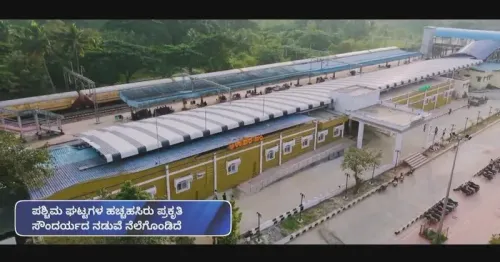
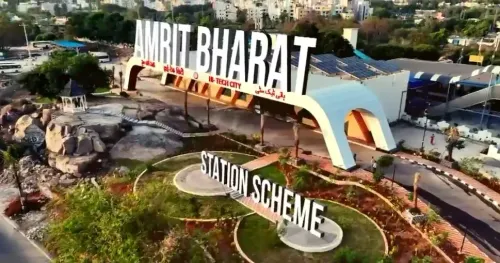
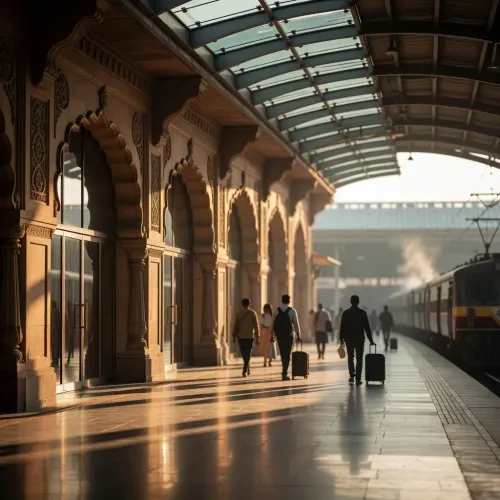
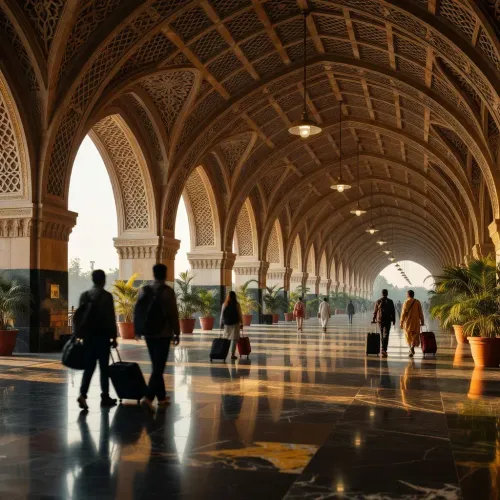
Modernised railway stations under the Amrit Bharat Station Scheme — launched in February 2023 for over 1,300 stations — will be inaugurated.
New rail lines and new rail services will be flagged off as part of the event.
A significant section of the Delhi–Amritsar–Katra Expressway , linking Delhi to Punjab and Katra in Jammu & Kashmir, will be inaugurated.
The projects are expected to strengthen trade, tourism, and economic activity in Punjab .
The initiative is framed as part of the central government's #ViksitBharat vision for integrated multimodal infrastructure development.
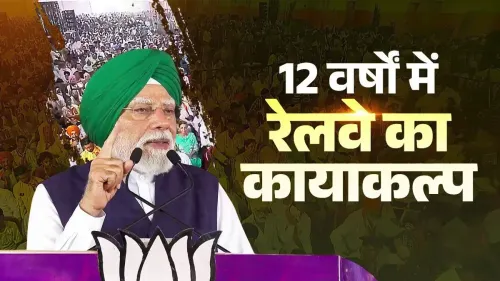
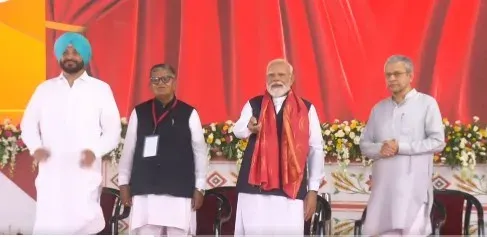
BJP leader Smriti Irani on Friday, 17 July 2026, announced that Prime Minister Narendra Modi would inaugurate and lay the foundation stone for rail, road infrastructure projects and other development works worth over ₹5,470 crore in Punjab, aimed at giving fresh momentum to the state's development.
Context
Irani's post, shared on X, states that PM Modi will carry out the lokarpaṇ (inauguration) and śilānyās (foundation-laying) of multiple projects on the day. The announcement covers modernised railway stations under the Amrit Bharat Station Scheme, new rail lines, new rail services, and a key section of the Delhi–Amritsar–Katra Expressway. Together, these are described as measures that will 'strengthen connectivity, and give new momentum to trade, tourism and economic activity' in the state.
Irani frames the push as part of the broader #ViksitBharat (Developed India) vision being pursued under Modi's leadership, describing modern infrastructure as continuously reinforcing that national resolve.
Policy Backdrop
The Amrit Bharat Station Scheme, launched in February 2023, targets the redevelopment of over 1,300 railway stations across India with upgraded passenger amenities, improved accessibility, and modern design standards. Punjab stations falling under this scheme are part of that nationwide modernisation drive.
The Delhi–Amritsar–Katra Expressway is a major access-controlled highway project that will link New Delhi with Punjab and onward to Katra in Jammu & Kashmir, reducing travel time significantly for pilgrims, tourists, and freight movement. The expressway is aligned with the Bharatmala Pariyojana Phase-I, approved in 2017, which envisaged construction of 34,800 km of national highways. Integrated planning for such corridors has been guided since 2021 by the PM Gati Shakti National Master Plan, which seeks to synchronise road, rail, port, and logistics infrastructure.
Stakeholders and Impact
Punjab's traders, rail passengers, and the tourism sector stand to benefit most directly from the projects. Improved rail connectivity lowers logistics costs for agricultural and industrial goods moving out of the state, while faster road access to religious destinations such as Amritsar and Katra is expected to boost pilgrim and tourist footfall.
The state also holds strategic significance as a border economy, and infrastructure investment in Punjab has consistently been linked to national security and regional economic integration objectives in successive Union budgets. Expressway and rail upgrades reduce dependence on older, congested routes and support last-mile freight efficiency.
What's Next
Attention will now turn to the rollout timelines for the remaining segments of the Delhi–Amritsar–Katra Expressway and the commissioning schedule for other stations being redeveloped under the Amrit Bharat Station Scheme in Punjab. The pace of project completion will determine how quickly the projected economic benefits — in trade, tourism, and employment — materialise for the state's residents.
Point of View
With Punjab serving as a key node linking Delhi to the Jammu & Kashmir pilgrim economy. Inaugurating rail and expressway assets simultaneously signals an intent to present multimodal progress as a unified political narrative ahead of any state-level electoral cycle. For the BJP, high-visibility infrastructure events in border states like Punjab also carry a strategic dimension beyond pure economics — reinforcing the party's development credential in a state it has historically found competitive. The Viksit Bharat framing ties individual project launches to a long-horizon national brand, making each inauguration a building block in a larger electoral and policy story.
NationPress
16 Oct 2026
Frequently Asked Questions
What projects is PM Modi inaugurating in Punjab worth ₹5,470 crore?
PM Modi is inaugurating and laying foundation stones for rail and road infrastructure projects worth over ₹5,470 crore in Punjab, including modernised railway stations under the Amrit Bharat Station Scheme, new rail lines, new rail services, and a key section of the Delhi–Amritsar–Katra Expressway.
What is the Amrit Bharat Station Scheme?
The Amrit Bharat Station Scheme is a Union government initiative launched in February 2023 for the redevelopment of over 1,300 railway stations across India with modern passenger amenities and improved infrastructure.
What is the Delhi–Amritsar–Katra Expressway?
The Delhi–Amritsar–Katra Expressway is a major access-controlled highway project that will connect New Delhi with Amritsar in Punjab and Katra in Jammu & Kashmir, boosting trade, tourism, and pilgrim movement along the corridor.
Why is infrastructure investment in Punjab significant?
Punjab is a border state with strategic importance, and improved rail and road connectivity is expected to lower logistics costs for traders, increase tourist and pilgrim footfall to Amritsar and Katra, and support broader regional economic integration.
What is Viksit Bharat and how do these projects relate to it?
Viksit Bharat, meaning 'Developed India,' is the central government's long-term vision for national development. Infrastructure projects like those in Punjab are presented as concrete steps toward achieving this goal of a modern, well-connected India.