Amrit Bharat Scheme: Modi to inaugurate 75 stations across 20 states
Synopsis
PM Modi is set to inaugurate 75 redeveloped railway stations across 20 states in the latest push under the Amrit Bharat Station Scheme — a ₹71,000 crore programme that has already touched 1,340 stations nationwide. The 110-year-old Jalandhar Cantt station, rebuilt at ₹125 crore, is the centrepiece, blending heritage architecture with airport-style infrastructure in a project the government calls the world's largest station redevelopment drive.
Key Takeaways
PM Narendra Modi is set to inaugurate 75 redeveloped railway stations across 20 states under the Amrit Bharat Station Scheme .
The latest batch carries a combined investment of nearly ₹1,570 crore ; cumulative scheme investment exceeds ₹71,000 crore .
The 110-year-old Jalandhar Cantt Railway Station has been rebuilt at ₹125 crore , featuring a 1,770 sq metre air concourse and a 4,855 sq metre parking area.
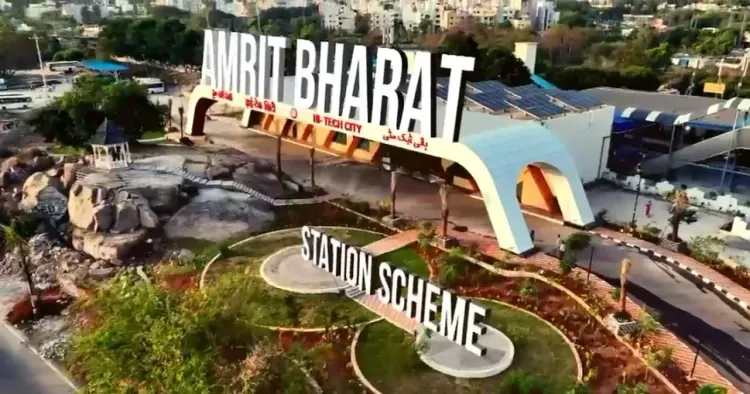
Hyderabad's Hi-tech City station was modernised at ₹26 crore , serving 3,000 passengers daily across 62 trains .
More than 1,340 stations have been redeveloped nationwide since the scheme launched in December 2022 ; 1,338+ are identified for the full programme.
All stations include Divyangjan-accessible features, regional heritage elements, and 'One Station One Product' retail spaces.
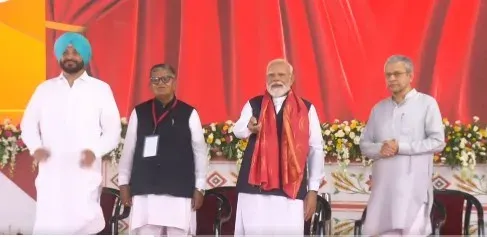
Prime Minister Narendra Modi is set to inaugurate 75 redeveloped railway stations across 20 states under the Amrit Bharat Station Scheme, with the historic Jalandhar Cantt Railway Station in Punjab among the flagship projects. The latest batch of inaugurations, announced on 16 July, represents a cumulative investment of nearly ₹1,570 crore and marks a fresh milestone in one of the world's largest station redevelopment programmes.
Jalandhar Cantt: A 110-Year-Old Station Reimagined
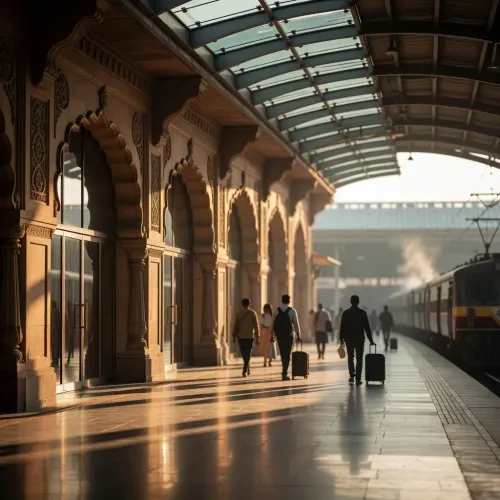
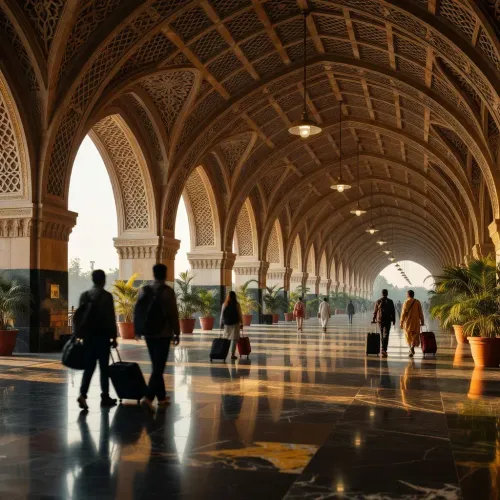
The 110-year-old Jalandhar Cantt Railway Station has been overhauled at a cost of ₹125 crore, emerging as a showcase project under the scheme's guiding principle of 'Virasat Bhi, Vikas Bhi' (Heritage as well as Development). The station now features a double-height air concourse spanning 1,770 square metres, a 40-metre-wide trough roof covering 200 metres of platform length, and two new Foot Over Bridges (FOBs) of six metres and nine metres width respectively.
A new second entry with a 300 square metre station building and a 4,855 square metre parking area have been added, alongside heavy steel platform roofing, slip-resistant flooring, and energy-efficient LED lighting. Connectivity from both sides of the city has also been improved.
Key Stations Upgraded Across States
In Delhi, the Modi Nagar railway station has been upgraded under the Northern Railway zone at a cost of ₹25.75 crore. The revamped facility includes a 12-metre-wide Foot Over Bridge, new parking and circulating areas, an improved waiting room, and better platform shelters. Notably, Divyangjan-friendly features — entry ramps, tactile pathways, dedicated toilets, water booths, and two lifts — have been integrated to serve senior citizens and persons with disabilities.
In Telangana, the Hi-tech City railway station in Hyderabad's Cyber City corridor has been modernised at ₹26 crore. Catering to roughly 3,000 passengers daily and serving 62 trains, the station now offers enhanced facilities befitting its location in the city's IT hub.
Elsewhere, stations such as Shamli, Kunnur, Balaghat Junction, Kalka, and Majbat have been redeveloped to integrate local culture and heritage with contemporary amenities. Indian Railways has completed the redevelopment of 10 stations at a combined cost of ₹424.02 crore across Delhi, Uttar Pradesh, Odisha, Punjab, Telangana, and Rajasthan.
Scale of the Scheme So Far
Launched in December 2022, the Amrit Bharat Station Scheme has identified more than 1,338 stations for redevelopment nationwide, with a cumulative investment exceeding ₹71,000 crore. As of mid-2026, 1,340 stations have already been redeveloped, with 122 stations completed in recent phases alone.
This is not the first large-scale inauguration under the scheme. In February 2024, Modi laid the foundation for 554 stations, and in May 2025, he inaugurated 103 redeveloped stations across 18 states. The current batch of 75 stations brings the programme's visible momentum further into focus ahead of its mid-term review.
What the Redevelopment Covers
Across all stations, the scheme mandates grand entrances, modern waiting halls, upgraded toilet blocks, lifts, escalators, improved passenger information systems, executive lounges, and dedicated spaces for local artisans under the 'One Station One Product' initiative. Special emphasis has been placed on regional architectural elements, giving many stations an airport-like character while retaining local identity.
The scheme is positioned alongside other Indian Railways modernisation drives — including Vande Bharat trains and dedicated freight corridors — as part of a broader push to create an integrated, efficient rail ecosystem. Officials say the programme also addresses logistical challenges such as geological complexities and cross-zone coordination.
Broader Impact and What Comes Next
The Amrit Bharat Station Scheme is expected to improve daily commutes for millions of passengers, stimulate local economies near redeveloped hubs, and boost tourism at heritage locations. As more stations become operational, Indian Railways aims to raise the overall passenger experience to global standards — a goal the government has framed within the broader narrative of 'Amrit Kaal', India's centenary-of-independence development window running to 2047.
With over 1,338 stations still in various stages of planning and execution, the programme's full impact on India's transport backbone will unfold over the coming years.
Point of View
340 stations and ₹71,000 crore is not a marginal upgrade programme. But the government's own framing, which leans heavily on aesthetics and 'airport-like feel', risks obscuring the more consequential question: whether redevelopment is translating into measurably better punctuality, capacity, and safety outcomes for the hundreds of millions who use these stations daily. The scheme's heritage-meets-modernity branding is politically effective, but Indian Railways' chronic overcrowding and maintenance deficits are structural problems that new flooring and LED lighting alone cannot fix. The real test of Amrit Bharat will come in the operational data — not the inauguration count.
NationPress
15 Oct 2026
Frequently Asked Questions
What is the Amrit Bharat Station Scheme?
The Amrit Bharat Station Scheme is an Indian Railways programme launched in December 2022 to redevelop more than 1,338 railway stations across India with a cumulative outlay exceeding ₹71,000 crore . It aims to transform stations into modern, passenger-friendly facilities that blend contemporary infrastructure with local heritage, under the theme 'Virasat Bhi, Vikas Bhi'.
How many stations have been redeveloped under the scheme so far?
As of mid-2026, more than 1,340 stations have been redeveloped nationwide under the Amrit Bharat Station Scheme, with 122 stations completed in recent phases. PM Modi also laid the foundation for 554 stations in February 2024 and inaugurated 103 stations across 18 states in May 2025.
What makes the Jalandhar Cantt station redevelopment significant?
The 110-year-old Jalandhar Cantt Railway Station in Punjab has been rebuilt at a cost of ₹125 crore , making it one of the flagship projects in the latest batch. It now features a 1,770 sq metre double-height air concourse, a 40-metre-wide trough roof covering 200 metres of platform, two new Foot Over Bridges, and a 4,855 sq metre parking area — combining heritage identity with modern passenger infrastructure.
Which other stations are being inaugurated in this latest batch?
The latest batch covers 75 stations across 20 states , including Modi Nagar in Delhi (upgraded at ₹25.75 crore), Hi-tech City station in Hyderabad (₹26 crore), and stations such as Shamli, Kunnur, Balaghat Junction, Kalka, and Majbat. Indian Railways has also completed 10 stations at a combined cost of ₹424.02 crore across Delhi, Uttar Pradesh, Odisha, Punjab, Telangana, and Rajasthan.
What passenger amenities do the redeveloped stations offer?
Redeveloped stations include grand entrances, modern waiting halls, upgraded toilets, lifts, escalators, executive lounges, and improved passenger information systems. All stations feature Divyangjan-accessible infrastructure — ramps, tactile pathways, dedicated toilets, and lifts — and dedicated retail spaces under the 'One Station One Product' initiative.