India's first hydrogen train flagged off by Modi; ₹14,700 crore projects launched from Jind
Synopsis
India crossed a clean-energy milestone on 17 July as PM Modi flagged off the country's first hydrogen fuel cell train from Jind — a 10-coach, 3,200 HP trainset that emits only water vapour. Paired with ₹14,700 crore in highway, healthcare, and cultural projects, the event signals both a railway inflection point and a concentrated political push in Haryana.
Key Takeaways
PM Narendra Modi flagged off India's first hydrogen fuel cell trainset from Jind, Haryana on 17 July .
The 10-coach train runs between Jind and Sonipat , covering 90 km in two hours , powered by a 3,200 HP propulsion system emitting only water vapour.
Modi dedicated 157.92 km of the Delhi–Amritsar–Katra Expressway (Packages 1–5), built at a cost of ₹9,680 crore ; the full corridor will cut Delhi–Katra travel time from 14 hours to ~6 hours .
Three highways — Ambala–Kala Amb , Jind–Gohana Greenfield , and Hansi–Barwala — were dedicated or launched, improving Haryana's connectivity with Himachal Pradesh and Delhi-NCR.
Three medical institutions in Bhiwani and Narnaul were dedicated to the nation, expanding MBBS seats and specialist care in Haryana.
Foundation stone laid for a Sikh Museum in Kurukshetra to document Sikh history and heritage using modern technology.
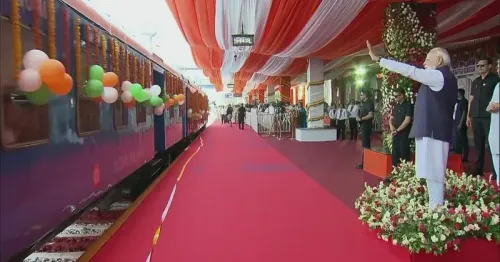
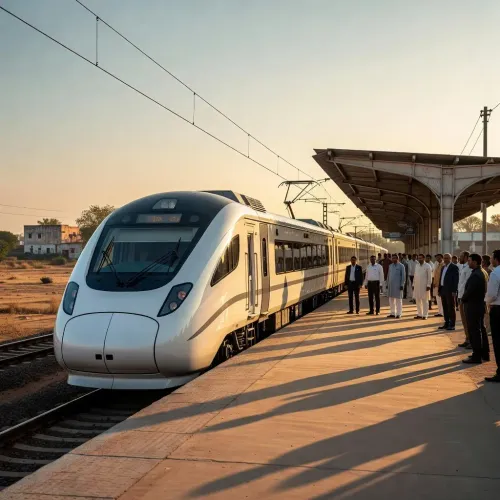
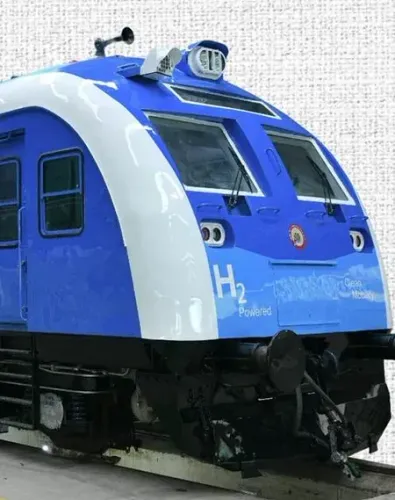
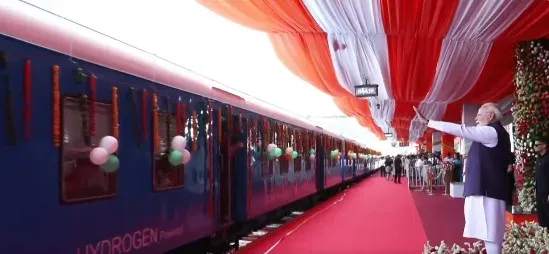
Prime Minister Narendra Modi on Friday, 17 July flagged off India's first hydrogen fuel cell trainset from Jind, Haryana, marking a historic leap in the country's clean mobility journey. The train, which generates electricity onboard using hydrogen and emits only water vapour, will operate on the Jind–Sonipat corridor, covering 90 km in two hours.
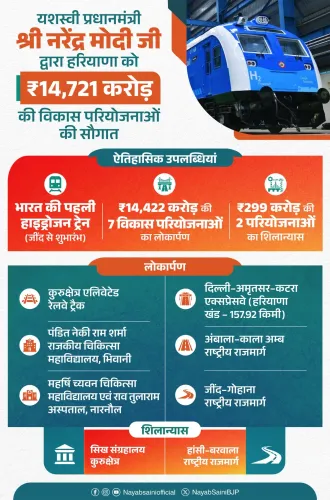
Alongside the hydrogen train launch, the Prime Minister dedicated and laid the foundation stones of infrastructure projects worth over ₹14,700 crore across Haryana, spanning highways, medical institutions, and urban infrastructure.
India's Hydrogen Train: What Makes It Historic
The 10-coach hydrogen trainset is powered by a 3,200 HP propulsion system, making it one of the most powerful hydrogen-powered trains currently in operation anywhere in the world. Unlike conventional trains, it generates its own electricity through hydrogen fuel cells onboard, with the only emission being water vapour.
By designing and assembling the trainset domestically, India joins a small group of nations — including Germany and China — that operate hydrogen-powered railway systems. The launch also represents the latest chapter in Indian Railways' energy transition, from coal and steam to electrification over the past 12 years, and now to hydrogen.
Delhi-Amritsar-Katra Expressway: Key Corridor Opened
From Jind, Modi dedicated 157.92 km of the four-lane, fully access-controlled Delhi–Amritsar–Katra Expressway (Packages 1 to 5), developed at a cost of approximately ₹9,680 crore. This section forms part of the larger 667 km expressway project.
Once complete, the corridor will cut travel time between Delhi and Katra from roughly 14 hours to about six hours, and between Delhi and Amritsar from approximately eight hours to four hours. The expressway is also expected to significantly ease congestion on NH-44 (GT Road), boost pilgrim traffic to Shri Mata Vaishno Devi, and spur industrial and logistics growth along the route.
Other Highway Projects Dedicated and Launched
The Prime Minister also dedicated the 33.81-km four-lane Ambala–Kala Amb Highway on NH-7 and NH-344, strengthening road links between Haryana and Himachal Pradesh and improving access to the Kala Amb industrial belt.
Another project dedicated was the 40.60-km Jind–Gohana Greenfield Highway on NH-352A, which will reduce travel time between Jind and Gohana from roughly two hours to just 40 minutes, benefiting freight transport and improving connectivity to Rohtak, Panipat, and the Delhi-NCR region.
Modi also laid the foundation stone for the 24.27-km Hansi–Barwala Brownfield Highway Project, which will upgrade the existing road to a 2/4-lane configuration with paved shoulders. Additionally, the Elevated Railway Track in Kurukshetra was dedicated to the nation to eliminate longstanding traffic congestion at railway crossings in the city.
Medical Colleges and Cultural Infrastructure
The Prime Minister dedicated three major medical institutions to the nation: Pandit Neki Ram Sharma Government Medical College, Bhiwani; Maharishi Chyawan Medical College; and Rao Tula Ram Hospital in Koriawas, Narnaul. These facilities are expected to expand access to quality medical education in Haryana, increase MBBS seats, and improve specialist healthcare availability.
Modi also laid the foundation stone for a Sikh Museum in Kurukshetra, which will use modern technology to showcase the history of Sikhism, the teachings of the Sikh Gurus, and the community's contributions to Indian civilisation and culture.
What Comes Next
The hydrogen train's Jind–Sonipat run is expected to serve as a pilot for broader deployment on Indian Railways. With rapid electrification already reducing dependence on imported diesel over the past decade, the hydrogen trainset signals the next phase of India's rail energy transition. The completion of the remaining stretches of the Delhi–Amritsar–Katra Expressway will be closely watched as a test of the project's transformative potential for pilgrim and freight corridors.
Point of View
Green hydrogen production costs, and maintenance ecosystems remain nascent in India. The ₹14,700 crore event also bundles unrelated projects — highways, hospitals, a museum — into a single political moment in Haryana, a state where the BJP has faced electoral headwinds. The optics of a sweeping dedication event are as deliberate as the infrastructure itself.
NationPress
17 Jul 2026
Frequently Asked Questions
What is India's first hydrogen train and where does it run?
India's first hydrogen fuel cell trainset was flagged off by PM Modi on 17 July from Jind, Haryana. The 10-coach train runs between Jind and Sonipat, covering 90 km in two hours, powered by a 3,200 HP propulsion system that generates electricity onboard using hydrogen and emits only water vapour.
What makes the hydrogen train different from conventional trains?
Unlike diesel or electric trains, the hydrogen trainset generates its own electricity onboard through fuel cells, with water vapour as the only emission. It is domestically designed and assembled, making India one of a small number of countries operating hydrogen-powered railways.
What is the Delhi–Amritsar–Katra Expressway and what was inaugurated?
The Delhi–Amritsar–Katra Expressway is a 667-km greenfield corridor. PM Modi dedicated 157.92 km of it (Packages 1 to 5) on 17 July, built at a cost of approximately ₹9,680 crore. Once fully complete, it will cut Delhi–Katra travel time from about 14 hours to roughly six hours.
Which other projects were launched from Jind on 17 July?
Alongside the hydrogen train, Modi dedicated the Ambala–Kala Amb Highway (33.81 km), the Jind–Gohana Greenfield Highway (40.60 km), and an Elevated Railway Track in Kurukshetra. He also laid foundation stones for the Hansi–Barwala Highway and a Sikh Museum in Kurukshetra, and dedicated three medical colleges in Bhiwani and Narnaul.
How does the hydrogen train fit into Indian Railways' broader energy transition?
Indian Railways has pursued rapid electrification over the past 12 years to cut dependence on imported diesel. The hydrogen trainset represents the next phase of that transition, moving toward zero-emission propulsion. The Jind–Sonipat corridor is expected to serve as a pilot for potential wider deployment.