CM Bhajanlal directs rooftop drain cleaning on govt buildings
Synopsis
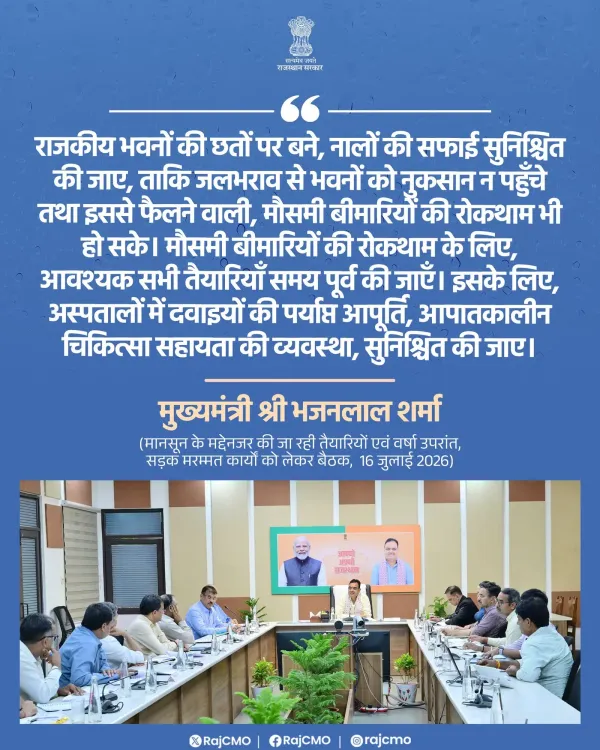
The Rajasthan Chief Minister's Office on 17 July 2026 directed officials to clean drains on government building rooftops before the monsoon, warning that unchecked waterlogging risks structural damage to public infrastructure across the state.
Key Takeaways
The Rajasthan CMO issued a directive on 17 July 2026 ordering rooftop drain cleaning on all government buildings.
The order aims to prevent waterlogging-induced structural damage during the monsoon season.
The directive is addressed to Chief Minister Bhajanlal Sharma and targets the Public Works Department and district administrations.
Rajasthan has seen rising urban waterlogging despite its traditionally arid climate, driven by erratic rainfall and expanding built-up areas.
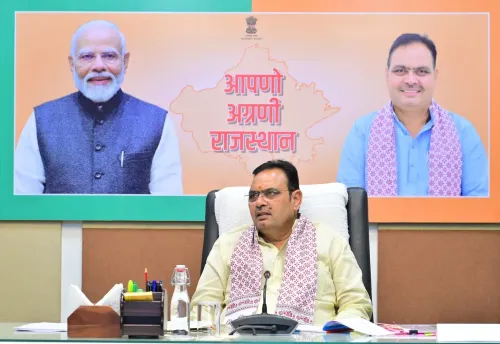
The post carries the hashtag #AapnoAgraniRajasthan , the state government's development branding campaign.
Compliance tracking and any supplementary maintenance budget will indicate how the directive is being implemented on the ground.
The Chief Minister's Office of Rajasthan issued a directive on Friday, 17 July 2026, instructing officials to ensure that drains built on the rooftops of government buildings are cleaned promptly to prevent waterlogging and structural damage during the monsoon season. The order, addressed to Chief Minister Bhajanlal Sharma, underscores the state government's push for pre-monsoon preparedness across its building stock.
What the directive says
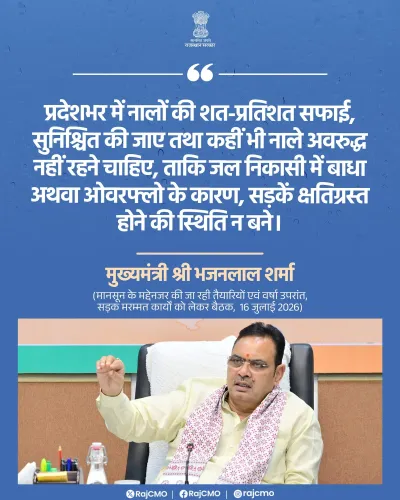
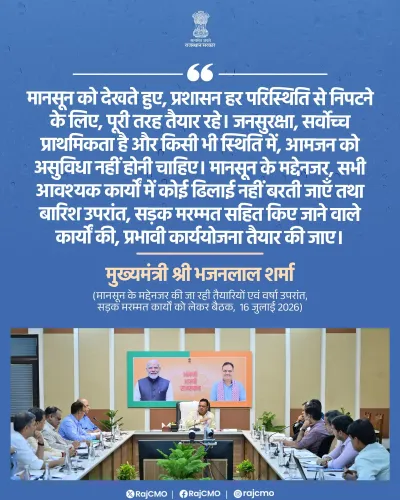
The post from the official CMO account reads: 'Rajkiya bhavano ki chhaaton par bane, nalon ki safai sunishchit ki jaye, taki jalbharav se bhavano ko nuksan na pahunche' — ('Drains built on the rooftops of government buildings must be cleaned, so that buildings are not damaged by waterlogging'). The message is tagged to @BhajanlalBjp and carries the hashtag #AapnoAgraniRajasthan, the state government's flagship branding campaign.
The directive is brief but operationally pointed: it places the responsibility squarely on departments managing government infrastructure to act before heavy rains cause preventable damage to public assets.
Context
Rajasthan, traditionally associated with an arid climate, has in recent decades seen increasingly erratic and intense rainfall episodes, particularly in urban centres such as Jaipur, Jodhpur, and Kota. Expanding built-up areas and ageing drainage infrastructure have made government buildings vulnerable to rooftop waterlogging, which can compromise structural integrity over time.
Pre-monsoon maintenance orders for public buildings are a recurring feature of state administration across India. Such directives typically flow from the Chief Minister's Office to the Public Works Department (PWD) and district collectors, who are responsible for compliance and reporting.
Policy backdrop
Chief Minister Bhajanlal Sharma took office in December 2023 following the Bharatiya Janata Party's victory in the Rajasthan assembly elections. His administration has positioned infrastructure upkeep and urban resilience as priorities under the #AapnoAgraniRajasthan ('Our Leading Rajasthan') campaign, which frames governance initiatives in the language of development and citizen welfare.
Rooftop drain maintenance, while unglamorous, carries significant fiscal logic: deferred cleaning leads to water seepage, plaster damage, and in some cases structural compromise of load-bearing elements — repair costs that far exceed the cost of routine monsoon-season upkeep.
Stakeholders and impact
The directive directly concerns PWD officials, state department heads, and district-level administrations responsible for government building stock across Rajasthan's 50 districts. Compliance will determine whether the order translates into ground-level action or remains an administrative nudge.
For citizens, well-maintained government buildings signal institutional credibility. Offices that flood or develop leaks during the monsoon disrupt public services and erode trust in state infrastructure management.
What's next
Attention will now shift to district-level compliance reports and whether the PWD issues a formal action plan with timelines. Any supplementary budget allocations for emergency building maintenance ahead of peak monsoon months — typically July to September in Rajasthan — will be a key indicator of how seriously the directive is being operationalised.
Point of View
High-visibility, and politically safe. What distinguishes it from routine circulars is the public tagging of Chief Minister Bhajanlal Sharma, which places the order in the accountability chain rather than letting it disappear into departmental files. The use of the #AapnoAgraniRajasthan hashtag suggests the government is framing even routine maintenance as part of its broader development narrative. The real test, as with most such orders, lies in district-level follow-through — an area where Indian state administrations have historically struggled to convert directives into documented compliance.
NationPress
17 Jul 2026
Frequently Asked Questions
Why did the Rajasthan CMO order cleaning of rooftop drains on government buildings?
The Rajasthan CMO issued the order to prevent waterlogging on rooftops of government buildings during the monsoon season, which can cause structural damage if drains are blocked.
Who is responsible for implementing the Rajasthan government building maintenance directive?
The Public Works Department (PWD) and district-level administrations across Rajasthan's districts are responsible for ensuring compliance with the rooftop drain cleaning directive.
Does Rajasthan face waterlogging problems despite being a desert state?
Yes. Despite its arid climate, Rajasthan has experienced increasing episodes of urban waterlogging in recent decades due to more intense and erratic rainfall patterns and rapid urban expansion.
What is #AapnoAgraniRajasthan?
#AapnoAgraniRajasthan, meaning 'Our Leading Rajasthan', is the Bhajanlal Sharma government's flagship branding hashtag used to frame governance and development initiatives.
When was Bhajanlal Sharma sworn in as Chief Minister of Rajasthan?
Bhajanlal Sharma was sworn in as Chief Minister of Rajasthan in December 2023 after the BJP's victory in the state assembly elections.