Rajasthan CMO Directs Alert Mode for Disaster Relief Ops
Synopsis
The Chief Minister's Office of Rajasthan on 17 July 2026 directed all officials to operate in alert mode for disaster relief and maintain functional control rooms, tagging CM Bhajanlal Sharma in a monsoon-season preparedness advisory.
Key Takeaways
The Chief Minister's Office of Rajasthan issued a disaster relief alert directive on 17 July 2026 , addressing Chief Minister Bhajanlal Sharma .
Officials have been asked to work in alert mode and ensure smooth operation of control rooms for disaster relief activities.
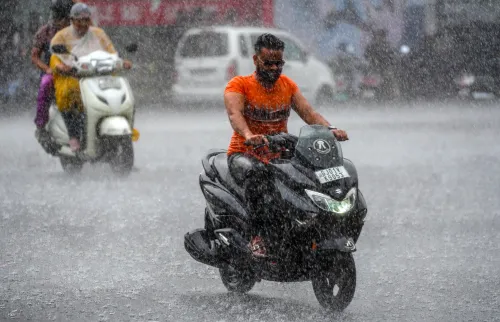
The directive falls within Rajasthan's active monsoon season , when both flood-prone eastern districts and arid western zones face weather emergencies.
The Rajasthan State Disaster Management Authority and State Disaster Response Force are the key institutional bodies responsible for executing relief operations under this framework.
The advisory continues an established pattern of centralised CMO directives to district administrations during the monsoon season under successive state governments.
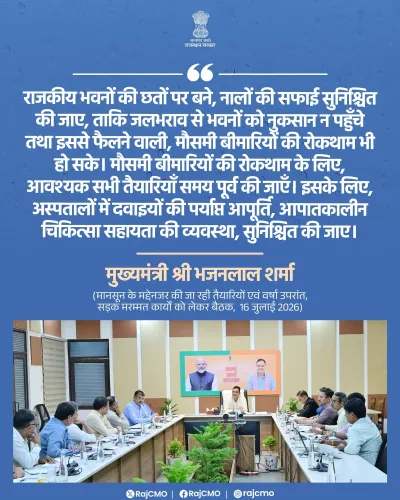
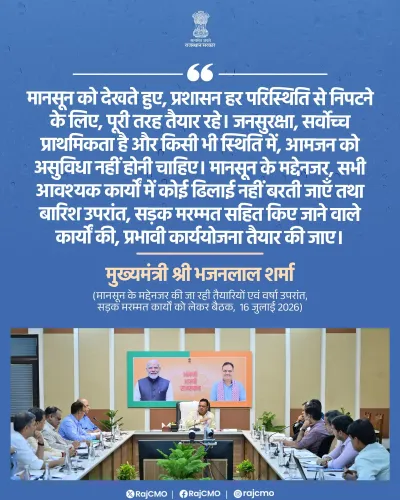
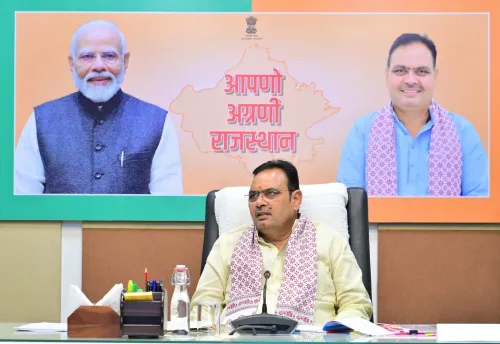
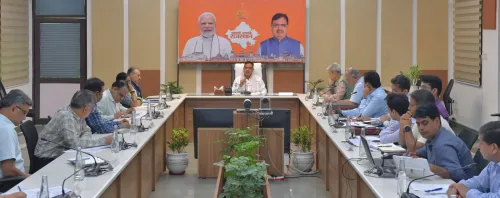
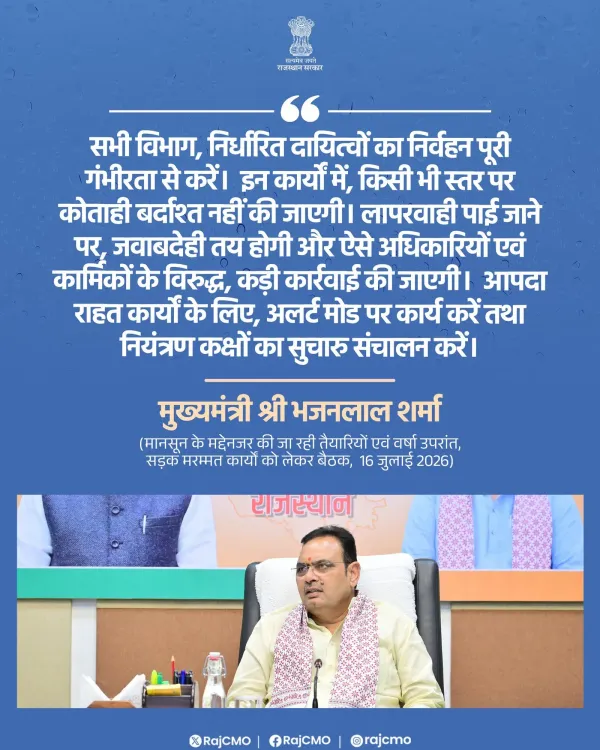
The Chief Minister's Office of Rajasthan on Friday, 17 July 2026 directed all concerned officials to operate in alert mode for disaster relief operations and ensure the smooth functioning of control rooms across the state. The directive, addressed to Chief Minister Bhajanlal Sharma, was issued under the hashtag #आपणो_अग्रणी_राजस्थान ('Our Leading Rajasthan'), reflecting the government's stated governance brand.
Context
The post, in Hindi, instructs officials to 'aapda rahat karyon ke liye, alert mode par karya karein tatha niyantran kakshon ka sucharu sanchalan karein' — translated: 'For disaster relief operations, work in alert mode and ensure the smooth operation of control rooms.' The message is consistent with seasonal monsoon-preparedness advisories that the Chief Minister's Office issues to district administrations and field agencies. July falls squarely in Rajasthan's active monsoon window, when both arid western districts and eastern flood-prone zones face weather-related emergencies.
Policy Backdrop
India's Disaster Management Act, 2005 mandates the creation of state-level disaster management authorities responsible for preparedness, response, and mitigation. The Rajasthan State Disaster Management Authority (RSDMA) operates under this framework, coordinating with district collectors and the State Disaster Response Force (SDRF) to deploy personnel and resources during emergencies. Following the 2023 Rajasthan assembly elections, the incoming BJP government directed district administrations to strengthen monsoon-season control rooms and early-warning systems, a continuity of institutional practice across administrations.
Control rooms serve as nerve centres during disaster events — receiving distress calls, coordinating rescue teams, and maintaining real-time communication with the state capital. Their 'smooth operation', as the directive specifies, is a prerequisite for effective relief delivery at the last mile.
Stakeholders and Impact
District administrations across Rajasthan's 50 districts are the primary recipients of this directive, with sub-divisional officers and block-level functionaries expected to activate or reinforce existing control room infrastructure. Flood-prone villages in eastern districts such as Baran, Kota, Sawai Madhopur, and Dholpur, as well as communities in western districts vulnerable to flash floods despite low average rainfall, stand to benefit from heightened preparedness. The SDRF and civil defence volunteers are also implicated in any escalation of relief operations.
For ordinary citizens, the directive signals that the state machinery is expected to be reachable and responsive during weather emergencies — a message as much for public reassurance as for administrative compliance.
What's Next
Daily monsoon rainfall reports from the India Meteorological Department (IMD) will determine whether the alert-mode directive translates into active deployments. Any significant rainfall event triggering flooding or displacement in Rajasthan's districts is likely to prompt a follow-up from the Chief Minister's Office, potentially including SDRF mobilisation or inter-departmental coordination meetings. Observers will watch whether district-level control rooms report consistently to the state command structure as the monsoon season progresses through July and August 2026.
Point of View
The advisory carries political weight beyond a routine administrative circular — it places accountability visibly at the top of the executive chain. This mirrors a broader pattern across Indian states where monsoon-season disaster preparedness has become a reputational as well as administrative priority for ruling governments. The real test, as in previous years, will be the speed and reach of ground-level response when actual weather events strike vulnerable districts.
NationPress
17 Jul 2026
Frequently Asked Questions
Why has the Rajasthan CMO issued a disaster alert directive in July 2026?
July falls within Rajasthan's active monsoon season, when flash floods and heavy rainfall affect multiple districts. The CMO issued the directive to ensure district administrations and control rooms are fully operational for disaster relief.
What does 'alert mode' mean for Rajasthan officials?
'Alert mode' requires officials to remain on standby, keep control rooms staffed and functional around the clock, and coordinate rapidly with relief agencies such as the State Disaster Response Force when emergencies arise.
What is the role of control rooms in Rajasthan's disaster management?
Control rooms serve as coordination hubs that receive distress calls, dispatch rescue teams, and maintain real-time communication between field units and the state government during flood or disaster events.
Who is Bhajanlal Sharma and what is his role in this directive?
Bhajanlal Sharma is the Chief Minister of Rajasthan, in office since December 2023 . The directive from the CMO was tagged to him, indicating the advisory carries the authority of his office.
Which districts in Rajasthan are most at risk during the monsoon season?
Eastern districts such as Baran, Kota, Sawai Madhopur , and Dholpur are historically flood-prone, while western arid districts can also experience sudden flash floods during intense monsoon spells.