CM Tamil Nadu Pays Tribute to Three Freedom Fighters on Martyrs' Day
Synopsis
The Chief Minister's Office of Tamil Nadu paid solemn tribute on 17 July 2026 to three freedom fighters — Thiyagi Arya (Bashyam), Thiyagi Shankaralinganar, and Thiyagi Senbagaraman — on Martyrs' Day, honouring their sacrifice for India's independence and the campaign to name the state Tamil Nadu.
Key Takeaways
The Chief Minister's Office of Tamil Nadu posted a Martyrs' Day tribute on 17 July 2026 honouring three freedom fighters.
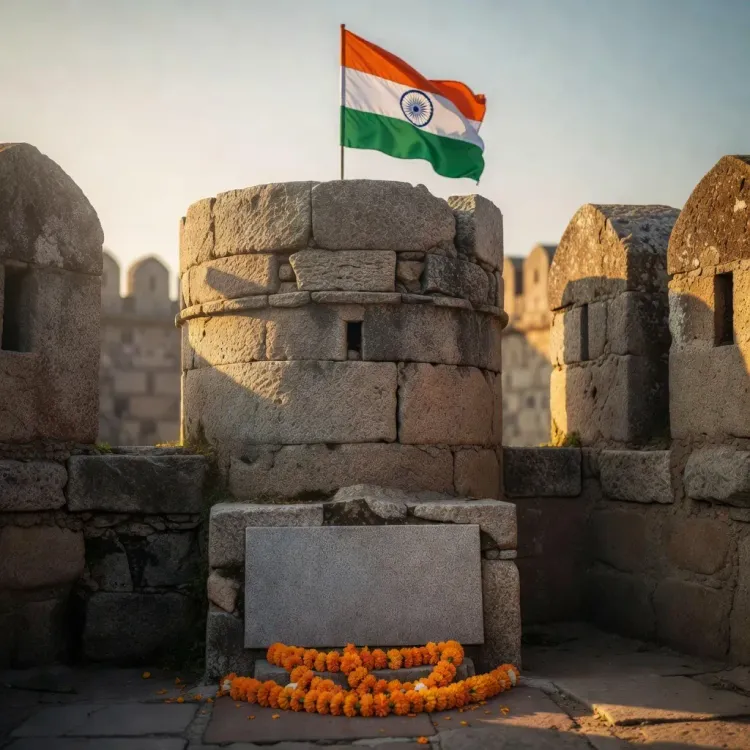
Thiyagi Arya (alias Bashyam) lowered the British Union Jack at Fort St.
George, Chennai and hoisted the Indian tricolour during the independence struggle.
Thiyagi Shankaralinganar fasted unto death in 1956 demanding the state be named Tamil Nadu ; the renaming was achieved on 14 January 1969 .
Thiyagi Senbagaraman popularised the slogan 'Jai Hind' and sought international support for India's freedom movement.
The CMO called on citizens to 'build a new society imbued with humanity and patriotism' by following the martyrs' example.
The Chief Minister's Office of Tamil Nadu on Friday, 17 July 2026, posted a tribute on behalf of the Chief Minister honouring three freedom fighters — Thiyagi Arya (alias Bashyam), Thiyagi Shankaralinganar, and Thiyagi Senbagaraman — on the occasion of Martyrs' Day, saluting their sacrifice for India's independence and the rights of the people.
Context
The post, written in Tamil, extends 'veeravanakkam' (heroic salutations) to the three martyrs and recalls their distinct contributions to the national freedom movement. The Chief Minister's message states: 'Their tireless labour and selfless sacrifice are worthy of eternal praise.' The tribute underscores Tamil Nadu's long tradition of honouring regional freedom fighters alongside national icons.
Thiyagi Arya (alias Bashyam) is remembered for a dramatic act of defiance during the independence struggle: he lowered the British Union Jack flying at the bastion of Fort St. George in Chennai and hoisted the Indian tricolour in its place, directly challenging colonial authority at one of its most symbolic seats of power.
Policy Backdrop
Thiyagi Shankaralinganar undertook a fast unto death in 1956 demanding that the state then known as Madras State be renamed Tamil Nadu, a cause rooted in the broader linguistic reorganisation movement sweeping post-independence India. His sacrifice is credited as a key moment in the sustained campaign that culminated in the official renaming of the state on 14 January 1969.
Thiyagi Senbagaraman is credited with popularising the rallying cry 'Jai Hind' (Victory to India) and with mobilising international support for India's freedom movement. The post describes him as a 'veera thiyagi' — a heroic martyr — who gave the independence struggle one of its most enduring slogans.
Stakeholders and Impact
The tribute is addressed to Tamil citizens broadly, and in particular to the families and communities that carry the memory of these three fighters. Fort St. George, the site of Bashyam's act of defiance, remains the seat of the Tamil Nadu government today, lending additional symbolic weight to the commemoration.
Tamil Nadu administrations have consistently maintained the practice of publicly commemorating regional martyrs who linked the national independence movement with demands for linguistic and cultural recognition. These observances reinforce the state's narrative of combining patriotism with its distinct Dravidian cultural identity within the Indian Union.
What's Next
The Chief Minister's message closes with a call to action: 'Let us imbibe the noble qualities of such martyrs as a way of life and build a new society imbued with humanity and patriotism.' Annual state-level observances on the death anniversaries of all three martyrs are expected to continue, and references to their legacies are likely to feature in upcoming Tamil Nadu Formation Day events commemorating the 14 January 1969 renaming. The tribute signals that the state government intends to keep this strand of regional freedom-fighter history prominent in public memory.
Point of View
Reinforcing Tamil Nadu's established practice of weaving regional martyrs into the state's official memory alongside national freedom-movement icons. By invoking Shankaralinganar's fast for the state's renaming in the same breath as Bashyam's flag-hoisting and Senbagaraman's 'Jai Hind' slogan, the CMO frames Tamil linguistic assertion as inseparable from Indian patriotism — a durable pillar of the state's political identity. This approach allows the ruling establishment to claim both nationalist credentials and Dravidian cultural distinctiveness simultaneously. As Tamil Nadu Formation Day approaches, such commemorations are likely to intensify, serving as soft anchors for the government's broader cultural messaging.
NationPress
15 Oct 2026
Frequently Asked Questions
Who is Thiyagi Arya (Bashyam) and what did he do at Fort St. George?
Thiyagi Arya, also known as Bashyam, was a Tamil freedom fighter who lowered the British Union Jack from the bastion of Fort St. George in Chennai and hoisted the Indian tricolour in its place during the independence struggle, directly defying colonial authority at one of its most prominent symbols.
Why did Thiyagi Shankaralinganar fast unto death?
Thiyagi Shankaralinganar undertook a fast unto death in 1956 demanding that Madras State be renamed Tamil Nadu, as part of the broader linguistic reorganisation movement in post-independence India. The state was officially renamed Tamil Nadu on 14 January 1969.
What is Thiyagi Senbagaraman known for in India's freedom movement?
Thiyagi Senbagaraman is credited with popularising the slogan 'Jai Hind' and with mobilising international support for India's independence movement, making him a significant figure in the global campaign for India's freedom.
When was Madras State renamed Tamil Nadu?
Madras State was officially renamed Tamil Nadu on 14 January 1969, following sustained campaigns including Shankaralinganar's 1956 fast unto death demanding the change.
What is the significance of Fort St. George in Tamil Nadu's history?
Fort St. George in Chennai was the primary seat of British colonial administration in South India. It became a site of symbolic protest when freedom fighter Thiyagi Arya (Bashyam) replaced the Union Jack with the Indian tricolour there. Today, the fort houses the Tamil Nadu state legislature and secretariat.