CM Dhami: UCC and Anti-Conversion Law Strengthen Uttarakhand
Synopsis
Chief Minister Pushkar Singh Dhami has said that Uttarakhand's Uniform Civil Code and anti-conversion law have strengthened the state's identity. Uttarakhand became the first Indian state post-independence to enact a UCC, in February 2024, and passed its Freedom of Religion Act in 2022.
Key Takeaways
CM Pushkar Singh Dhami stated on 17 July 2026 that the UCC and anti-conversion law have strengthened Uttarakhand's identity.
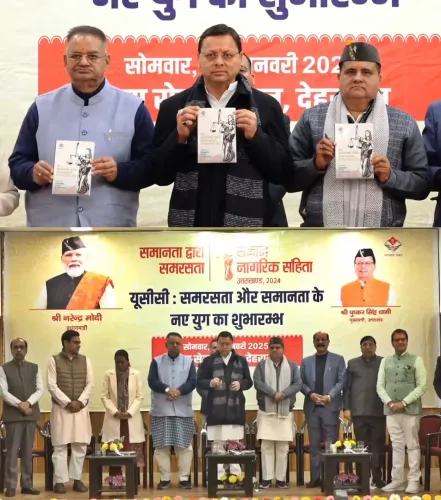
Uttarakhand became the first Indian state after independence to pass a Uniform Civil Code , doing so in February 2024 .
The state enacted the Freedom of Religion Act in 2022 to regulate religious conversions.
Anti-conversion laws exist in at least eight Indian states , but a state-level UCC remains unique to Uttarakhand .
Implementation rules for the UCC and potential Supreme Court challenges remain key issues to watch.
The twin laws align with the BJP's national policy positions on legal uniformity and cultural identity.
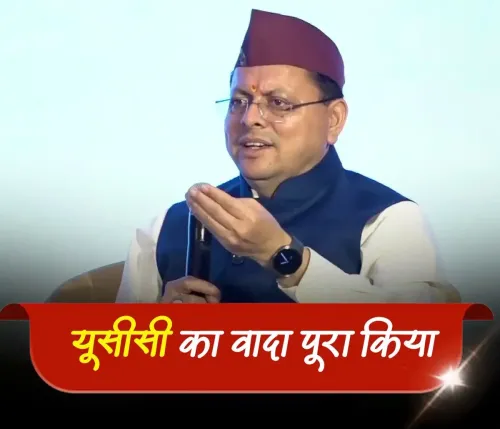
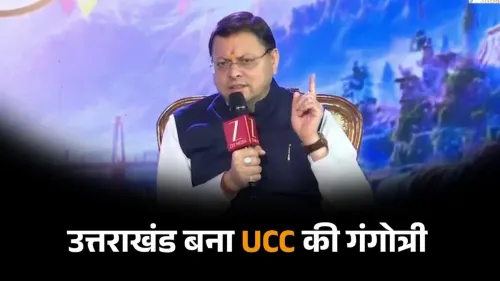
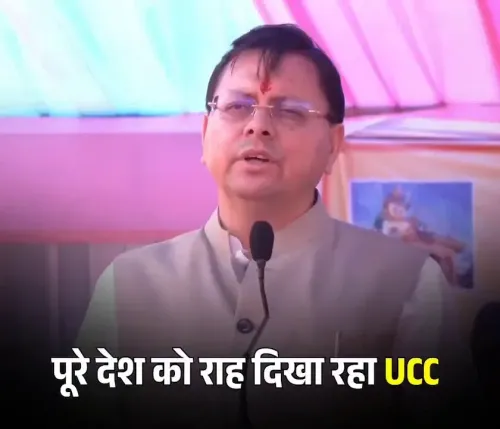
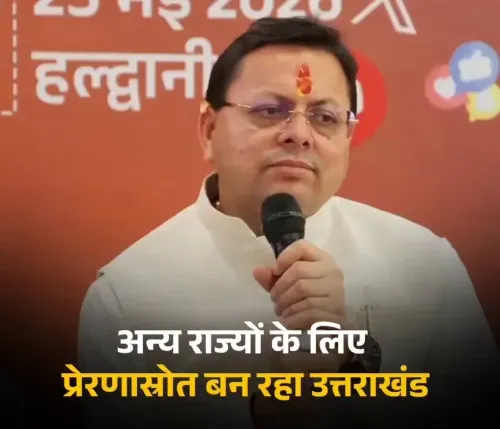
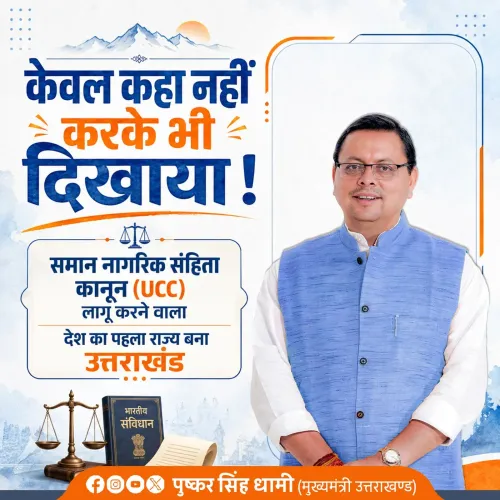
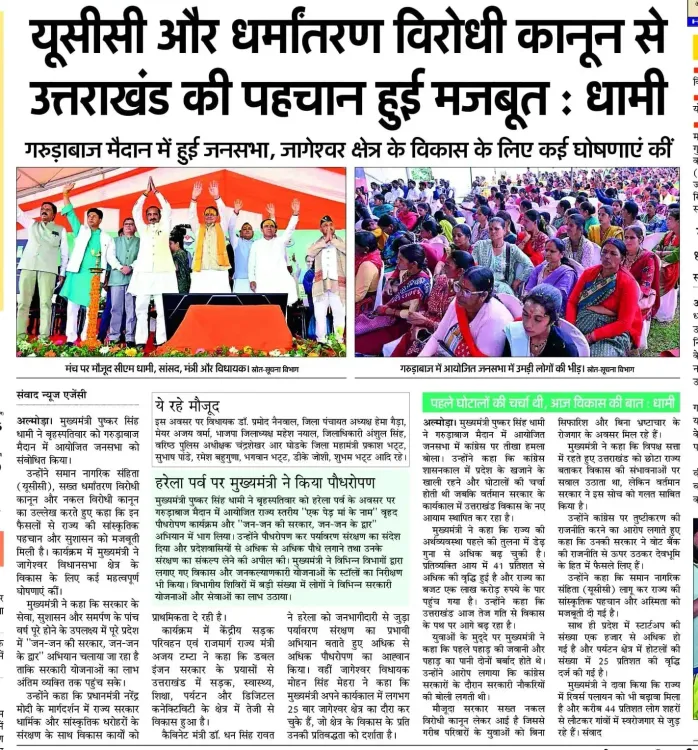
The Chief Minister's Office of Uttarakhand on Friday, 17 July 2026 shared a statement by Chief Minister Pushkar Singh Dhami asserting that the state's Uniform Civil Code (UCC) and anti-conversion law have strengthened Uttarakhand's identity and standing among Indian states.
The post, shared in Hindi, quotes CM Dhami as saying: 'UCC aur dharmantaran virodhi kanoon se Uttarakhand ki pehchaan hui mazboot' — 'The Uniform Civil Code and the anti-conversion law have strengthened the identity of Uttarakhand.' The statement frames both legislations as markers of the state's distinct governance character.
Context
Uttarakhand made national history in February 2024 when its state assembly passed the Uniform Civil Code Bill, becoming the first Indian state to enact such a law after independence. The UCC seeks to replace religion-specific personal laws — governing marriage, divorce, inheritance, and adoption — with a single uniform legal framework applicable to all citizens regardless of faith, as envisioned under Article 44 of the Constitution of India.
Two years earlier, in 2022, the state had enacted the Freedom of Religion Act, which regulates religious conversions and prescribes procedures and penalties for conversions deemed unlawful. Both laws have been central to CM Dhami's governance agenda since he assumed office in 2021.
Policy Backdrop
Anti-conversion statutes are not unique to Uttarakhand; comparable legislation exists in at least eight Indian states, including Madhya Pradesh and Gujarat, with roots going back to the 1960s. However, the UCC is a far rarer legislative step — no other state had enacted one in the post-independence era before Uttarakhand.
The twin legislations align with the Bharatiya Janata Party's long-standing policy positions on legal uniformity and cultural identity, both of which have featured prominently in the party's national manifestos. The UCC has also been a subject of ongoing debate at the national level, with proponents arguing for equality before law and critics raising concerns about minority rights and cultural autonomy.
Stakeholders and Impact
Women's groups have broadly welcomed the UCC's provisions on equal inheritance and divorce rights, while some religious minority organisations and civil society bodies have raised concerns about the law's implications for personal religious practices. The anti-conversion law has similarly drawn praise from Hindu nationalist groups and criticism from Christian and Muslim organisations who argue it creates procedural hurdles for voluntary conversions.
Legal challenges to both laws remain a live possibility. Petitions questioning the constitutional validity of anti-conversion statutes in other states have previously reached the Supreme Court of India, and the UCC's implementation rules are being closely watched by legal scholars and advocacy groups alike.
What's Next
The implementation framework for Uttarakhand's UCC — including the administrative rules and tribunals needed to operationalise it — remains a key area to watch, as does any judicial scrutiny of its provisions. CM Dhami's statement on 17 July 2026 signals that the ruling dispensation intends to continue positioning these laws as defining achievements ahead of future electoral cycles.
Other BJP-governed states have been watching Uttarakhand's experience closely; the success or otherwise of the state's UCC rollout could influence whether similar legislation is attempted elsewhere, potentially reshaping personal law debates at the national level.
Point of View
' the Chief Minister is speaking simultaneously to a domestic constituency and to a national audience watching whether the UCC model can be replicated. The timing, well ahead of any immediate electoral deadline, suggests the government is building a durable narrative around these laws rather than responding to a specific trigger. How the UCC's implementation unfolds on the ground — particularly for women and minorities — will ultimately determine whether the political branding holds.
NationPress
17 Jul 2026
Frequently Asked Questions
What is the Uniform Civil Code in Uttarakhand?
The Uniform Civil Code passed by Uttarakhand in February 2024 replaces religion-specific personal laws on marriage, divorce, inheritance, and adoption with a single legal framework applicable to all citizens of the state, making Uttarakhand the first Indian state post-independence to enact such a law.
What is Uttarakhand's anti-conversion law?
Uttarakhand's anti-conversion law, the Freedom of Religion Act enacted in 2022, regulates religious conversions by prescribing mandatory procedures and penalties for conversions deemed unlawful or carried out by force, fraud, or allurement.
Is Uttarakhand the first state to have a UCC?
Yes, Uttarakhand became the first Indian state after independence to pass a Uniform Civil Code when its assembly approved the bill in February 2024.
What did CM Dhami say about UCC and anti-conversion law?
CM Pushkar Singh Dhami stated on 17 July 2026 that both the Uniform Civil Code and the anti-conversion law have strengthened Uttarakhand's identity, framing them as landmark governance achievements of his administration.
Can other states adopt a Uniform Civil Code like Uttarakhand?
Constitutionally, other states can pass their own UCC legislation, and several BJP-governed states have been watching Uttarakhand's experience; however, none had enacted a comparable law as of the time of this report.