US seeks deeper investment ties with India ahead of G20 Asheville talks
Synopsis
A senior US Treasury official has publicly offered to help Indian companies navigate the notoriously complex CFIUS national security review — a rare and concrete signal of investment goodwill. With 90 per cent of CFIUS reviews cleared and Asheville G20 talks imminent, Washington appears to be positioning India as a preferred investment partner in its post-America First recalibration.
Key Takeaways
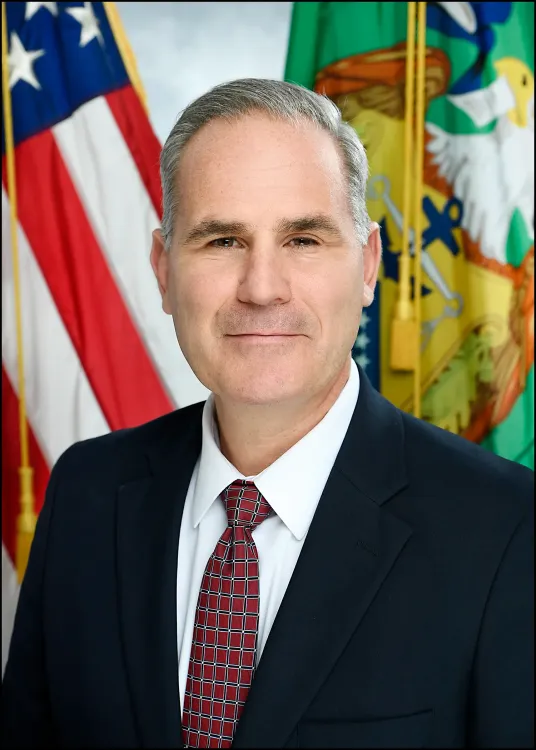
US Treasury Assistant Secretary Chris Pilkerton said Washington is keen to expand investment engagement with India ahead of G20 finance meetings in Asheville .
Pilkerton offered to help Indian officials and companies navigate the CFIUS national security review process.
Nearly 90 per cent of transactions reviewed by CFIUS are cleared, according to Pilkerton.
The Trump administration's 'America First' policy does not mean 'America alone,' Pilkerton said, signalling openness to multilateral investment partnerships.
Asheville G20 discussions are expected to cover global growth, trade imbalances, supply chains, AI , quantum technology , and the space economy .
The United States has expressed strong interest in expanding investment engagement with India and helping Indian companies navigate its national security review process, a senior US Treasury official said on 31 August, describing New Delhi as 'an important partner' ahead of the G20 finance ministers' meetings in Asheville.
What the Treasury Official Said
Chris Pilkerton, Assistant Secretary for the US Treasury, said he welcomed direct discussions with Indian officials and businesses about potential investment opportunities in the United States. 'I welcome the opportunity to meet with Indian officials, Indian companies, and see if there's ways to work together through the CFIUS process,' Pilkerton said.
He described the bilateral relationship as 'a wonderful relationship' and indicated Washington was actively looking to deepen it through structured investment cooperation.
How the CFIUS Process Works
The Committee on Foreign Investment in the United States (CFIUS) reviews certain foreign investments to assess their potential impact on US national security. Pilkerton clarified that the committee evaluates each transaction on its own merits, not on the basis of the investor's country of origin.
'The Committee on Foreign Investment in the United States is agnostic as to where the actual capital is coming from,' he said. 'We make an assessment on the national security level on a case by case basis.'
Notably, Pilkerton said nearly 90 per cent of transactions reviewed by CFIUS are cleared, with some approvals conditional on measures introduced to mitigate identified security risks. He added that approved foreign investments could deliver significant benefits to American communities through economic development, workforce expansion, and opportunities for local vendors.
America First — But Not America Alone
Asked about the Trump administration's approach to allies, Pilkerton drew a distinction between its 'America First' posture and outright unilateralism. 'That doesn't necessarily mean America alone,' he said, adding that Washington wanted to 'advance mutual initiatives' with a range of partner countries.
He declined to specify economic deliverables Washington expected from India at the Asheville meetings, but said economic growth was 'incredibly important across the board.'
Key Themes at Asheville G20 Finance Meetings
The Asheville discussions are expected to centre on global growth, trade imbalances, resilient supply chains, and investment flows. Technology and national security are also on the agenda, with US authorities examining developments in artificial intelligence, quantum technology, hypersonics, biotechnology, and the space economy.
Washington has signalled it wants to promote secure cooperation with partners while guarding against the potential dual use of sensitive technologies — a priority that aligns closely with the India-US technology partnership framework that has expanded significantly in recent years.
India-US Economic Ties: The Broader Context
India and the United States have steadily broadened their economic and strategic engagement, with bilateral discussions increasingly focused on critical and emerging technologies, secure supply chains, and high-technology sector collaboration. Pilkerton's remarks signal that investment facilitation — particularly through the CFIUS framework — is emerging as a new frontier in that relationship.
As the G20 finance meetings get underway in Asheville, all eyes will be on whether the goodwill expressed by senior officials translates into concrete investment commitments and streamlined processes for Indian companies seeking a foothold in the US market.
Point of View
But the real bottleneck for Indian firms has been uncertainty about timelines and conditions, not outright rejection. If Washington is serious about deepening investment ties, the follow-through must include clearer pre-screening guidance and faster review windows. The Asheville G20 platform gives both sides an opportunity to move from goodwill statements to a structured investment facilitation framework — something the bilateral relationship has long promised but rarely delivered at scale.
NationPress
31 Aug 2026
Frequently Asked Questions
What did the US Treasury official say about investment ties with India?
US Treasury Assistant Secretary Chris Pilkerton said Washington is keen to expand investment engagement with India and help Indian companies navigate the CFIUS national security review process. He described India as 'an important partner' and said the two countries share 'a wonderful relationship.'
What is CFIUS and why does it matter for Indian companies?
CFIUS, the Committee on Foreign Investment in the United States, reviews certain foreign investments to assess their potential impact on US national security. It matters for Indian companies because any significant investment in a US business — particularly in technology or defence-adjacent sectors — may require CFIUS clearance before it can proceed.
What percentage of CFIUS reviews are approved?
According to Pilkerton, nearly 90 per cent of transactions reviewed by CFIUS are cleared. Some are approved with conditions designed to address specific national security concerns identified during the review.
What topics are on the agenda at the Asheville G20 finance meetings?
The Asheville meetings are expected to focus on global growth, trade imbalances, resilient supply chains, and investment. Technology and national security — including artificial intelligence, quantum technology, hypersonics, biotechnology, and the space economy — are also expected to feature prominently.
How have India-US economic ties evolved in recent years?
India and the United States have significantly expanded their economic and strategic engagement, with growing cooperation in critical and emerging technologies, secure supply chains, and high-technology sectors. The latest signals from Washington suggest investment facilitation through frameworks like CFIUS is emerging as the next frontier in the relationship.