Mohan Bhagwat in Toronto: India's 'third way' can resolve global conflicts
Synopsis
RSS chief Mohan Bhagwat told a 2,000-strong diaspora audience in Toronto that the world’s interlocking crises — war, ecological collapse, the individual-versus-society bind — cannot be solved by existing Western or Eastern frameworks. His answer: an ancient Indian ‘third way’ grounded in dharma, where individual, society, and nature advance together. It is a civilisational pitch, delivered from Canadian soil, that signals the RSS’s growing global ideological ambition.
Key Takeaways
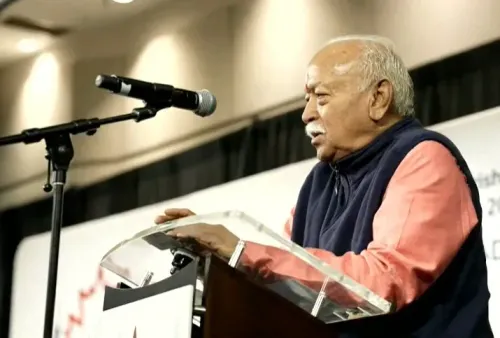
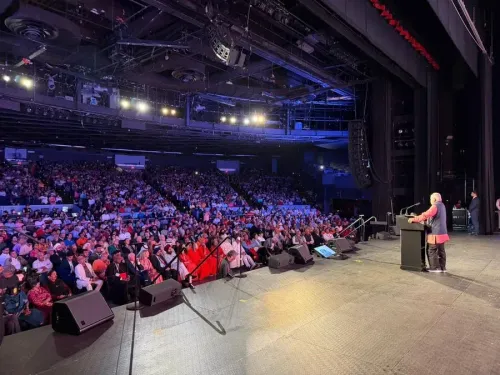
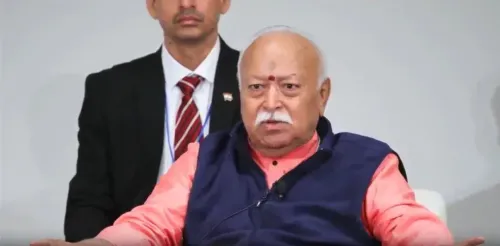
RSS chief Mohan Bhagwat addressed more than 2,000 people in the Greater Toronto Area on 31 August .
He called for a ‘third way’ rooted in India’s ancient dharmic worldview to address global conflict, environmental crisis, and social imbalance.
Bhagwat cited nuclear technology as an example of science being prioritised for destruction over clean energy.
He defined dharma as sustenance and balance — distinct from religious worship — and argued it allows individual, society, and nature to progress together.
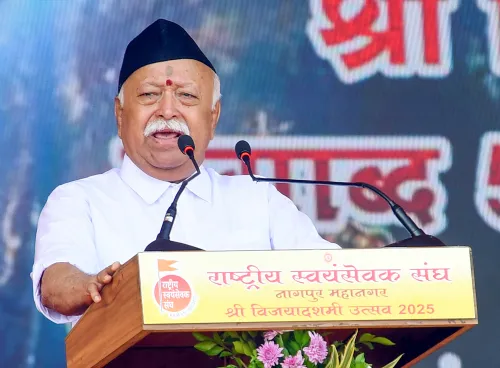
Bhagwat has led the RSS since 2009 ; the Toronto address was part of a North American visit that also included New York engagements.
He called for mutual introspection over confrontation, saying “both are right and both have some wrongs.”
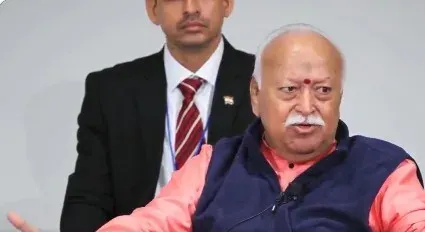
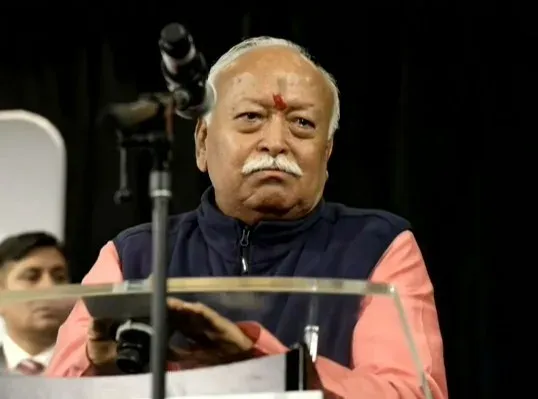
Rashtriya Swayamsevak Sangh (RSS) chief Mohan Bhagwat on 31 August called on the world to adopt an Indian “third way” — rooted in dharma and the recognition of a shared humanity — to address mounting global crises including armed conflict, environmental degradation, and the perceived tension between individual fulfilment and collective well-being. Bhagwat was speaking before an audience of more than 2,000 Hindus and friends of the community in the Greater Toronto Area during a North American visit that also included engagements in New York.
The Core Argument: Progress Without Harm
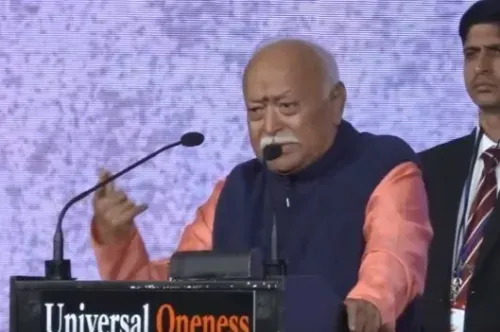
Bhagwat opened by acknowledging that humanity had achieved extraordinary scientific progress, but argued it had too often been channelled toward destructive ends. He pointed to nuclear technology as a telling example: “Clean energy is on second place. Weapons of mass restrictions, they are with the priority. We use the atom first for those,” he said.
He described a global dilemma in which nations compete rather than cooperate, and where individual happiness and social well-being are framed as mutually exclusive. “If an individual has to be happy, society has to suffer. If we try to create a happy society, individuals have to be current. What is the way?” he asked the gathering.
What Bhagwat Means by the 'Third Way'
The RSS Sarsanghchalak — who has headed the organisation since 2009 — described the “third way” not as a new ideology but as an ancient Indian worldview. “There has to be a third way, and this new third way is ancient very old way of Hindustan,” he said.
At its centre is the idea that the individual, society, and the natural world can advance together without harming one another. Bhagwat grounded this in the concept of dharma, which he distinguished from religious ritual or worship. “That is not worship. That is sustenance. That is balance. That is looking towards everybody as their own,” he said.
He argued that dharma enables people to “earn livelihood” and “satisfy desires” without abandoning the pursuit of deeper meaning — and that this framework, if applied globally, could allow all nations to prosper without weakening others.
On Hindu Identity and Diversity
Bhagwat also addressed what he described as the breadth of Hindu identity, arguing it could not be confined to any single language, belief system, or way of life. “When I say Hindu, the word Hindu cannot be defined by any specific language, through any specific worship, or through any living style,” he said.
He framed diversity as natural and unity as the underlying reality. “Diversity is natural. Unity is the reality,” he said, adding that differences in opinion, temperament, and preference need not prevent people from choosing to remain together.
Call for Introspection Over Confrontation
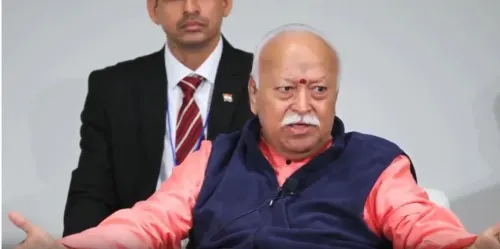
Rather than casting global disagreements as contests with a single winner, Bhagwat called for mutual introspection. “Whether you are right, whether I am right. Both are right and both have some wrongs,” he said. “What we need is to introspect, correct ourselves, you together.”
This address forms part of a broader North American outreach by the RSS leadership, with Bhagwat’s remarks in Toronto and New York drawing significant attention from the Indian diaspora. As geopolitical fault lines deepen and climate commitments falter, the RSS chief’s framing of an India-rooted civilisational alternative is likely to resonate — and invite scrutiny — well beyond the diaspora hall.
Point of View
But delivering that pitch before a North American audience, in the language of global crisis management, marks a strategic escalation in soft-power outreach. What the speech leaves unaddressed is the gap between the universalist rhetoric of ‘Hindu accepts all’ and the lived experience of minorities in India who might contest that framing. The credibility of India’s ‘third way’ abroad will ultimately depend on how convincingly it is practised at home.
NationPress
31 Aug 2026
Frequently Asked Questions
What did Mohan Bhagwat say in Toronto?
RSS chief Mohan Bhagwat told an audience of over 2,000 in the Greater Toronto Area on 31 August that the world needs an Indian ‘third way’ — rooted in dharma — to resolve global conflicts, environmental degradation, and the tension between individual happiness and social well-being. He argued this ancient Indian worldview allows individuals, societies, and nature to progress together without harming one another.
What is the ‘third way’ Bhagwat referred to?
Bhagwat described the ‘third way’ as an ancient Indian civilisational approach grounded in dharma — which he defined not as religious worship but as sustenance, balance, and recognising the underlying unity of all humanity and nature. He contrasted it with existing global models that pit individual well-being against social progress, or national advancement against the welfare of other nations.
Why did Bhagwat mention nuclear technology in his speech?
Bhagwat used nuclear technology as an example of scientific achievement being directed toward destruction before constructive use, noting that weapons of mass destruction took priority over clean energy applications. It illustrated his broader argument that humanity’s scientific progress has often been misused.
How does Bhagwat define Hindu identity?
Bhagwat argued that Hindu identity cannot be defined by any single language, form of worship, or way of life. He described it as an inclusive worldview that respects and accepts diversity, framing diversity as natural and unity as the deeper reality connecting all people.
What is the significance of Bhagwat’s North America visit?
The visit — covering Toronto and New York — represents a significant international outreach effort by the RSS leadership, taking its civilisational and dharmic arguments directly to the Indian diaspora in the West. It signals the organisation’s intent to position India’s philosophical traditions as relevant responses to contemporary global crises.