US shifts to 'Trade Over Aid': Landau pushes private investment diplomacy
Synopsis
The Trump administration is done with aid as diplomacy's backbone. Deputy Secretary of State Christopher Landau laid out a sweeping pivot at a New York showcase — replace foreign grants with private investment deals, streamline fragmented US agencies into a 'one-stop shop', and use commercial ties to outcompete China's state-backed financing. The question critics are already asking: who picks up the tab for countries too poor or risky to attract any investor at all?
Key Takeaways
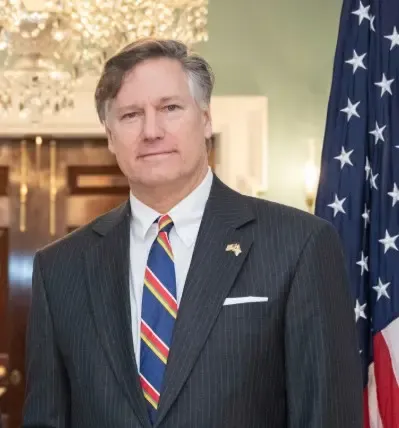
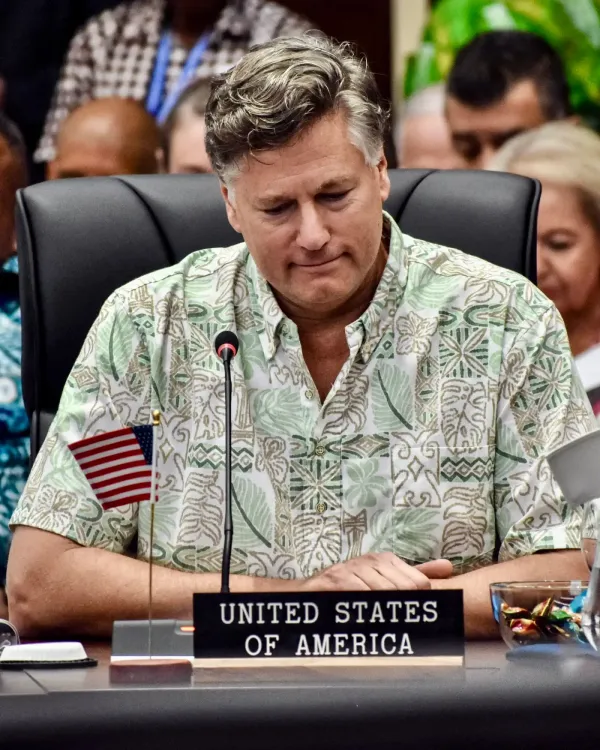
Deputy Secretary of State Christopher Landau unveiled the Trump administration's 'Trade Over Aid' economic diplomacy strategy at a showcase in New York on 26 September 2026 .
The policy prioritises private investment and commercial agreements over traditional foreign assistance programmes.
Landau criticised aid models for attaching conditions he said could conflict with recipient nations' culture and sovereignty.
He flagged the near-absence of American companies in overseas project bids as a major problem requiring urgent attention.
The State Department, Commerce Department, DFC , and Export-Import Bank are to be better coordinated into a 'one-stop shop' for overseas investment support.
The approach is explicitly positioned as a US counter to China's state-backed infrastructure financing model.
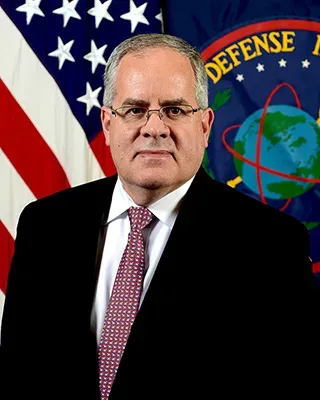
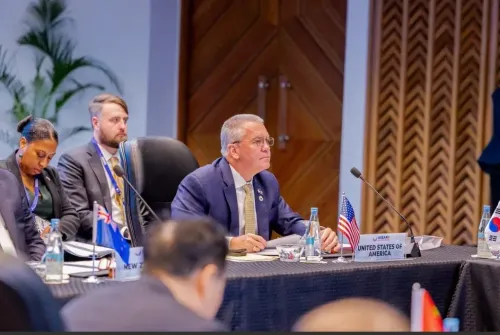
Deputy Secretary of State Christopher Landau on 26 September 2026 outlined the Trump administration's ambition to fundamentally reorient US economic diplomacy — away from traditional foreign aid and toward private investment, commercial agreements, and durable economic partnerships. Speaking at a 'Trade Over Aid Deals Showcase' in New York, Landau argued that commercial ties could outlast governments and build more resilient relationships between nations than grant-based assistance ever could.
The Case Against Traditional Aid
Landau was pointed in his critique of conventional aid models, arguing that foreign assistance programmes — while capable of keeping economies afloat in the short term — frequently impose conditions that may conflict with recipient nations' culture and sovereignty. 'A lot of times they come with conditions that you have to do this or that, which may be contrary to your country's culture, and you have to be put to a very unpleasant choice,' he said.
He described the era of aid-driven diplomacy as a 'mirage', warning that both donor and recipient countries needed to acknowledge that identifying genuine economic opportunities represented a fundamentally sounder model. 'For too long, I think, we have kind of lived on the mirage that the world of aid could go on,' Landau said.
Investment as an Engine of Sovereignty
Landau pushed back against the view that accepting foreign investment amounts to surrendering national sovereignty. 'Investment is an engine of growth; you're bringing money into the country,' he said, adding that sovereign governments retain the authority to set the conditions governing any investment. He noted, however, that businesses require legal and regulatory certainty — a framework that allows them to calculate returns and trust that agreed conditions will be honoured.
He described himself as the administration's 'quarterback' for economic diplomacy and framed commercial success as inseparable from foreign policy. 'Diplomacy is not — that is not different than diplomacy. That is the core of diplomacy,' he said.
America's Private Sector Gap
One of Landau's central concerns was the relative absence of American companies from major infrastructure and development bids abroad. He said foreign officials frequently asked him why companies from other countries submitted multiple bids on projects while no US firm participated. 'That's a big problem. I spend most of my sleepless nights when I'm thinking about my job pondering that question,' he said.
He pointed to the availability of capital as a critical lever, noting that trillions of dollars managed from New York could be deployed internationally. Private investors, he acknowledged, have complained that the US government's support architecture for overseas projects is fragmented — with the State Department, Commerce Department, US International Development Finance Corporation (DFC), and Export-Import Bank each playing separate, poorly coordinated roles. 'I think we need to become more of a one-stop shop, and I'm going to work on that,' Landau said.
The Broader Strategic Context
The 'trade over aid' push is not purely an economic argument — it carries significant geopolitical weight. Washington has increasingly positioned private investment in infrastructure, energy, telecommunications, and critical minerals as a direct counterweight to state-backed financing from China and other strategic competitors. The approach echoes earlier US-led initiatives such as the Blue Dot Network and the G7's Partnership for Global Infrastructure and Investment, though Landau's framing placed far greater emphasis on mobilising the American private sector rather than government-to-government commitments.
Notably, this shift comes as US foreign aid budgets face domestic political pressure, making the pivot to commercially led engagement both a strategic choice and a fiscal one. Critics argue that commercial investment, driven by profit motives, may bypass the poorest and most fragile states that traditional aid was designed to reach — a tension the administration has yet to address publicly.
What Comes Next
Landau indicated the State Department would move toward a more integrated role, connecting the American private sector with overseas opportunities and helping companies assess geopolitical and regulatory risk. Whether the administration can deliver the institutional consolidation he described — streamlining the DFC, Export-Import Bank, and Millennium Challenge Corporation into a coherent offer — will be the practical test of the policy. All eyes will be on which specific deals and investment frameworks emerge from the New York showcase in the weeks ahead.
Point of View
So repositioning cuts as strategy is smart messaging. But the structural tension is real: commercial capital follows returns, not need, which means the fragile and conflict-affected states that traditional aid was built for will simply fall off Washington's map. The 'one-stop shop' promise is also familiar territory; US development finance institutions have been promised coordination reforms for years with limited results. The real measure of this pivot will not be the showcase rhetoric but whether a single major infrastructure deal in a genuinely risky market closes under this new framework within the next 12 months.
NationPress
26 Sept 2026
Frequently Asked Questions
What is the US 'Trade Over Aid' policy?
It is the Trump administration's strategy to replace traditional foreign aid with private investment, commercial agreements, and economic partnerships as the primary tool of US diplomatic engagement. Deputy Secretary of State Christopher Landau outlined the approach at a New York showcase on 26 September 2026, arguing that commercial ties create more durable relationships than grant-based assistance.
Why does the Trump administration want to move away from foreign aid?
Landau argued that foreign aid programmes, while capable of keeping economies afloat, often impose conditions that conflict with recipient countries' culture and sovereignty. He described sustained reliance on aid as a 'mirage' and said identifying genuine economic opportunities was a preferable and more sustainable model.
How does the 'Trade Over Aid' approach counter China?
Washington is positioning private investment in infrastructure, energy, telecommunications, and critical minerals as an alternative to state-backed financing offered by China. The approach aims to mobilise US private capital — including the trillions managed from New York — to compete with Chinese-led project financing in lower- and middle-income countries.
What institutional changes are planned under this policy?
Landau said the State Department, Commerce Department, US International Development Finance Corporation, and Export-Import Bank currently operate in a fragmented way, and he committed to building a more integrated 'one-stop shop' for companies seeking to invest overseas with US government backing.
What are the criticisms of the 'Trade Over Aid' model?
Critics argue that commercially driven investment follows profit motives and may bypass the poorest and most fragile states that traditional aid was designed to support. The administration has not yet publicly addressed how those countries would be served under the new framework.