US Senate warns AI scams cost seniors $7.7bn in 2025

Synopsis
Americans over 60 lost $7.7 billion to scams in 2025 — and the US Senate is now warning that AI has turned fraud into an industrial operation. Voice clones, deepfakes, and chatbots are dismantling the last line of defence: trusting your own senses. The threat is no longer hypothetical, and it is no longer confined to the United States.
Key Takeaways
Americans aged 60 and above lost $7.7 billion to scams in 2025 , according to the US Senate Special Committee on Ageing .
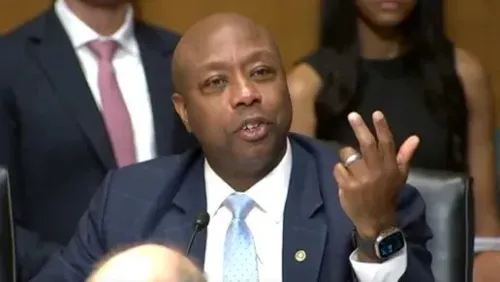
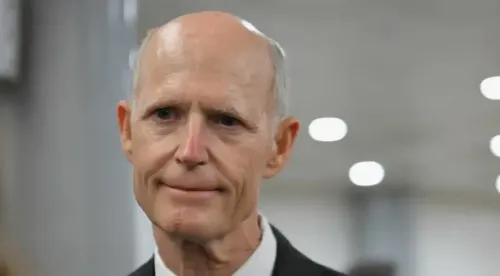
Committee Chairman Rick Scott warned that AI deepfakes and voice-cloning tools are making fraud dramatically more convincing and accessible.
Victim Deborah Del Mastro transferred $5,400 to scammers who cloned her daughter's voice in a fake kidnapping scheme.
Ranking Member Kirsten Gillibrand wrote to OpenAI and Meta demanding details on safeguards for older adults.
The American Bankers Association warned that generative AI is 'industrialising' traditional scams, not replacing them.
India has also recorded a sharp increase in AI-enabled cyber fraud targeting bank customers, executives, and families.
A bipartisan US Senate Special Committee on Ageing sounded a sharp alarm on Wednesday, 30 July 2025, warning that deepfakes, cloned voices, and AI-powered chatbots are exposing older Americans to a new generation of sophisticated fraud — a threat with direct relevance for India and the global Indian diaspora as similar scams proliferate worldwide.
Scale of the Crisis
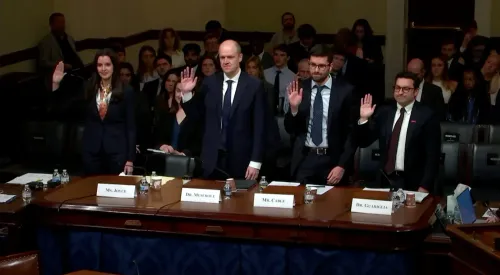
Opening the hearing titled 'The AI Deception Machine: Deepfakes, Chatbots, and the New Frontier of Senior Fraud', Committee Chairman Rick Scott disclosed that Americans aged 60 and above lost a staggering $7.7 billion to scams in 2025. He described artificial intelligence as a force that has made fraud both more convincing and more accessible to criminals with limited technical skills.
'AI can be used to make fraudulent videos known as deepfakes, impersonating experts and celebrities to try to fraud our seniors,' Scott said. 'AI can also be used to clone someone's voice, a terrifying development that has been used in heartbreaking and evil ways to impersonate a loved one and deceive their family.'
Senators Demand Accountability from Tech Giants
Ranking Member Kirsten Gillibrand acknowledged that AI offered significant societal benefits but warned that criminals were exploiting the technology at an unprecedented scale. 'Americans deserve to trust their own eyes and ears,' she said, adding that AI-generated scams were 'making old cons more convincing and far easier to pull off.'
Gillibrand also disclosed that she had written to leading AI companies — including OpenAI and Meta — seeking details on what safeguards they have in place for older adults and people with disabilities.
Victim Testimonies Lay Bare the Human Cost
Deborah Del Mastro of California delivered emotional testimony describing how scammers cloned her daughter's voice during a five-and-a-half-hour ordeal in which she believed her daughter had been kidnapped. 'It was her voice. It was absolutely her voice,' she told senators. The caller, claiming a Mexican drug cartel had abducted her daughter, ultimately extracted $5,400 before Del Mastro discovered her daughter was safe. 'It was the worst day of my life,' she said, calling for greater public awareness and regulatory guardrails.
Los Angeles surgeon Dr David Amron described how fraudsters used AI to produce a deepfake video falsely showing him endorsing a counterfeit medical product. 'They used my name and my reputation to deceive the very people I have dedicated my career to helping and protecting,' he said, warning that such scams risk causing patients to delay legitimate medical treatment while eroding trust in physicians.
Industry Warns of 'Industrialised' Fraud
Paul Benda, Executive Vice President for Risk, Fraud and Cybersecurity at the American Bankers Association, told lawmakers that generative AI was not replacing traditional scams but 'industrialising them.' He said banks were increasingly deploying AI and behavioural analytics to flag suspicious transactions before funds leave customer accounts, but argued that technology companies and telecommunications providers must share responsibility. 'The best fraud prevention is to stop the criminal from reaching and deceiving the victim in the first place,' he said.
Cybersecurity expert Matthew Ferraro urged greater public education, stronger inter-agency coordination, and wider adoption of AI detection technologies capable of distinguishing authentic content from fabricated audio and video.
Legislative Push and Global Implications
Senators from both parties used the hearing to advance proposals including a national anti-scam strategy, a centralised fraud reporting portal, enhanced law enforcement training, and a formal study into AI's impact on ageing populations.
The hearing also carries significance beyond US borders. India has seen a sharp rise in AI-enabled cyber fraud, including voice-cloning scams, deepfake videos, and digitally manipulated impersonation schemes targeting bank customers, business executives, and families. Experts warn that as these tools become cheaper and easier to deploy, no country — and no age group — is insulated from the threat.
Point of View
But the Senate hearing's deeper revelation is structural: AI has lowered the skill barrier for fraud to near zero, turning what once required criminal networks into a one-person operation with a laptop. The focus on seniors is warranted, but the threat is generational — voice cloning and deepfakes are equally effective against younger adults who are simply less likely to report losses. The calls for tech-company accountability are overdue, yet the hearing produced no binding commitments from OpenAI or Meta. Without legislative teeth, awareness campaigns will remain the only line of defence — and awareness, as Del Mastro's testimony shows, is no match for a cloned voice in a moment of panic.
NationPress
13 Sept 2026
Frequently Asked Questions
How much did AI scams cost American seniors in 2025?
Americans aged 60 and above lost $7.7 billion to scams in 2025, according to figures cited by US Senate Special Committee on Ageing Chairman Rick Scott at a Congressional hearing on 30 July 2025. The figure reflects a surge driven largely by AI-enabled fraud tools including deepfakes and voice cloning.
What is voice-cloning fraud and how does it work?
Voice-cloning fraud uses AI to replicate a real person's voice from audio samples — often scraped from social media — and deploy it in phone calls to deceive victims. In one case heard by the Senate, a California woman transferred $5,400 to scammers who cloned her daughter's voice and falsely claimed a drug cartel had kidnapped her.
Which AI companies did Senator Gillibrand contact about senior fraud?
Ranking Member Kirsten Gillibrand disclosed she had written to OpenAI and Meta, seeking details on the safeguards each company has in place to protect older adults and people with disabilities from AI-enabled fraud.
What legislation is the US Senate proposing to tackle AI fraud?
Senators from both parties advanced proposals at the hearing including a national anti-scam strategy, a centralised fraud reporting portal, stronger law enforcement training, and a formal study into AI's impact on ageing populations. No specific bill has been passed yet.
Does AI-enabled senior fraud affect India?
Yes. India has recorded a significant rise in AI-enabled cyber fraud, including voice-cloning scams, deepfake videos, and digitally manipulated impersonation schemes targeting bank customers, business executives, and families. The US Senate hearing is seen as having direct relevance for India and the Indian diaspora globally.