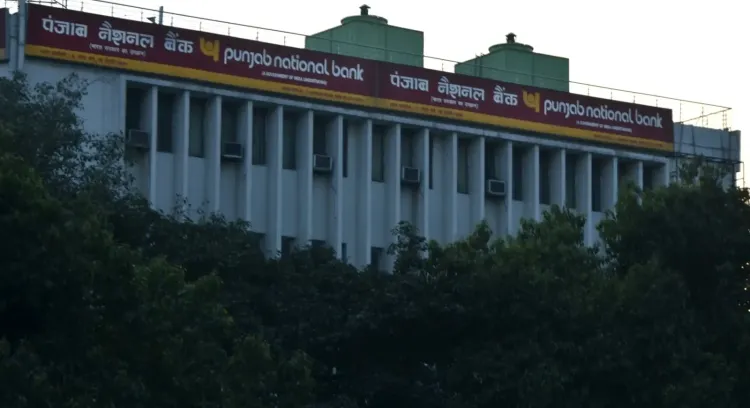
PNB warns customers against AI voice cloning and deepfake frauds
Synopsis
PNB's top executive is sounding the alarm on AI-powered fraud that can clone your relative's voice or fake a banker's face — and two recent cases, in Pune and Ahmedabad, show how the scam plays out in practice, targeting senior citizens through pension card lures and costing them lakhs in minutes.
Key Takeaways
PNB MD and CEO Ashok Chandra issued a formal advisory in October 2026 warning customers against AI voice cloning, deepfakes and phishing .
Fraudsters are reportedly mimicking voices and appearances of family members to create false emergencies and demand urgent fund transfers.
A 70-year-old Pune resident, Dilip Eknath Waikar , lost ₹4.81 lakh in a WhatsApp pension card scam between 8–9 September ; no arrests made.
A 72-year-old retired bank employee in Ahmedabad lost ₹5 lakh via a Facebook pension card advertisement the previous month.
Indian banks are increasing IT and cybersecurity investments in response to RBI mandates and AI-driven fraud threats.
Customers can report cyber fraud at cybercrime.gov.in or by dialling 1930 .
Punjab National Bank (PNB), one of India's largest state-run lenders, has issued a formal caution to its customers against a rising wave of AI-enabled cyber frauds, including voice cloning, deepfakes, and phishing attacks. The advisory comes in October 2026, observed nationally as Cyber Security Awareness Month, amid a documented surge in such incidents across the country.
What PNB's Warning Covers
PNB MD and CEO Ashok Chandra said fraudsters are deploying increasingly sophisticated tools to make their attempts appear credible. 'Many cyber frauds today exploit human behaviour, particularly trust, fear, urgency and everyday digital habits. Fraudsters may imitate the voice or appearance of your family members, friends, or trusted persons and create a false emergency to seek an urgent transfer of money,' Chandra said.
He added that fraudulent emails, SMS messages and digital communications can now appear highly personalised, mimicking genuine bank correspondence almost exactly. These messages are designed to trigger panic and push recipients into acting without verification — a tactic that has proven effective against customers of all age groups.
The Broader Cyber Threat Landscape
The PNB warning reflects a wider pattern across the Indian banking sector. Both public and private sector banks are ramping up IT and cybersecurity investments to counter threats from advanced artificial intelligence, quantum computing vulnerabilities, and tightening regulatory mandates from the Reserve Bank of India (RBI). The convergence of AI-generated content and social engineering has made fraud detection significantly harder for ordinary users.
Pune: Retired Man Loses ₹4.81 Lakh in Pension Card Scam
In a case that illustrates the scale of the threat, a 70-year-old man in Pune's Baner area was defrauded of ₹4.81 lakh through a WhatsApp-based pension card registration scam. The victim, Dilip Eknath Waikar, a resident of Pashan, received a message between 8 and 9 September prompting him to click a link and enter his bank account details, after which the funds were fraudulently withdrawn.
A case was subsequently registered at Baner police station under Sections 318(4) and 318(2) of the Bharatiya Nyaya Sanhita (BNS) and Section 66(D) of the Information Technology Act. No arrests have been made so far, according to officials.
Pattern of Targeting Senior Citizens
The Pune case is not isolated. In a strikingly similar incident the previous month, a 72-year-old retired bank employee in Ahmedabad's Makarba area lost ₹5 lakh after clicking on a Facebook advertisement purportedly offering pension card services. The repeated targeting of senior citizens through pension-related lures points to an organised fraud network exploiting a demographic that may be less familiar with digital verification practices.
What Customers Should Do
Banking officials and cybersecurity experts consistently advise customers never to click unsolicited links, share OTPs, or transfer funds in response to urgent requests — regardless of how familiar the voice or message appears. Customers encountering suspicious contact are advised to call their bank's official helpline and report incidents to the National Cyber Crime Reporting Portal at cybercrime.gov.in or dial 1930.
With AI tools becoming cheaper and more accessible, the frequency and sophistication of such attacks are expected to increase, making awareness and verification habits the first line of defence.
Point of View
Not before. The deeper problem is structural: AI fraud tools are now cheap, accessible, and outpacing consumer awareness campaigns. Targeting senior citizens with pension-linked lures is not random; it is calculated exploitation of a demographic with limited digital verification instincts and significant accumulated savings. The RBI's regulatory pressure on banks is necessary, but no amount of backend cybersecurity investment protects a customer who has already handed over their account details. India urgently needs a mandatory, standardised fraud-awareness module integrated into bank onboarding and annual KYC refreshes — not just annual awareness month messaging.
NationPress
20 Oct 2026
Frequently Asked Questions
What is the AI voice cloning fraud that PNB has warned about?
AI voice cloning fraud involves criminals using artificial intelligence to replicate the voice of a trusted person — such as a family member or bank official — to deceive victims into transferring money or revealing sensitive account details. PNB has warned that such frauds also include deepfake video calls and personalised phishing messages designed to appear like genuine bank communications.
Who was duped in the Pune pension card scam?
Dilip Eknath Waikar , a 70-year-old resident of Pashan, Pune, lost ₹4.81 lakh after receiving a WhatsApp message about pension card registration between 8 and 9 September. He clicked the link and entered his bank details, after which the funds were fraudulently withdrawn. A case has been registered at Baner police station; no arrests have been made.
Why are senior citizens being targeted in these cyber frauds?
Senior citizens are frequently targeted because pension and government-benefit lures resonate with them, and they may be less familiar with digital verification practices. Both recent cases — in Pune and Ahmedabad — involved retired individuals who responded to pension card-related messages on WhatsApp and Facebook respectively, losing a combined ₹9.81 lakh.
What should customers do if they receive a suspicious message or call?
Customers should avoid clicking unsolicited links, never share OTPs or account details in response to urgent requests, and verify any claim by calling their bank's official helpline directly. Suspicious incidents can be reported at the National Cyber Crime Reporting Portal, cybercrime.gov.in, or by calling the helpline number 1930.
How are Indian banks responding to the surge in AI-driven cyber fraud?
Public and private sector banks in India are increasing investments in IT infrastructure and cybersecurity systems to counter threats from AI, quantum computing risks, and evolving fraud tactics. These efforts are partly driven by tightening regulatory mandates from the Reserve Bank of India (RBI), which has made cybersecurity compliance a priority for the sector.