US senators push bill to permanently ban Chinese connected vehicles

Synopsis
Even as Trump and Xi met at the White House, two bipartisan US senators pushed legislation to enshrine a permanent ban on Chinese connected vehicles and components in federal law — covering software by 2027 and hardware by 2030, with penalties up to $1.5 million per violation. The move signals Congress's intent to lock in restrictions that executive actions alone cannot guarantee will survive a change in administration.
Key Takeaways
Senators Bernie Moreno (Republican, Ohio) and Elissa Slotkin (Democrat, Michigan) pushed the Connected Vehicle Security Act of 2026 on the Senate floor on 25 September 2026 .
The bill would permanently ban importation, manufacture and sale of Chinese connected vehicles, software, communications systems and certain hardware in the US .
Software restrictions would apply to vehicles from model year 2027 ; hardware restrictions take effect in 2030 .
The bill cleared the Senate Commerce Committee unanimously but still needs full Senate and House approval.
Violations could carry civil penalties of at least $1.5 million or five times the transaction value.
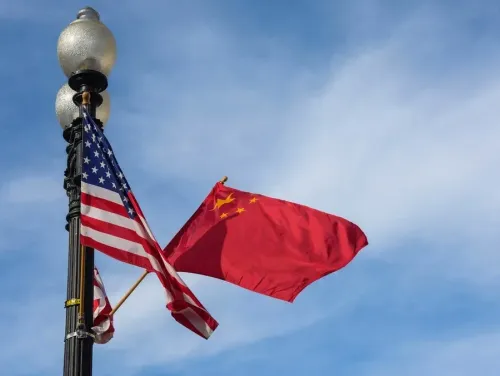
The push came as President Trump met President Xi Jinping at the White House , with trade and national security among the summit's key issues.
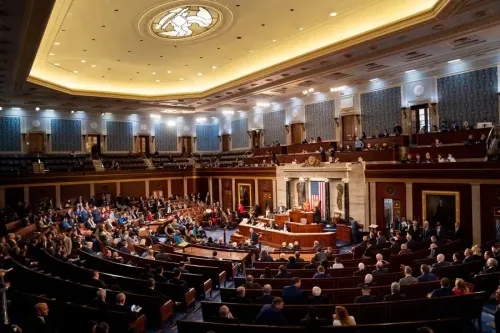
Two US senators took to the Senate floor on Thursday, 25 September 2026 to seek consideration of the Connected Vehicle Security Act of 2026, a bill that would permanently bar Chinese connected vehicles and key components from the American market — even as President Donald Trump held talks with Chinese President Xi Jinping just a few blocks away at the White House.
Key Provisions of the Bill
Republican Senator Bernie Moreno of Ohio and Democratic Senator Elissa Slotkin of Michigan jointly pushed for Senate action on legislation that would prohibit the importation, manufacture and sale of connected vehicles associated with China and other countries designated as foreign adversaries. The bill covers not just vehicles but also vehicle software, communications systems and certain hardware linked to companies based in or controlled by such countries.
The bill has already cleared the Senate Commerce Committee unanimously but has yet to receive final approval from the full Senate or the House of Representatives. Restrictions on covered software would apply to connected vehicles manufactured for model year 2027 or later, while hardware restrictions are slated to take effect in 2030. Hardware imported for repairs or warranty work on older vehicles would qualify for an exception.
Why National Security Is at the Centre
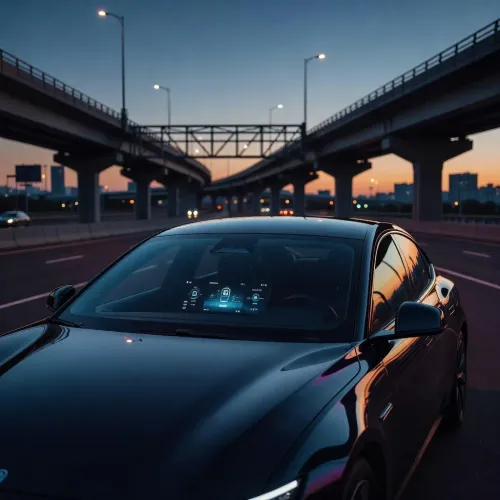
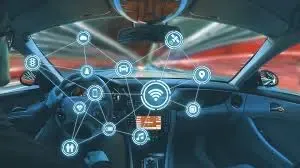
Supporters of the legislation argue that modern connected vehicles collect 'vast amounts of sensitive data, including geolocation, operational, and personal information' and are 'capable of being remotely accessed and controlled.' The bill's findings list surveillance, espionage, cyber intrusion and disruption of critical infrastructure among the potential risks linked to foreign control of vehicle systems.
Notably, the bill would codify restrictions in federal law, making them significantly harder for any future administration to reverse or waive without congressional scrutiny — a deliberate design aimed at providing regulatory certainty beyond the current executive-order framework.
Existing Measures and the Legislative Gap
The Trump administration already imposes a 100 per cent tariff on Chinese electric vehicles, and the Commerce Department has restricted Chinese vehicles containing certain connectivity software. Together, according to reports, those measures have largely kept Chinese passenger-vehicle brands out of the US market. However, executive actions can be reversed by subsequent administrations, which is precisely the gap the proposed legislation seeks to close.
The measure would establish a process allowing the Commerce Secretary to authorise otherwise restricted products after assessing their security risks, with Congress to be notified of any such decisions. Manufacturers and importers would be required to certify compliance, and violations could carry civil penalties of at least $1.5 million or five times the value of the transaction.
Trump's Stance and Industry Concerns
The legislative push carries an undercurrent of tension with Trump's own previously stated position. He has indicated that he could accept Chinese companies manufacturing vehicles inside the United States, a prospect that has raised alarm among lawmakers, labour organisations and domestic automobile manufacturers who worry about competition from state-supported Chinese firms.
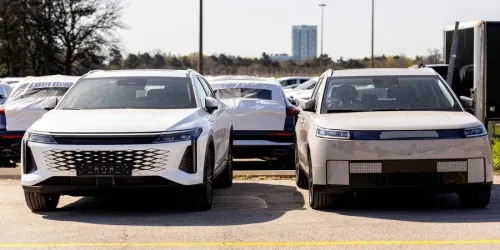
China has become the world's leading producer and exporter of electric vehicles, with its manufacturers expanding aggressively across Asia, Europe and other international markets, even as they remain largely excluded from the US market. The timing of Thursday's Senate floor push — coinciding with the Trump-Xi summit — underscores the political and geopolitical stakes surrounding trade, technology and national security.
What Comes Next
The bill still requires passage by the full Senate and the House before it can be signed into law. Testing and evaluation conducted by eligible US entities would be exempt under specified conditions, and a product would not be classified as foreign-controlled solely on account of the citizenship of workers employed by an otherwise eligible company. As the Trump-Xi summit continues and trade negotiations evolve, the bill's trajectory will be closely watched by the automotive, technology and national security communities.
Point of View
Unanimous committee approval signals that Chinese vehicle technology has become one of the rare issues that unites both parties on national security grounds. Yet the timing reveals a deeper tension: the senators were legislating against Chinese vehicle access on the same day Trump was signalling openness to Chinese automakers building cars on US soil, a position that cuts against the bill's very logic. If Trump signs legislation that contradicts his own negotiating posture with Beijing, the contradictions in US trade strategy will be impossible to paper over. The real question is whether this bill passes before any US-China deal is struck that could render its provisions politically inconvenient.
NationPress
25 Sept 2026
Frequently Asked Questions
What is the Connected Vehicle Security Act of 2026?
The Connected Vehicle Security Act of 2026 is a proposed US law that would permanently prohibit the importation, manufacture and sale of connected vehicles, software, communications systems and certain hardware linked to China and other foreign adversary nations. It has passed the Senate Commerce Committee unanimously but still requires approval from the full Senate and House.
Why are US senators pushing a ban on Chinese connected vehicles?
Supporters argue that Chinese connected vehicles pose national security risks because they collect large amounts of geolocation, operational and personal data and are capable of being remotely accessed or controlled. The bill's findings specifically cite surveillance, espionage, cyber intrusion and critical infrastructure disruption as potential threats.
When would the Chinese vehicle ban take effect if the bill passes?
Software restrictions would apply to connected vehicles manufactured for model year 2027 or later. Hardware restrictions would take effect in 2030, with an exception for hardware imported for repairs or warranty work on older vehicles.
What penalties does the bill propose for violations?
Companies found in violation could face civil penalties of at least $1.5 million or five times the value of the transaction, whichever is greater. Manufacturers and importers would also be required to certify compliance with the law.
How does this bill relate to existing US restrictions on Chinese vehicles?
The Trump administration already imposes a 100 per cent tariff on Chinese electric vehicles and the Commerce Department has restricted vehicles with certain Chinese connectivity software. The proposed legislation goes further by enshrining these restrictions in federal law, making them harder for any future administration to reverse without congressional oversight.