US condemns China's 'dangerous' actions at Second Thomas Shoal
Synopsis
Washington's condemnation of the 20 July 2026 Second Thomas Shoal incident is more than a diplomatic rebuke — it is a deliberate invocation of the 2016 arbitral ruling, signalling that the US views Chinese actions as a sustained legal and strategic challenge, not a one-off provocation. With the Philippines under mounting pressure, the Indo-Pacific's most volatile flashpoint is heating up again.
Key Takeaways
The US formally condemned China's actions against Philippine navy personnel at Second Thomas Shoal on 20 July 2026 .
State Department spokesperson Tommy Pigott called China's conduct a 'troubling pattern of provocation' undermining regional peace.
Washington reaffirmed the July 2016 Arbitral Tribunal ruling , declaring it 'final and legally binding' on both China and the Philippines.
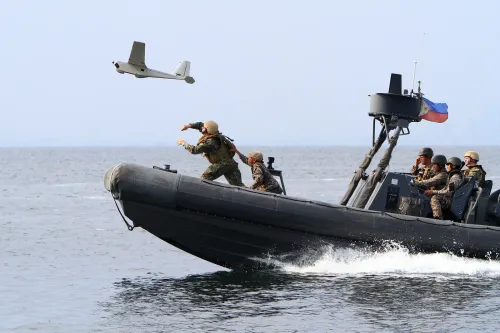
The US praised Philippine navy personnel for their 'professionalism and restraint' during the incident.
The Second Thomas Shoal has been a recurring flashpoint, with Chinese vessels repeatedly intercepting Philippine resupply missions to the BRP Sierra Madre .
India's trade exposure through Indo-Pacific sea lanes makes South China Sea stability a direct strategic concern for New Delhi .
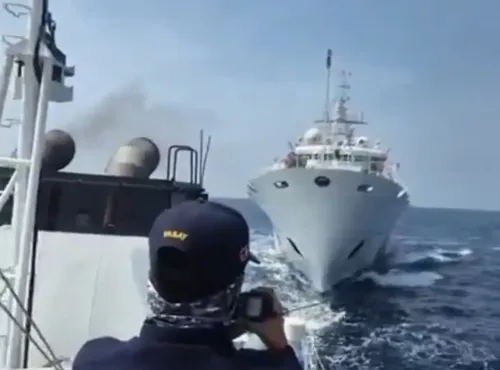
The United States on 21 July 2026 formally condemned what it called China's 'dangerous and aggressive actions' against Philippine navy personnel at the Second Thomas Shoal in the South China Sea, calling on Beijing to immediately halt what Washington described as destabilising conduct in one of Asia's most contested waterways.
What Washington Said
State Department spokesperson Tommy Pigott issued a formal statement condemning the 20 July 2026 incident and reiterating the US commitment to its treaty ally. 'China's troubling pattern of provocation against lawful Philippine maritime operations undermines regional peace and stability and directly contradicts China's repeated commitments to resolve disputes peacefully,' Pigott said.
Washington also commended the response of Filipino forces. 'We stand with our Ally, the Philippines, and commend the professionalism and restraint shown by Philippine navy personnel in this incident,' Pigott added.
The 2016 Arbitral Ruling Invoked
The US used the statement to reaffirm the July 2016 Arbitral Tribunal ruling, which determined that China's expansive maritime claims in the South China Sea have no basis in international law. Washington underscored that the decision is 'final and legally binding on both China and the Philippines' — a position Beijing has consistently rejected.
Notably, the invocation of the arbitral ruling signals that the US views the latest incident not as an isolated flare-up but as part of a sustained Chinese effort to contest Philippine sovereign rights in the disputed waters.
A Pattern of Confrontation
The Second Thomas Shoal — known in the Philippines as Ayungin Shoal — has been a persistent flashpoint. The Philippines maintains a small military presence aboard the grounded vessel BRP Sierra Madre at the shoal, and Chinese coast guard and maritime militia vessels have repeatedly intercepted Philippine resupply missions. This is the latest in a series of confrontations that have grown in frequency and intensity over the past two years.
Washington said it would continue working with regional allies and partners to uphold security and stability across the Indo-Pacific. 'We will continue to stand with our Allies and partners in defense of a free and open Indo-Pacific,' Pigott said.
What This Means for India
For India, developments at the Second Thomas Shoal carry direct strategic weight. A significant share of India's trade transits through Indo-Pacific sea lanes, and New Delhi has consistently called for freedom of navigation, unimpeded commerce, and the peaceful settlement of maritime disputes in accordance with international law. Any sustained escalation in the South China Sea risks disrupting trade flows and complicating India's own maritime security calculus in the broader Indo-Pacific theatre.
Point of View
Invokes a binding legal instrument, and praises Philippine restraint, all of which are deliberate signals rather than boilerplate diplomacy. What mainstream coverage underplays is the legal escalation: by re-anchoring the condemnation to the 2016 arbitral ruling, Washington is building a cumulative record that could support future multilateral action. Beijing's consistent rejection of that ruling means the two sides are not just clashing physically at the shoal — they are operating under incompatible legal frameworks, and that gap is widening. For India, the subtext is equally important: New Delhi's own South China Sea position aligns with Washington's on freedom of navigation, but India has been cautious about joining explicit condemnations of China. Each escalation at the shoal tests that studied ambiguity.
NationPress
20 Oct 2026
Frequently Asked Questions
What happened at Second Thomas Shoal on 20 July 2026?
Chinese forces conducted what the United States described as 'dangerous and aggressive actions' against Philippine navy personnel at the Second Thomas Shoal in the South China Sea on 20 July 2026. The US State Department did not disclose specific operational details but condemned the incident as part of a broader pattern of Chinese provocation.
What is the Second Thomas Shoal and why is it disputed?
The Second Thomas Shoal, known in the Philippines as Ayungin Shoal, is a contested maritime feature in the South China Sea where the Philippines maintains a military presence aboard the deliberately grounded vessel BRP Sierra Madre. Both China and the Philippines claim the shoal, and Chinese vessels have repeatedly intercepted Philippine resupply missions there.
What is the 2016 Arbitral Tribunal ruling that the US reaffirmed?
The July 2016 ruling by an international arbitral tribunal found that China's expansive maritime claims in the South China Sea — based on the so-called 'nine-dash line' — have no basis in international law. The US has described the ruling as final and legally binding on both China and the Philippines; Beijing has rejected it.
Why does the South China Sea dispute matter to India?
A significant portion of India's trade passes through Indo-Pacific sea lanes, making freedom of navigation in the South China Sea a direct economic and strategic concern for New Delhi. India has consistently called for peaceful resolution of maritime disputes in accordance with international law, aligning broadly with the US position on the 2016 ruling.
How has the US responded to the latest incident?
The US State Department issued a formal condemnation, called on China to immediately cease destabilising conduct, reaffirmed the 2016 arbitral ruling, and pledged continued support for a free and open Indo-Pacific alongside regional allies and partners.