South China Sea rule of law under threat, says Philippines envoy in New Delhi
Synopsis
Philippines Ambassador Josel F Ignacio, speaking in New Delhi, declared that the rule of law is under 'great challenge' in the South China Sea — a pointed signal that Manila is actively internationalising its maritime dispute with China and seeking diplomatic backing from partners like India, even as fresh clashes near the Second Thomas Shoal escalate tensions.
Key Takeaways
Philippines Ambassador Josel F Ignacio said the rule of law is under 'great challenge' in the South China Sea , speaking in New Delhi on 22 July .
He cited the 2016 Arbitral Tribunal ruling as affirming the Philippines' maritime entitlements under UNCLOS .
Ignacio argued China's nine or ten-dash line historic rights claims were extinguished by UNCLOS, to which China is itself a party.
The Armed Forces of the Philippines (AFP) dismissed China Coast Guard allegations of deliberate ramming near Second Thomas Shoal as 'false and misleading.' The Philippines reiterated its commitment to peaceful, rule-of-law-based dispute resolution while building international diplomatic support.
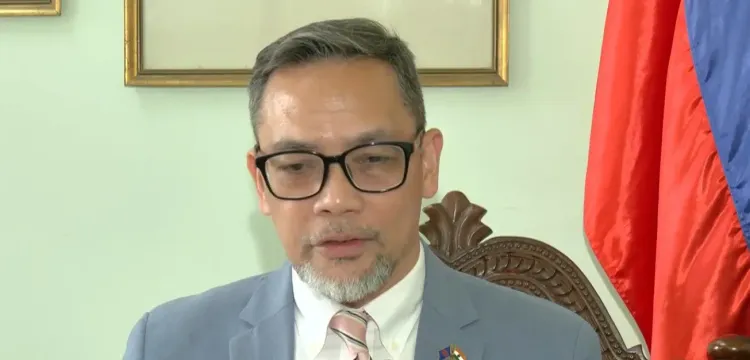
Philippines Ambassador to India, Josel F Ignacio, said on Wednesday, 22 July that the rule of law is under 'great challenge' in the South China Sea, warning that Manila's legitimate maritime entitlements face daily assault despite a binding international tribunal ruling. Speaking in New Delhi, Ignacio reaffirmed the Philippines' commitment to a peaceful, law-based resolution of the dispute.
The Core Grievance
'The South China Sea has been a challenging area for several years,' Ignacio said. 'The aspiration for us as the Philippines and for ASEAN and I'm sure for many other countries is that oceans — including the South China Sea — should be areas where prosperity and peace and security should reign. But the realities right now is that unfortunately in the South China Sea, rule of law is under great challenge.'
The ambassador pointed specifically to the United Nations Convention on the Law of the Sea (UNCLOS), noting it is unambiguous about the maritime entitlements of coastal states. He stressed that the Philippines' rights were further confirmed by the Arbitral Tribunal ruling of 2016, which Manila views as legally binding. 'We continue to be challenged illegally and without legitimate basis in those waters where our legitimate maritime entitlements and our sovereignty is day to day under assault,' he said.
China's Nine-Dash Line and UNCLOS
Ignacio directly challenged China's assertion of historic rights through the so-called nine or ten-dash line, arguing those claims were extinguished by UNCLOS — a treaty to which China itself is a signatory. 'What states have now are entitlements defined by UNCLOS — a 12 nautical mile territorial sea, a 12 nautical mile contiguous zone, a 200 nautical mile Exclusive Economic Zone (EEZ), and so on,' he explained. 'In the Philippines' case, that has been affirmed by the Arbitral Tribunal.'
He added that the specific incidents recently in the news concern a 'low tide elevation' — a geographic feature that, under international law and UNCLOS, is not subject to any sovereignty claim. 'A foreign coast guard has no business being there because that's entirely well within Philippine EEZ,' he said.
Second Thomas Shoal Incident
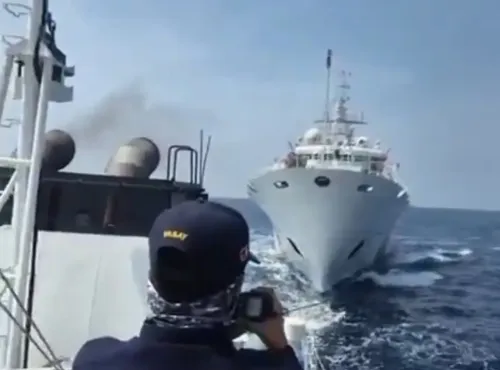
Ignacio's remarks came a day after the Armed Forces of the Philippines (AFP) dismissed allegations by the China Coast Guard (CCG) that Philippine boats had deliberately rammed one of its patrol vessels near the Second Thomas Shoal. The AFP described those claims as 'false and misleading.'
The AFP also raised concerns over a China Coast Guard Rigid Hull Inflatable Boat (RHIB) operating in close proximity to the BRP Sierra Madre, calling its presence 'an unlawful intrusion into an area where the Philippines exercises sovereign rights under international law.'
Manila's Diplomatic Stance
Despite the escalating incidents, Ignacio underlined that the Philippines remains committed to dialogue and peaceful resolution. 'The Philippines, we are resolved to seek a peaceful dispute resolution based on the rule of law, and that has always been our priority,' he said. This position aligns broadly with ASEAN's longstanding preference for a rules-based maritime order, even as individual member states vary in how directly they confront Beijing. The ambassador's remarks in New Delhi signal that Manila is actively internationalising the dispute — including by engaging key partners such as India — to build broader diplomatic support for its legal position.
Point of View
Courting partners like India at a time when ASEAN itself remains divided on how hard to push back against Beijing. The 2016 Arbitral Tribunal ruling is legally unambiguous, yet China has ignored it for nearly a decade with no meaningful multilateral consequence. The Second Thomas Shoal incidents reveal a pattern: incremental Chinese pressure designed to test Manila's resolve and erode its physical presence without triggering a formal military response. India, itself a party to UNCLOS with its own maritime boundary sensitivities, has a strategic interest in the outcome — which is precisely why the Philippines is making this case in New Delhi.
NationPress
21 Oct 2026
Frequently Asked Questions
What did the Philippines Ambassador say about the South China Sea?
Ambassador Josel F Ignacio said the rule of law is under 'great challenge' in the South China Sea, with the Philippines facing daily violations of its maritime entitlements despite a binding 2016 Arbitral Tribunal ruling. He reaffirmed Manila's commitment to a peaceful, UNCLOS-based resolution.
What is the 2016 Arbitral Tribunal ruling on the South China Sea?
The 2016 Arbitral Tribunal ruled in favour of the Philippines, affirming its maritime entitlements under UNCLOS and rejecting China's broad historic rights claims based on the nine or ten-dash line. China has not recognised or complied with the ruling.
What happened near the Second Thomas Shoal recently?
The China Coast Guard alleged that Philippine boats deliberately rammed one of its patrol vessels near the Second Thomas Shoal. The Armed Forces of the Philippines dismissed these claims as 'false and misleading' and called the presence of a Chinese coast guard vessel near the BRP Sierra Madre an unlawful intrusion.
Why does China's nine-dash line claim matter?
China's nine or ten-dash line asserts historic rights over most of the South China Sea, overlapping with the EEZs of several countries including the Philippines. Ambassador Ignacio argued these historic rights were legally extinguished when UNCLOS came into force — a treaty China itself has signed.
Why is the Philippines raising this issue in New Delhi?
Manila appears to be building broader international diplomatic support for its legal position in the South China Sea, engaging key partners like India. India is also a coastal state with UNCLOS rights and a strategic interest in freedom of navigation in regional waters.