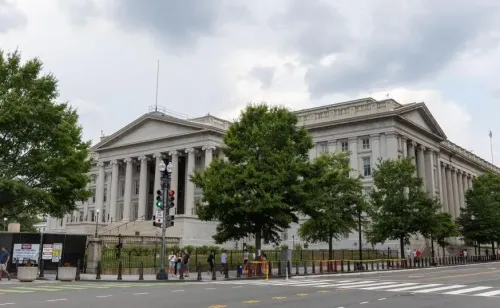
US sanctions 4 people, 41 firms in Cambodia Prince Group crackdown
Synopsis
The US Treasury has now sanctioned the Prince Holding Group network three times in roughly 13 months — yet the group kept operating, forcing Washington to target the offshore corporate plumbing that sustained it. The latest round exposes how layered shell structures and financial facilitators can outlast individual sanctions, and raises hard questions about whether bilateral pressure on Cambodia alone is enough to dismantle billion-dollar cyber-scam infrastructure.
Key Takeaways
The US Treasury sanctioned 4 people and 41 companies on 6 November 2026 for enabling Cambodia's Prince Holding Group network.
This is the third round of sanctions against the group, following actions in October 2025 and June 2026 .
Treasury Secretary Scott Bessent said cyber scam syndicates 'continue to steal billions of dollars from American victims.' Malaysian national Chui Kok Wa was separately sanctioned for running a Madagascar-based scam network that defrauded Americans of more than $400,000 .
Chui also faces a US Justice Department wire fraud conspiracy charge filed on 27 October , linked to an alleged NFT investment fraud scheme.
Prince Holding Group and chairman Chen Zhi have previously rejected the allegations against them.
The United States Treasury Department on 6 November 2026 sanctioned four individuals and 41 companies linked to Cambodia's Prince Holding Group, targeting an offshore corporate network it accused of helping alleged cybercrime operators conceal assets and circumvent earlier restrictions. The action marks the third successive round of sanctions against the Prince Group network, following designations in October 2025 and June 2026.
What the Sanctions Target
According to the Treasury Department, the latest round focuses on corporate structures and financial facilitators that kept the Prince Group's operations running after prior restrictions were imposed. The designated entities and individuals allegedly helped conceal company ownership, manage offshore businesses, and transfer property on behalf of previously sanctioned executives.
Treasury alleges that Prince Group-linked operations generated billions of dollars through cryptocurrency investment fraud, romance scams, and other online schemes. Some operations, the department added, reportedly relied on trafficked or coerced workers held in Southeast Asian scam compounds — a detail that underscores the human cost of the network's alleged activities.
What Treasury Secretary Bessent Said
'Cyber scam syndicates continue to steal billions of dollars from American victims,' said Treasury Secretary Scott Bessent, framing the designations as part of a sustained campaign to disrupt offshore enablers of digital financial crime. The statement signals Washington's intent to pursue not just operators but the broader corporate infrastructure that sustains them.
Prince Holding Group has previously rejected allegations against the company and its chairman, Chen Zhi.
The Madagascar Network and Chui Kok Wa
In a separate but related designation, the Treasury sanctioned Malaysian national Chui Kok Wa, accusing him of managing a Madagascar-based scam network that defrauded American victims of more than $400,000. Treasury clarified that Chui is not identified as part of the Prince Group network.
Chui already faces a distinct US criminal case. On 27 October, the Justice Department announced a wire fraud conspiracy charge against him, describing him as the alleged leader of a fraudulent investment scheme involving non-fungible tokens (NFTs). Evidence reportedly recovered from his phones included employment contracts, work schedules, and bonus arrangements tied to stolen money, as well as instructions on how to manipulate victims' emotions and cryptocurrency wallet addresses. Prosecutors noted that overnight shifts in Madagascar were timed to align with daytime and evening hours in the United States.
How OFAC Blocking Works
Under OFAC (Office of Foreign Assets Control) rules, a blocking action freezes covered property within the United States or held by US persons. It does not transfer ownership to the government — the owner retains title but cannot freely transfer, withdraw, or otherwise deal with the property without prior authorisation.
Broader Context
The Prince Group crackdown is part of a wider US effort to dismantle Southeast Asian cyber-scam infrastructure, which has drawn scrutiny from governments across the region and multilateral bodies. This is the third escalation in roughly 13 months, suggesting that prior sanctions had limited deterrent effect on the network's operational continuity. Whether the latest round succeeds where earlier actions fell short will depend on how effectively partner jurisdictions cooperate on asset freezes and corporate transparency.
Point of View
But the Prince Group's alleged operations span Cambodia, Madagascar, and beyond, where OFAC designations have limited practical bite without host-country enforcement. The human trafficking dimension — coerced workers in scam compounds — also demands a response beyond financial sanctions, one that regional bodies and ASEAN governments have been slow to deliver. The Chui Kok Wa case, meanwhile, illustrates the growing convergence of crypto fraud and organised scam labour, a threat vector that existing regulatory frameworks were not built to handle at scale.
NationPress
6 Nov 2026
Frequently Asked Questions
Why did the US sanction companies linked to Cambodia's Prince Holding Group?
The US Treasury sanctioned 41 companies and four individuals because they allegedly helped Prince Group-linked cybercrime operators conceal assets and evade restrictions imposed in October 2025 and June 2026. Treasury says the network generated billions through cryptocurrency fraud, romance scams, and other online schemes, some of which relied on trafficked workers in Southeast Asian compounds.
Who is Chui Kok Wa and why was he sanctioned?
Chui Kok Wa is a Malaysian national separately sanctioned by the US Treasury for allegedly managing a Madagascar-based scam network that defrauded American victims of more than $400,000. He also faces a US Justice Department wire fraud conspiracy charge filed on 27 October, related to an alleged fraudulent NFT investment scheme.
What does an OFAC blocking sanction actually do?
An OFAC blocking sanction freezes any property of the designated person or entity that is located in the United States or held by US persons. It does not transfer ownership to the government — the owner keeps title but cannot transfer, withdraw, or deal with the frozen property without authorisation from OFAC.
Has Prince Holding Group responded to the allegations?
Yes. Prince Holding Group has previously rejected the allegations against the company and its chairman, Chen Zhi. The group has not, according to available information, issued a public response specifically to the November 2026 sanctions round.
How many times has the US sanctioned the Prince Group network?
This is the third round of US sanctions against the Prince Group network, following earlier actions in October 2025 and June 2026. The repeated designations suggest that prior rounds did not fully disrupt the group's operational capacity.