US Treasury to roll out new Iran bank sanctions, warns IRGC-linked entities
Synopsis
US Treasury Secretary Scott Bessent announced back-to-back Iran bank sanctions are imminent — with IRGC-linked entities, a Dubai-based Egyptian bank branch that routed USD 1.8 billion to Tehran, and personal accounts in the British Virgin Islands all in the crosshairs. With China privately aligned and the EU on board, Washington is mounting its most coordinated financial squeeze on Iran in years.
Key Takeaways
US Treasury Secretary Scott Bessent announced new Iran bank sanctions on 1 September , with at least two waves expected within weeks.
A branch of an Egyptian bank in Dubai was shut down after allegedly channelling more than USD 1.8 billion to the Iranian government.
The Treasury is targeting IRGC -linked accounts in the British Virgin Islands and high-value properties worldwide for freezing.
Sanctions scope covers digital assets , aviation , and maritime networks , using five new Treasury authorities.
The EU , ECB , Britain , and the UAE have expressed support; China has held private discussions with Washington on Iran.
The IRGC has been designated a foreign terrorist organisation by the US since 2019 .
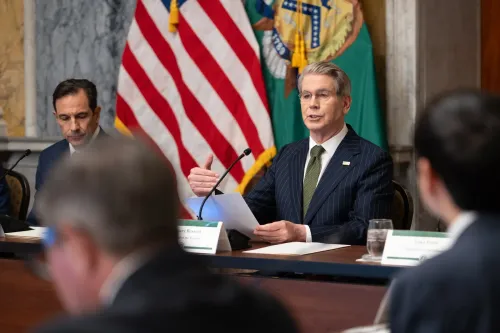
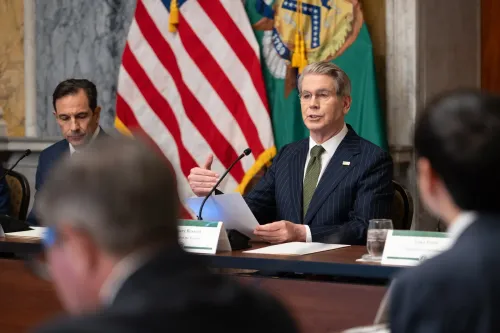
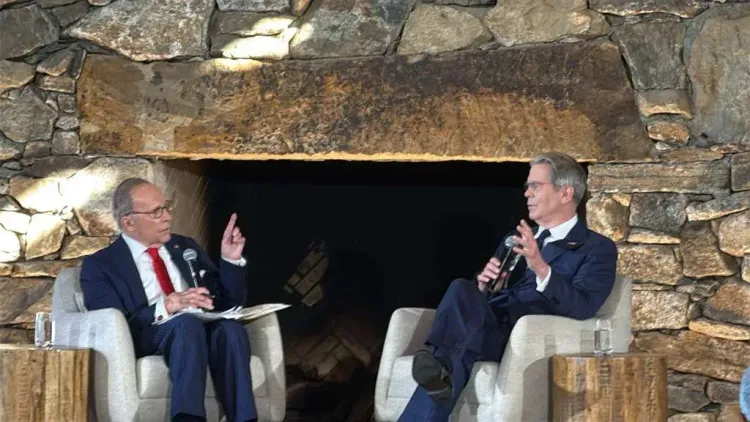
US Treasury Secretary Scott Bessent announced on 1 September that Washington is preparing a fresh wave of sanctions targeting banks that facilitate transactions for Iran, warning that any entity conducting business with the Islamic Revolutionary Guard Corps (IRGC) risks being cut off from the American financial system. The remarks were made at a fireside conversation with Larry Kudlow in Asheville, North Carolina, on the sidelines of the G20 finance ministers' summit.
Sanctions Timeline and Scope
'We're probably going to announce a bank sanction this week and we are going to have another one the week after,' Bessent said, signalling an accelerated enforcement calendar. The Treasury Department is broadening its pressure campaign beyond conventional banking to cover digital assets, aviation, and maritime networks. 'The Treasury now has five new authorities and it is across digital assets. It is across aviation. It is across maritime. And we are flexing every day,' he added.
Egyptian Bank Branch Case Cited as Model
Bessent cited a specific enforcement action involving a branch of an Egyptian bank in Dubai that he said had channelled more than USD 1.8 billion to the Iranian government. Washington invoked authority under the Patriot Act to shut down the Dubai operation while leaving the bank's Egyptian parent entity untouched — a targeted approach the Treasury appears to be replicating across the region. The action illustrates how the US is attempting to isolate Iranian financial flows without triggering broader diplomatic fallout with third-country governments.
IRGC Assets and Personal Accounts in Crosshairs
In a direct warning to Iranian officials, Bessent said the Treasury had identified accounts held through trust companies in the British Virgin Islands, as well as high-value properties in multiple countries. 'We are going to freeze those. We are going to, with our partners, we are going to close all that down,' he said. Enforcement, he warned, could extend to banks, airline leasing companies, and any entity that transacts with the IRGC, which the United States has designated a foreign terrorist organisation since 2019.
International Support and China Engagement
Bessent said the administration had secured backing from the European Union, the European Central Bank, Britain, and the United Arab Emirates (UAE), and vowed 'zero tolerance' towards sanctions evasion efforts. Notably, he disclosed that Washington had held private discussions with China on Iran, despite broader geopolitical tensions between the two powers. 'We have more in common with the Chinese on Iran than we disagree with,' he said, adding that Beijing agreed Iran must not acquire a nuclear weapon and shared an interest in freedom of navigation — a pressure point given Iran's repeated accusations of threatening commercial shipping lanes.
US Economy and Broader Context
On the domestic front, Bessent said the US economy was re-accelerating, crediting regulatory, tax, and energy policies under President Donald Trump with boosting investment and employment. He noted that global finance ministers gathered at the G20 acknowledged growth had outperformed expectations despite the ongoing Iran conflict. Washington has maintained a sustained sanctions architecture against Tehran for decades, targeting the IRGC, energy exports, shipping networks, and intermediaries accused of facilitating evasion. Secondary sanctions — which can penalise non-US institutions for certain dealings with sanctioned Iranian entities — remain a central enforcement tool.
The coming weeks are expected to bring further designations, with the Treasury's expanded authorities signalling a more aggressive phase of financial pressure on Tehran.
Point of View
A refinement from earlier blunt-instrument approaches. More consequential is the China dimension: if Beijing is privately aligned on Iran's nuclear status and freedom of navigation, Washington has more leverage than the headline US-China rivalry suggests. The real test is enforcement consistency — secondary sanctions have historically been applied unevenly, giving mid-tier banks in third countries room to manoeuvre. Whether the 'zero tolerance' framing holds under allied pressure will define how much bite this campaign actually has.
NationPress
1 Sept 2026
Frequently Asked Questions
What new Iran sanctions did the US Treasury announce?
US Treasury Secretary Scott Bessent said on 1 September that Washington plans to announce at least two rounds of bank sanctions targeting entities that facilitate transactions for Iran and the IRGC, with action expected within consecutive weeks. The measures extend across digital assets, aviation, and maritime networks using five new Treasury authorities.
Which bank was cited as an example of Iran sanctions enforcement?
Bessent cited a branch of an Egyptian bank in Dubai that allegedly channelled more than USD 1.8 billion to the Iranian government. The US used authority under the Patriot Act to shut down the Dubai operation while leaving the bank's Egyptian parent entity unaffected.
What assets of Iranian officials is the US targeting?
The Treasury has identified accounts held through trust companies in the British Virgin Islands and expensive properties in multiple countries linked to Iranian officials. Bessent said Washington and its partners intend to freeze and shut down these assets.
Which countries are supporting the US Iran sanctions campaign?
Bessent said the European Union, the European Central Bank, Britain, and the UAE have expressed support. He also disclosed that the US has held private discussions with China on Iran, with Beijing reportedly agreeing that Iran cannot be allowed to acquire a nuclear weapon.
Why is the IRGC central to US Iran sanctions policy?
The Islamic Revolutionary Guard Corps has been designated a foreign terrorist organisation by the United States since 2019. Secondary sanctions allow Washington to penalise non-US institutions for transactions with sanctioned IRGC-linked entities, making the IRGC designation a broad enforcement lever across the global financial system.