MoS Sanjay Seth calls for civil-military fusion to win future wars
Synopsis
At CENJOWS's Trident Lecture, MoS Defence Sanjay Seth drew a direct line between semiconductor sovereignty, civil-military integration, and India's readiness for next-generation warfare — with Operation Sindoor cited as a live case study in why coordinated execution is no longer optional.
Key Takeaways
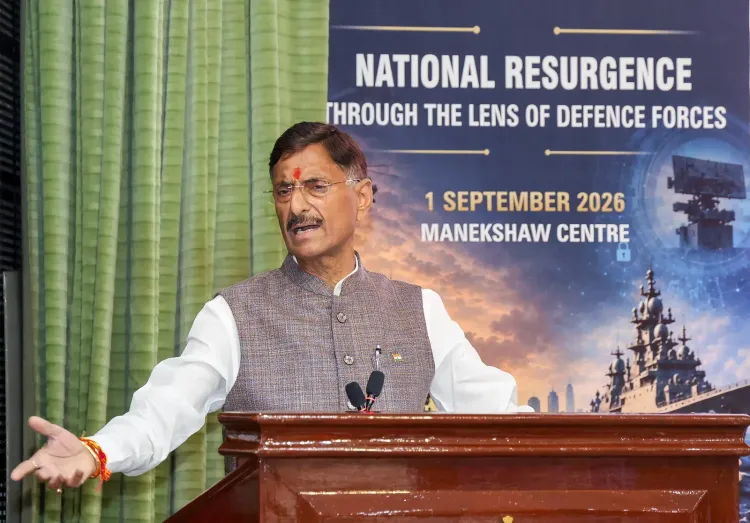
MoS Defence Sanjay Seth addressed the Second Annual Trident Lecture at Manekshaw Centre, New Delhi on 1 September .
Seth stressed the need for national capability in semiconductors , electronics , and advanced technologies to prepare for future warfare.
India's industrial vision has shifted from 'Make in India' to 'Make for the World' , with MSMEs playing a growing role.
Air Marshal Tejinder Singh cited Operation Sindoor as evidence of the need for coordinated, integrated military planning.
Senior leaders including Lt Gen Sandeep Jain and Lt Gen Raj Shukla (Retd) discussed multi-domain warfare and civil-military fusion.
Seth launched the book 'An Era in Olive Green: Gen Anil Chauhan, Duty, Leadership and Legacy' at the event.
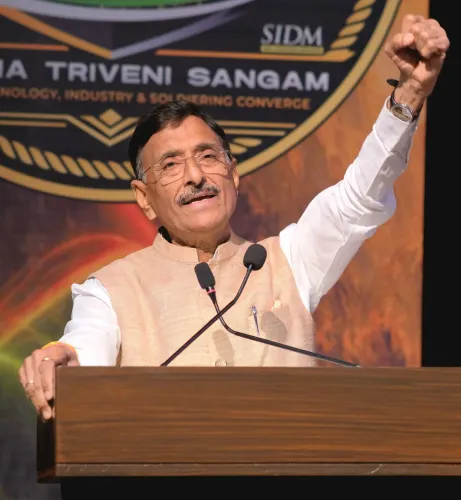
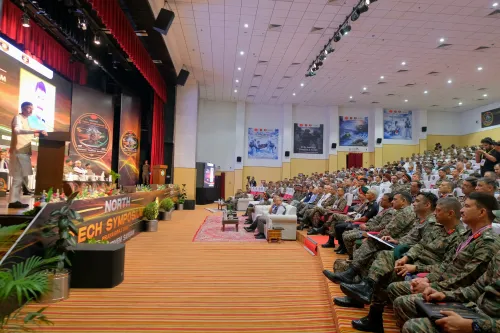
Minister of State for Defence Sanjay Seth on Tuesday, 1 September called for deeper jointness, civil-military integration, and a self-reliant defence ecosystem as India navigates an increasingly complex global security environment. Speaking at the Second Annual Trident Lecture organised by the Centre for Joint Warfare Studies (CENJOWS) at Manekshaw Centre, New Delhi, Seth delivered a Special Address on the theme 'Leveraging the Potential of Next Generation for Nation Building'.
Key Developments at the Trident Lecture
Seth underscored that under the guidance of Prime Minister Narendra Modi and Defence Minister Rajnath Singh, India is steadily reinforcing its defence capabilities in pursuit of an Aatmanirbhar and developed nation. He identified the commitment of the armed forces, adoption of modern technology, and enhanced inter-service coordination as the three pillars of a secure India.
The minister also launched the book 'An Era in Olive Green: Gen Anil Chauhan, Duty, Leadership and Legacy' during the event.
From 'Make in India' to 'Make for the World'
Seth highlighted India's demographic dividend, noting that the country's youth are contributing across defence, industry, startups, space, agriculture, technology, and sports. He argued that India's industrial ambition has evolved from 'Make in India' to 'Make for the World' — a shift from import dependence toward the manufacture and export of globally competitive products. He stressed the urgent need to build national capabilities in semiconductors, electronics, and advanced technologies to prepare for the wars of the future, applauding the growing role of Indian MSMEs and indigenous industries in this transition.
What Senior Military Leaders Said
Air Marshal Tejinder Singh, Chief of Integrated Staff to Chairman (CISC), broadened the definition of national security to encompass economic security, technological competition, maritime resilience, critical infrastructure, supply chains, and information integrity — beyond traditional territorial defence. Referring to recent operational experience, including Operation Sindoor, he underlined the importance of coordinated planning and integrated execution.
Vice Chief of the Army Staff Lt Gen Sandeep Jain and retired Lt Gen Raj Shukla deliberated on civil-military fusion, multi-domain warfare, emerging technologies, and India's preparedness for future security challenges. Their discussions reinforced the case for a forward-looking, innovation-driven approach to national security.
The Road to Viksit Bharat @2047
The overarching thread running through the Trident Lecture was India's long-horizon security planning tied to the Viksit Bharat @2047 vision. Speakers consistently linked defence modernisation with economic self-reliance, arguing that technological sovereignty — particularly in semiconductors and electronics — is inseparable from military preparedness. This comes amid an accelerating global arms-technology race and lessons drawn from recent conflicts worldwide, including India's own operational deployments.
Point of View
But the harder question is whether India's industrial ecosystem can match the rhetoric on 'Make for the World' in defence-critical components. The shift in framing — from jointness as a structural goal to jointness as an operational necessity — reflects a maturation in how India's security establishment thinks about multi-domain conflict. Whether budget allocations and procurement timelines follow the lecture-hall ambition is the test that will define the decade.
NationPress
2 Sept 2026
Frequently Asked Questions
What was the CENJOWS Trident Lecture about?
The Second Annual Trident Lecture, organised by the Centre for Joint Warfare Studies (CENJOWS) at Manekshaw Centre in New Delhi on 1 September, focused on the theme 'Leveraging the Potential of Next Generation for Nation Building.' It brought together senior military leaders and policymakers to discuss civil-military fusion, multi-domain warfare, and India's defence preparedness for future security challenges.
What did MoS Defence Sanjay Seth say about future warfare?
Seth called for strengthening India's capabilities in semiconductors, electronics, and advanced technologies as essential to preparing for future wars. He also stressed the importance of jointness among the three armed services, civil-military integration, and self-reliance in defence manufacturing.
What is the significance of Operation Sindoor being cited at the lecture?
Air Marshal Tejinder Singh referenced Operation Sindoor to illustrate the real-world importance of coordinated planning and integrated execution among India's defence forces. The citation suggests the military is drawing active operational lessons from recent deployments to shape future doctrine.
How does the 'Make for the World' vision connect to defence?
Seth described India's evolution from 'Make in India' to 'Make for the World' as a shift from import dependence to exporting globally competitive defence products and technologies. He highlighted the role of MSMEs and indigenous industries in driving this transition, particularly in semiconductors and electronics.
What book was launched at the Trident Lecture?
MoS Sanjay Seth launched 'An Era in Olive Green: Gen Anil Chauhan, Duty, Leadership and Legacy' at the event, a book chronicling the service and leadership of General Anil Chauhan.