US-Uzbekistan seal $12 bn deals as Rubio visits Samarkand
Synopsis
Secretary of State Marco Rubio's Samarkand visit unlocked $12 billion in US-Uzbekistan business agreements, brought Uzbekistan into the Artemis Accords as the 77th signatory, and opened doors to civil nuclear and critical minerals cooperation — a significant American push into a region where China and Russia have long held strategic dominance.
Key Takeaways
US-Uzbekistan business and investment agreements worth $12 billion were announced during Secretary of State Marco Rubio's visit to Samarkand on 19 October 2026 .
Uzbekistan formally joined the Artemis Accords , becoming the 77th country to sign the US-led space cooperation framework.
The two sides agreed to deepen collaboration on civil nuclear technology , critical minerals and space exploration .
Nearly 300 American businesses accompanied Rubio's delegation, reflecting strong commercial interest in Central Asia.
Rubio attended the C5+1 ministerial in Samarkand, meeting foreign ministers of all five Central Asian republics.
The $12 billion figure represents agreed commitments , not funds already disbursed; no project breakdown was released.
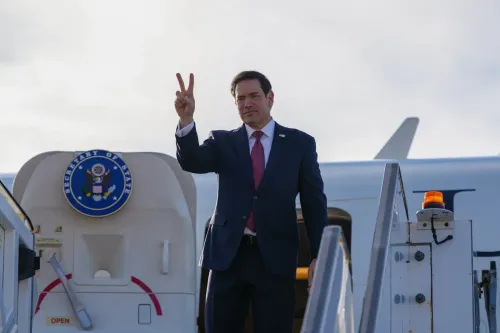
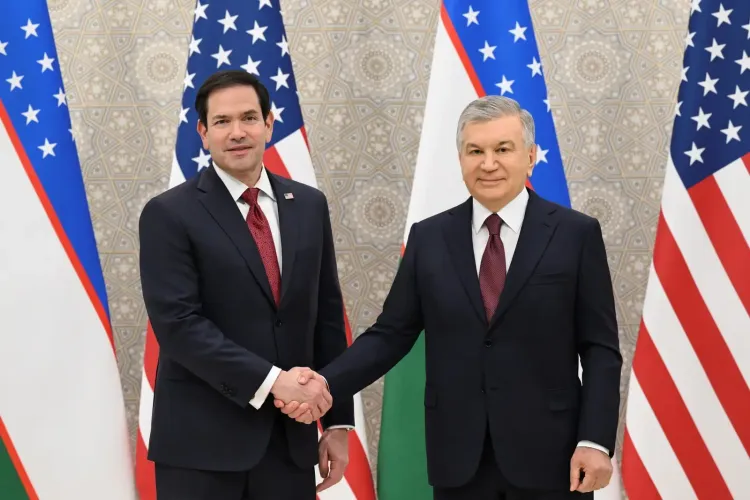
Secretary of State Marco Rubio's visit to Samarkand, Uzbekistan on Monday, 19 October 2026 produced business and investment agreements worth $12 billion, alongside expanded cooperation in civil nuclear technology, space exploration and regional security — signalling a meaningful deepening of the US-Uzbekistan strategic partnership.
Key Agreements and What They Cover
Uzbekistan President Shavkat Mirziyoyev announced the figure during his meeting with Rubio, attributing it to the US-Uzbekistan Business and Investment Council, a bilateral mechanism for promoting commercial projects. 'By following the current meeting of the council, there were agreements achieved worth of $12 billion U.S. dollars and for us, it's a great achievement,' Mirziyoyev said. Notably, the figure represents agreed commitments rather than funds already disbursed; no project-level breakdown or implementation schedule was immediately provided.
Artemis Accords and Space Cooperation
A headline moment of the visit was Uzbekistan formally joining the Artemis Accords, the US-led framework governing responsible and peaceful civil space activities. Uzbek Foreign Minister Bakhtiyor Saidov signed the agreement in Rubio's presence, making Uzbekistan the 77th country to endorse the accords. The framework establishes principles around transparency, cooperation and the sustainable use of space resources. Rubio separately welcomed Uzbekistan's interest in American civil nuclear technology and discussed emerging opportunities in the country's space sector.
Critical Minerals and Supply Chain Strategy
The two sides agreed to deepen cooperation on critical minerals — materials essential for advanced manufacturing, energy technologies, electronics and defence-related industries. The push reflects Washington's broader strategy of diversifying supply chains for strategically important resources, reducing dependence on Chinese-dominated extraction and processing networks. Central Asia's mineral wealth has drawn growing competition from major powers, and Uzbekistan's deposits make it a potentially significant partner in that contest.
The C5+1 Framework and Regional Dimension
Rubio travelled to Samarkand primarily for a C5+1 ministerial — a diplomatic platform established in 2015 that brings together the United States and the five Central Asian republics: Kazakhstan, Kyrgyzstan, Tajikistan, Turkmenistan and Uzbekistan. The talks covered trade, investment, regional connectivity and security cooperation. Rubio said Washington wanted to 'be a strong partner in Central Asia,' adding that nearly 300 American businesses were represented in the accompanying delegation. Mirziyoyev welcomed the expanded US engagement and expressed support for strengthening the sovereignty and independence of countries in the region.
Why Central Asia Matters Now
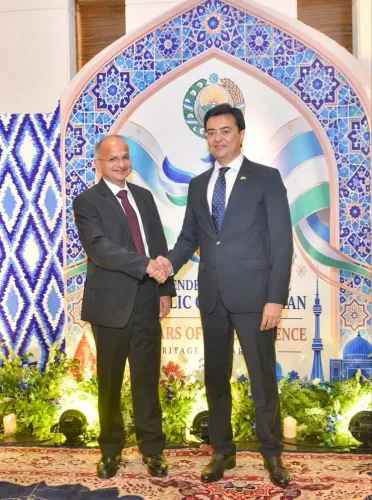
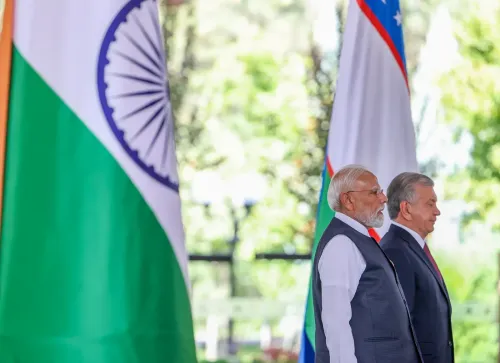
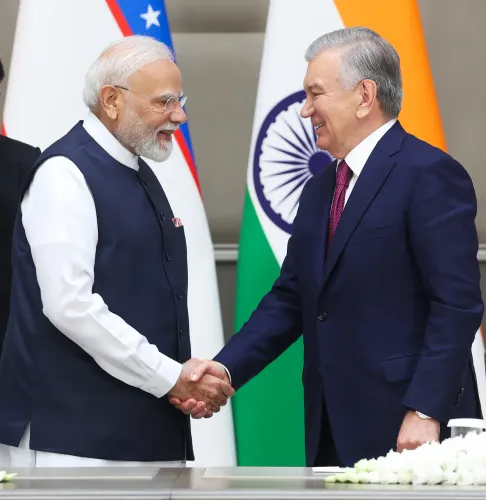
Central Asia sits at the intersection of Russia, China, South Asia and the Middle East, controlling critical transport corridors and holding substantial energy and mineral reserves. The region has attracted intensifying interest from multiple global powers. India, too, has pursued stronger connectivity and economic engagement here, making US inroads into the region a development with implications that extend well beyond the bilateral US-Uzbekistan relationship. This comes amid Washington's broader effort to expand its geopolitical footprint in spaces where Chinese and Russian influence has historically been dominant.
Point of View
But the absence of a project breakdown or disbursement timeline is a red flag — such figures from diplomatic visits frequently overstate near-term economic impact. More consequential may be Uzbekistan's entry into the Artemis Accords and the critical minerals dialogue, both of which fit a deliberate US strategy to build alternative supply chains and governance frameworks that reduce reliance on China. For India, the growing US footprint in Central Asia is a double-edged development: it crowds a connectivity space India has been trying to cultivate, but it also creates potential alignment on shared strategic interests in the region.
NationPress
20 Oct 2026
Frequently Asked Questions
What are the $12 billion US-Uzbekistan agreements about?
The $12 billion figure refers to business and investment agreements reached through the US-Uzbekistan Business and Investment Council during Secretary Rubio's visit to Samarkand on 19 October 2026. The figure represents agreed commitments rather than money already invested, and no project-level breakdown was provided.
What are the Artemis Accords and why did Uzbekistan join?
The Artemis Accords are a US-led international framework establishing principles for responsible, transparent and peaceful civil space activities, including the sustainable use of space resources. Uzbekistan became the 77th country to sign the accords during Rubio's visit, with Foreign Minister Bakhtiyor Saidov signing in the Secretary's presence.
What is the C5+1 diplomatic framework?
The C5+1 is a platform established in 2015 that brings together the United States and the five Central Asian republics — Kazakhstan, Kyrgyzstan, Tajikistan, Turkmenistan and Uzbekistan — to cooperate on regional security, economic development, energy and environmental challenges. Rubio's Samarkand visit centred on a C5+1 ministerial meeting.
Why are critical minerals central to the US-Uzbekistan talks?
Critical minerals — essential for advanced manufacturing, energy technologies, electronics and defence industries — have become a key arena of global strategic competition, with the US seeking to diversify supply chains away from China-dominated networks. Uzbekistan's mineral deposits make it a strategically attractive partner for Washington in this effort.
What does the US-Uzbekistan engagement mean for India?
India has been pursuing stronger connectivity and economic ties with Central Asia, making the deepening US presence in the region geopolitically significant. While it could crowd India's own engagement space, it may also create opportunities for alignment on shared strategic interests, particularly in regional security and supply chain resilience.