US watchdog faults Biden-era Labour Dept over confidential data safeguards
Synopsis
A US watchdog audit has revealed that the Biden-Harris Labour Department operated with no written policies, no centralised tracking, and no consistent approval process for agreements that allowed confidential investigative data to be shared with private lawyers — with records so scattered that auditors could not even obtain a full inventory. The department has now accepted all eight corrective recommendations, but the findings have deepened a partisan battle over how the agency was run.
Key Takeaways
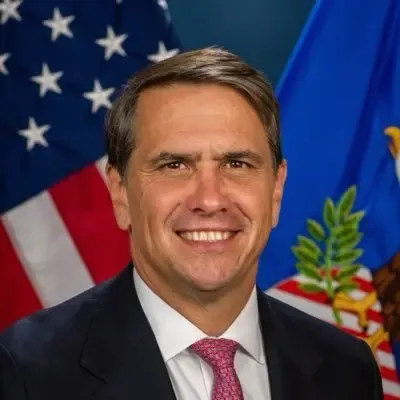
Inspector General Anthony D'Esposito testified before the House Education and Workforce Subcommittee on 22 July that the Biden-Harris Labour Department lacked department-wide controls over common interest agreements.
Auditors found no written policies, no consistent approval processes, and no centralised tracking of these agreements.
Officials initially identified 45 agreements ; manual searches uncovered additional ones — with records scattered across emails, shared drives, and case files.
In at least one instance, an individual reportedly executed an agreement without the authority to do so.
The Office of Inspector General's June report issued eight recommendations ; the Department of Labour has accepted all of them and implementation is under way.
Democrats, led by Ranking Member Mark Takano , argued the issue was overstated and that the report made primarily process-related recommendations already being addressed.
The Inspector General of the US Department of Labour, Anthony D'Esposito, on Wednesday, 22 July told lawmakers that the Biden-Harris administration failed to put in place basic safeguards governing the sharing of confidential investigative information with outside lawyers. Testifying before the House Education and Workforce Subcommittee on Workforce Protections in Washington, D'Esposito warned that weak oversight created the potential for sensitive government information to be exploited in private litigation.
What the Audit Found
The audit — initiated following concerns raised by Congress and Acting Labour Secretary Keith Sonderling — centred on so-called common interest agreements, which permit parties with shared legal interests to exchange confidential information under limited circumstances. D'Esposito told the subcommittee that the department had no department-wide controls governing such agreements during the Biden-Harris years.
'The Biden-Harris Department of Labour had no department-wide controls governing any of these common interest agreements,' D'Esposito said. 'There were no written policies, no consistent approval processes, no centralised tracking.'
Investigators found that some agreements were documented in writing while others, according to D'Esposito, 'amounted to a little more than a verbal handshake.' In at least one case, an individual reportedly executed a common interest agreement without the authority to do so.
Scale of the Accountability Gap
When auditors requested a complete inventory of the agreements, none existed. Records were scattered across emails, shared drives, and case files. Officials initially identified 45 agreements; manual searches uncovered additional ones beyond that count.
'That is not oversight. That is a system without accountability,' D'Esposito said. He stressed that government lawyers 'represent the United States of America, not private plaintiffs' law firms,' adding that the arrangements should never create the appearance that government resources or taxpayer-funded personnel are being used to benefit private attorneys.
Republican and Democratic Reactions
Subcommittee Chairman Ryan Mackenzie said the report confirmed 'serious failures of accountability' and praised the inspector general's eight recommendations to tighten oversight. House Republicans argued the findings revealed a breakdown in public trust, emphasising that the core problem was not the volume of agreements but the absence of safeguards around them.
Democrats, however, pushed back. Ranking Member Mark Takano argued that Republicans were overstating the issue, noting that common interest agreements represented only a tiny fraction of the department's investigations and that the inspector general's report was primarily making 'process-related recommendations.' Takano criticised the focus on what he called 'a legal, yet rarely used Labour Department practice' at the expense of discussions on wages, worker protections, and child labour enforcement.
Department Response and What Comes Next
D'Esposito confirmed that the Department of Labour accepted all eight recommendations issued in the Office of Inspector General's June report, and that implementation was already under way. The recommendations include formal written procedures, centralised tracking of agreements, conflict-of-interest monitoring, and mandatory staff training.
Separately, D'Esposito noted that his office was also working with the administration's anti-fraud efforts, including schemes involving H-1B visas that, according to his testimony, had 'led to wage theft, been exploited, encouraged human trafficking, funded criminal enterprises and taken American jobs away from American workers.' With all eight recommendations accepted, the central question now is how swiftly and rigorously the department implements structural change.
Point of View
But because no one can say with certainty what was shared or with whom — a distinction that matters enormously in litigation contexts. The absence of a complete inventory is the headline: it means the audit itself is incomplete by definition. Republicans are right that the accountability gap is real; Democrats are right that common interest agreements are routine legal tools. The uncomfortable truth is that routine tools with no guardrails are precisely where institutional trust erodes quietly. The eight accepted recommendations are a floor, not a ceiling — and the speed of implementation will be the real test of whether this administration treats oversight as a priority or a press-release exercise.
NationPress
21 Oct 2026
Frequently Asked Questions
What are common interest agreements at the US Labour Department?
Common interest agreements are arrangements that allow parties with shared legal interests — including government agencies and outside lawyers — to exchange confidential information under limited circumstances. The US Department of Labour used them during investigations, but the Biden-era department reportedly lacked any written policies or centralised tracking governing their use.
What did the Inspector General's audit find?
The audit found that the Biden-Harris Labour Department had no department-wide controls over common interest agreements — no written policies, no consistent approval processes, and no centralised tracking. Records were scattered across emails, shared drives, and case files, and auditors could not obtain a complete inventory even after manual searches.
How many recommendations did the Inspector General make, and has the department accepted them?
The Office of Inspector General issued eight recommendations in its June report, covering formal written procedures, centralised tracking, conflict-of-interest monitoring, and staff training. According to Inspector General Anthony D'Esposito's testimony, the Department of Labour accepted all eight and implementation is already under way.
What was the Democratic response to the hearing?
Ranking Member Mark Takano argued that Republicans were overstating the issue, noting that common interest agreements are a legal and rarely used practice and that the inspector general's findings were primarily process-related. He criticised the focus on the issue over substantive worker-protection topics such as wages, child labour, and enforcement.
What broader issues did the Inspector General raise at the hearing?
Beyond common interest agreements, D'Esposito noted that his office was working with the administration's anti-fraud efforts, including schemes involving H-1B visas that, according to his testimony, had led to wage theft, human trafficking, and the funding of criminal enterprises.