Concerns Mount as World Uyghur Congress Highlights Ramadan Repression in China
Synopsis
The World Uyghur Congress has raised alarm over the increasing restrictions imposed on Uyghurs during Ramadan in Xinjiang, revealing a shocking trend of detentions for religious observance. This situation underscores a larger pattern of repression against religious freedoms in the region.
Key Takeaways
Increased repression: Uyghurs in Xinjiang face growing restrictions during Ramadan.
Detentions for religious practices: Several individuals have been arrested for observing their faith.
UN involvement: The UN is addressing the situation amid ongoing human rights discussions.
Destruction of cemeteries: Chinese authorities are demolishing Uyghur cemeteries without family consent.
Broader implications: These developments indicate systemic repression of religious freedoms.
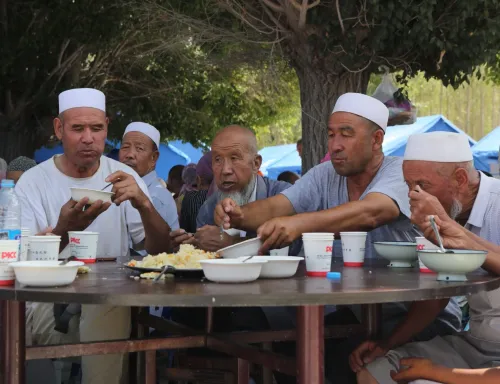
Berlin, March 6 (NationPress) The World Uyghur Congress (WUC) has voiced significant alarm regarding reports that Uyghurs residing in China's Xinjiang region are encountering strict limitations during the sacred month of Ramadan, with numerous individuals reportedly detained for participating in religious observances.
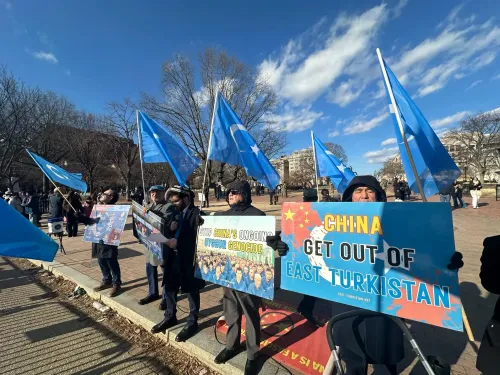
The organization emphasized that these measures highlight the lack of religious freedom in East Turkistan, also referred to as the Xinjiang Uyghur Autonomous Region of China.
According to the Uyghur Service of Radio Free Asia (RFA), on February 27, law enforcement apprehended six Uyghurs in various villages within Hotan Prefecture—including Bulaq Chorgey, Bash Chapal, Dul Tugman, and Korgan—for allegedly “secretly fasting” during the month of Ramadan.
“Restrictions on Ramadan observance tighten each year. The recent detention of six Uyghurs indicates that individuals are not even allowed to practice their faith in the privacy of their homes. Surveillance and forced labor are practices that violate both international law and domestic Chinese laws,” stated WUC President Turgunjan Alawdun.
The WUC noted that these troubling developments arise amid ongoing talks concerning the plight of Uyghurs at the 61st session of the UN Human Rights Council in Geneva.
In her thematic report to the Council, “How Freedom of Religion or Belief Relates to Death and Honouring the Deceased,” the UN Special Rapporteur on Freedom of Religion or Belief, Nazila Ghanea, underscored that Chinese authorities are demolishing and replacing Uyghur Muslim cemeteries under the pretense of “standardization” and “civilization,” often without informing the deceased’s relatives.
The WUC declared that these actions align with the broader initiative by the Chinese government to enforce the “Sinicisation” of religion, intended to modify religious practices to align with Communist Party ideology and state control.
“In East Turkistan, this policy has led to systematic curbs on the expression of Islamic faith, including prohibitions on fasting during Ramadan for many community members, alterations to or removal of mosques and religious sites, bans on religious education, and the criminalization of everyday religious activities. Practices that are normal expressions of faith—such as fasting, praying, wearing religious attire, or teaching religion to children—are increasingly viewed as signs of ‘extremism’,” the WUC explained.
“The surveillance and punishment of Uyghurs for observing Ramadan exemplify a broader strategy aimed at dismantling independent religious life and compelling the assimilation of Uyghurs into a state-defined cultural and ideological framework, which blatantly contravenes international law concerning the right to freedom of religion or belief,” it added.
Point of View
I view the ongoing repression of Uyghurs in Xinjiang as a grave violation of human rights. The situation reflects a disturbing trend of increasing restrictions on religious practices, particularly during sacred times such as Ramadan. We must advocate for awareness and action to protect fundamental freedoms.
NationPress
19 Sept 2026
Frequently Asked Questions
What are the recent developments regarding Uyghurs in Xinjiang?
Recent reports indicate that Uyghurs in Xinjiang are facing heightened restrictions during Ramadan, with several individuals arrested for practicing their faith.
What is the stance of the World Uyghur Congress?
The World Uyghur Congress has expressed serious concerns about the lack of religious freedom in Xinjiang and the systematic repression of Uyghur practices.
What has the UN said about the situation?
The UN Special Rapporteur highlighted the destruction of Uyghur cemeteries by Chinese authorities, emphasizing the broader issue of religious repression in the region.
How are Uyghurs being affected during Ramadan?
Uyghurs are reportedly facing arrests for observing Ramadan, indicating severe restrictions on their religious practices.
What are the broader implications of these actions?
These actions reflect a state-driven agenda to suppress religious expression and force assimilation into a state-defined culture.