Uyghur diaspora protests in US, Canada mark 16 years since 2009 Urumchi killings
Synopsis
Seventeen years after the Urumchi killings, Uyghur exiles took their case to the doorstep of the White House and Canada's Alberta Legislature simultaneously — invoking America's own independence anniversary to demand that Western governments move from symbolic condemnation to formal recognition of East Turkistan as an occupied nation. The coordinated global protests signal a diaspora shifting from commemoration to active diplomatic pressure.
Key Takeaways
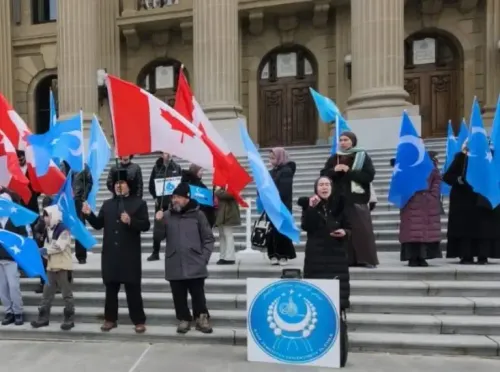
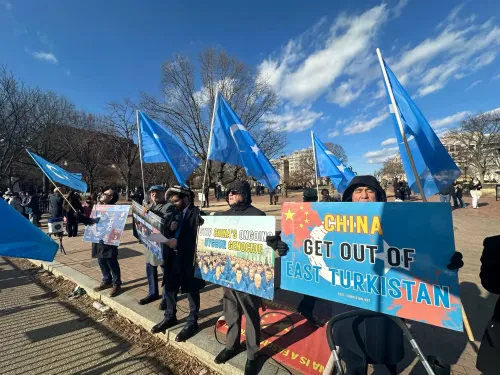
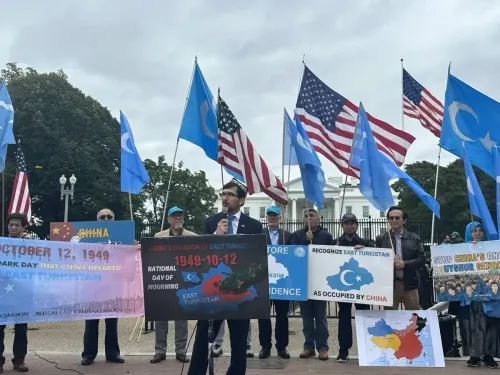
ETGE officials and Uyghur community members protested outside the White House and Alberta Legislature on 6 July 2025 .
The demonstrations marked the 17th anniversary of the 5 July 2009 Urumchi Massacre , which the ETGE calls one of the deadliest acts of state repression in Xinjiang.
ETGE Foreign Minister Salih Hudayar urged the US to support East Turkistan's independence, invoking America's own anti-colonial history.
ETGE Prime Minister Abdulahat Nur called on Canada to formally recognise East Turkistan as an occupied country.
The ETGE alleged over one million East Turkistani children have been separated from families and placed in Chinese state institutions — a figure attributed to the ETGE and not independently verified.
The group demanded rejection of China's 'Ethnic Unity Law' and support for the UN Declaration on Granting Independence to Colonial Countries and Peoples .
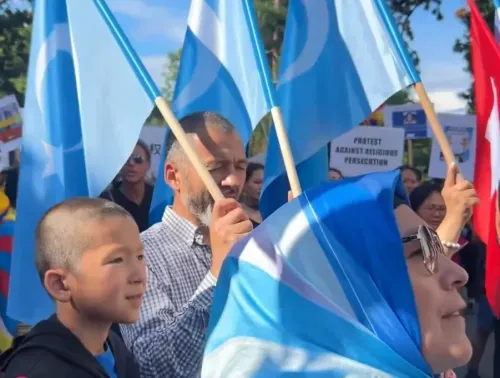
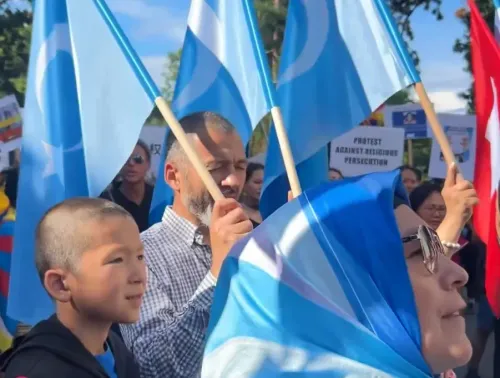
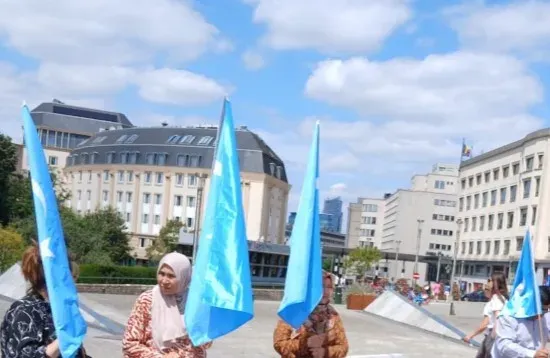
Officials of the East Turkistan Government in Exile (ETGE) and members of the Uyghur diaspora staged coordinated demonstrations in the United States and Canada on 6 July 2025, calling for international accountability and an end to what they described as Beijing's 'ongoing genocide' in East Turkistan, the region China designates as the Xinjiang Uyghur Autonomous Region. The protests marked the 17th anniversary of the 5 July 2009 Urumchi Massacre, which the ETGE has called 'one of the deadliest acts of state repression' carried out by Chinese authorities in the region.
Where Protests Were Held
Demonstrations took place simultaneously outside the White House in Washington, D.C. and at the Alberta Legislature in Edmonton, Canada. According to the ETGE, parallel commemorations were also held across Japan, Turkey, Norway, and the United Kingdom, with communities observing the anniversary as a day of 'national mourning and resistance.'
What Happened in Urumchi in 2009
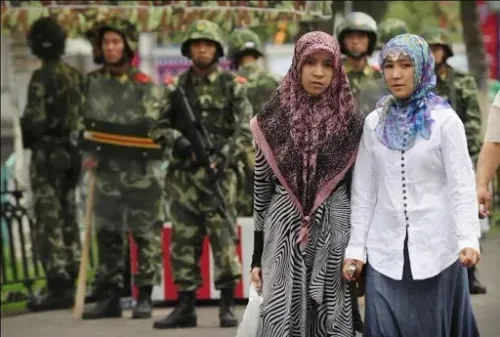
According to the ETGE, on 5 July 2009, thousands of Uyghurs marched peacefully in Urumchi demanding justice for Uyghur workers reportedly murdered at a toy factory in Shaoguan, China. The exiled government alleged that Chinese authorities responded with 'bullets, mass arrests, and enforced disappearances,' resulting in hundreds of deaths and thousands of Uyghur men and youth being 'seized from their homes and disappeared.' China has disputed such characterisations of the events, which it has described as a violent riot that authorities were compelled to suppress.
What the ETGE and Speakers Demanded
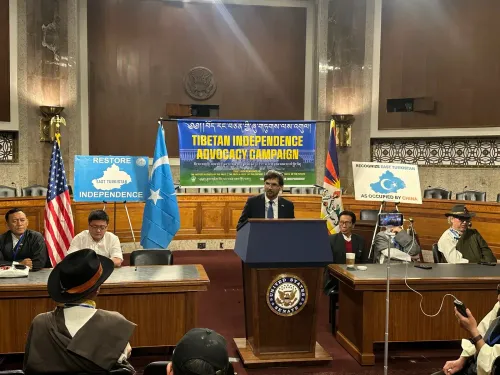
ETGE Foreign Minister Salih Hudayar, addressing the gathering outside the White House — one day after US President Donald Trump marked 250 years of American independence — drew a direct parallel between American history and the Uyghur cause. 'America, of all nations, should understand what it means to fight for independence against an empire that says you have no right to exist. A Chinese empire allowed to get away with genocide will not stop at our borders. To confront China's imperial expansion, the free world must support the independence of the nations it holds captive. Our independence and your security are one and the same cause,' Hudayar said.
In Edmonton, ETGE Prime Minister Abdulahat Nur, who also serves as President of the Alberta Uyghur Cultural Society, led the parallel rally. 'Canada must move beyond symbolic statements and formally recognise East Turkistan as an occupied country. We call on Ottawa to stand with our people's inalienable right to decolonisation and independence,' Nur said.
Key Allegations and Demands
The ETGE alleged that since 2009, 'millions of Uyghurs, Kazakhs, Kyrgyz, and other Turkic peoples have been imprisoned in concentration camps and prisons, subjected to forced labour, and stripped of their fundamental freedoms.' It further claimed that 'more than one million East Turkistani children have been separated from their families and placed in Chinese state institutions designed to erase their language, faith, and identity.' These figures are attributed to the ETGE and have not been independently verified.
The organisation called on the governments of the US, Canada, and the broader international community to formally recognise East Turkistan as an occupied country under international law, affirm its people's right to self-determination, reject China's recently enacted 'Ethnic Unity Law', hold Chinese authorities accountable under international law, and support implementation of the United Nations Declaration on the Granting of Independence to Colonial Countries and Peoples with respect to East Turkistan.
Broader Context
The protests come as international scrutiny of China's policies in Xinjiang has intensified over recent years, with governments including the US, UK, Canada, and the European Union having previously imposed sanctions on Chinese officials over alleged human rights abuses in the region. Beijing has consistently denied genocide allegations, describing its Xinjiang policies as counter-terrorism and vocational training measures. The ETGE, which operates from exile, is not recognised as a government by any UN member state, though it maintains advocacy offices across multiple countries. With the 17th anniversary protests drawing simultaneous global participation, the diaspora's push for formal diplomatic recognition appears to be gaining organisational momentum, even as a concrete policy shift from major governments remains uncertain.
Point of View
Designed to embed the Uyghur cause within America's own foundational mythology. Yet the gap between diaspora activism and actual policy movement remains wide: the US, UK, and Canada have sanctioned individual Chinese officials but stopped well short of recognising East Turkistan as an occupied territory, a step that would carry significant diplomatic and legal consequences. Beijing's 'Ethnic Unity Law', flagged by the ETGE as a fresh grievance, has received limited Western governmental attention so far. Until major democracies are willing to move beyond periodic sanctions and resolutions, the annual cycle of commemoration risks becoming a ritual of grief without political consequence.
NationPress
5 Oct 2026
Frequently Asked Questions
What was the 2009 Urumchi Massacre?
According to the ETGE, on 5 July 2009, thousands of Uyghurs marched peacefully in Urumchi, Xinjiang, demanding justice for Uyghur workers reportedly killed at a factory in Shaoguan, China. The ETGE alleges Chinese authorities responded with mass arrests, enforced disappearances, and deadly force, resulting in hundreds of deaths. China has characterised the events as a violent riot that required suppression.
Who is the East Turkistan Government in Exile (ETGE)?
The ETGE is an exiled political body that claims to represent the Uyghur people and advocates for the independence of East Turkistan, the region China administers as the Xinjiang Uyghur Autonomous Region. It is not recognised as a government by any UN member state but maintains advocacy offices in several countries, including the US and Canada.
What did protesters demand from the US and Canada?
Protesters called on both governments to formally recognise East Turkistan as an occupied country under international law, affirm Uyghurs' right to self-determination, reject China's 'Ethnic Unity Law,' and support the UN Declaration on Granting Independence to Colonial Countries and Peoples as it applies to East Turkistan.
Where else did Uyghur commemorations take place?
Beyond Washington, D.C. and Edmonton, the ETGE said Uyghur communities held commemorations in Japan, Turkey, Norway, and the United Kingdom, marking 5 July as a day of national mourning and resistance.
What is China's position on the Xinjiang allegations?
Beijing has consistently denied genocide allegations, describing its policies in Xinjiang as counter-terrorism and vocational training measures. China has not recognised the ETGE as a legitimate political entity and disputes the characterisation of the 2009 Urumchi events as a massacre.