Uyghur killings in US, Uzbekistan show diaspora no longer safe from China
Synopsis
Two Uyghur men killed thousands of miles from Xinjiang — one in California, one in Tashkent — have exposed a chilling evolution in authoritarian reach: China no longer needs to act directly. Through Belt and Road leverage, Beijing is reportedly shaping how partner governments treat Uyghur communities on their own soil, turning Central Asia from a refuge into a pressure zone.
Key Takeaways
Shukur Aikebaer was kidnapped and killed outside his home in California on 29 July ; suspect Zhengfeng Bo was shot dead by police during the abduction.
Ablehet Qahar , a Uyghur historian, was killed in Tashkent, Uzbekistan in July 2024 ; his historical collections reportedly disappeared after his death.
Analyst Zilala Mamat of the Uyghur American Association describes the pattern as 'transnational repression by proxy,' enabled through China's Belt and Road Initiative leverage over Central Asian governments.
Roughly half of BRI economic corridors pass through Kazakhstan , Kyrgyzstan , and Uzbekistan , giving Beijing significant political influence in the region.
The World Uyghur Congress separately reported that six Uyghurs were arrested in Hotan Prefecture on 27 February for allegedly fasting during Ramadan .
The murders of two Uyghur men — one in California, United States and another in Tashkent, Uzbekistan — have underscored a sobering reality: physical distance from Xinjiang (referred to as East Turkestan by many native Uyghurs) no longer insulates members of the diaspora from violence, according to a detailed report published in The Diplomat magazine.
The Two Killings
On 29 July, Shukur Aikebaer was abducted and killed outside his home in California by two individuals reportedly identified as Zhengfeng Bo and Jianquan Bo. Zhengfeng Bo was shot and killed by police during the abduction. Investigators have not publicly established a motive or released detailed information about the suspects.
The incident drew immediate comparisons to a July 2024 case in Uzbekistan, where Ablehet Qahar, a Uyghur historian, was killed in his apartment in Tashkent. According to the report, that case was, in the words of the author, 'quietly swept under the rug,' and Qahar's residence was subsequently barricaded while his entire collection of Uyghur historical materials disappeared.
Transnational Repression — and Its Proxy Form
Zilala Mamat, Vice President of the Uyghur American Association and founder of United Uyghur Youth, writing in The Diplomat, argued that conventional analyses of transnational repression — focused on a state's direct tools such as intelligence services, cyber surveillance, and diplomatic pressure — miss a broader and more dangerous pattern.
'China's growing political and economic influence appears to be producing a different dynamic, one in which repression is carried out also through the institutions of partner governments. It is, in effect, a form of transnational repression by proxy,' Mamat wrote.
Over the past decade, reports of harassment, surveillance, threats to family members, and attempted deportations targeting Uyghurs abroad have grown significantly, according to the report.
Central Asia's Shifting Role
Central Asia — historically home to one of the world's largest Uyghur diasporas and a custodian of Uyghur language and culture — has become a pressure point. Roughly half of the economic corridors within China's Belt and Road Initiative (BRI) run through Central Asian territory, making Kazakhstan, Kyrgyzstan, and Uzbekistan strategically critical for Beijing's global connectivity ambitions.
That economic dependency, the report argues, has inclined Central Asian governments to accommodate Chinese concerns — including those related to Uyghur communities on their soil. The result is a regional environment increasingly hostile to Uyghur activists, historians, and community leaders who once considered these countries a refuge.
Broader Policy Implications
Mamat's analysis contends that Western governments have historically treated China's human rights record and its geopolitical rise as two separate policy challenges. The pattern emerging from Central Asia, she argues, suggests they are the same challenge.
'If policymakers fail to recognise that connection, they risk confronting China's repression where it begins rather than where it is already taking hold,' she wrote.
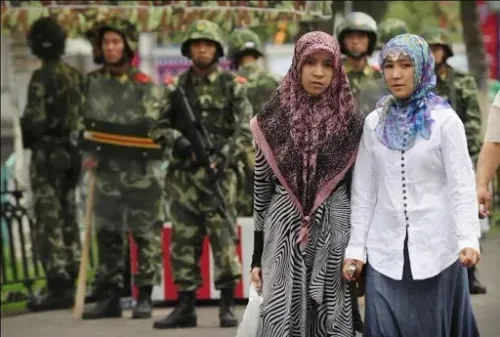
Separately, the World Uyghur Congress (WUC) in March expressed serious concern over reports that Uyghurs in Xinjiang faced restrictions during Ramadan, with several individuals allegedly arrested for observing religious practices. Citing Radio Free Asia's Uyghur Service, the WUC stated that on 27 February, police in China's Hotan Prefecture — across villages including Bulaq Chorgey, Bash Chapal, Dul Tugman, and Korgan — arrested six Uyghurs allegedly for 'secretly fasting' during Ramadan.
As international scrutiny of Beijing's treatment of Uyghurs intensifies, the two diaspora killings are likely to sharpen calls for coordinated policy responses that account for China's expanding extraterritorial reach.
Frequently Asked Questions
Who was Shukur Aikebaer and what happened to him?
Shukur Aikebaer was a Uyghur man killed outside his home in California on 29 July by two individuals reportedly named Zhengfeng Bo and Jianquan Bo. One suspect was shot dead by police during the abduction; investigators have not publicly established a motive.
What is transnational repression by proxy, as described in the report?
It refers to a pattern in which China's political and economic influence — particularly through the Belt and Road Initiative — leads partner governments to suppress Uyghur communities on their own soil, rather than China acting directly. Analyst Zilala Mamat of the Uyghur American Association detailed this dynamic in The Diplomat magazine.
Why is Central Asia significant in the context of Uyghur repression?
Central Asia was historically one of the largest Uyghur diaspora regions and a custodian of Uyghur culture. However, roughly half of China's Belt and Road Initiative corridors pass through Kazakhstan, Kyrgyzstan, and Uzbekistan, giving Beijing significant leverage over these governments and reportedly shaping their treatment of local Uyghur communities.
What happened to Uyghur historian Ablehet Qahar?
Ablehet Qahar was killed in his apartment in Tashkent, Uzbekistan in July 2024. According to the report in The Diplomat, the case received little attention, his residence was barricaded, and his entire collection of Uyghur historical materials reportedly disappeared.
What did the World Uyghur Congress report about Ramadan restrictions in Xinjiang?
In March, the World Uyghur Congress expressed serious concern over reports that Uyghurs in Xinjiang faced restrictions during Ramadan. Citing Radio Free Asia's Uyghur Service, it stated that six Uyghurs were arrested on 27 February in Hotan Prefecture for allegedly fasting secretly during the holy month.