Trump-Xi meeting silent on Uyghur rights in Xinjiang, activists alarmed
Synopsis
Despite bipartisan congressional resolutions urging action, the Trump-Xi summit produced no public mention of Uyghur rights — leaving activists like Rushan Abbas, whose sister has been jailed in China for eight years, without the breakthrough they had sought. With Xi set to visit Washington in September, the silence is becoming a political test.
Key Takeaways
Official statements from both Washington and Beijing after the Trump-Xi summit made no mention of human rights or Uyghur concerns.
Gulshan Abbas , sister of activist Rushan Abbas , has been imprisoned in China for nearly eight years ; her release was among six cases Congress urged Trump to raise.
Both the US Senate and House of Representatives passed resolutions before Trump's Beijing visit calling for the detainees' release.
Since 2017 , China has reportedly imprisoned more than one million Uyghurs and other Turkic minorities in Xinjiang .
Sophie Richardson of Human Rights Watch urged Congress to signal 'political opprobrium' during Xi Jinping's planned September visit to Washington.
Activist Salih Hudayar has had no contact with relatives in China for nearly 10 years .
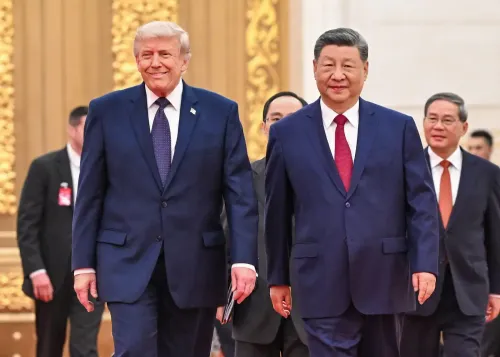
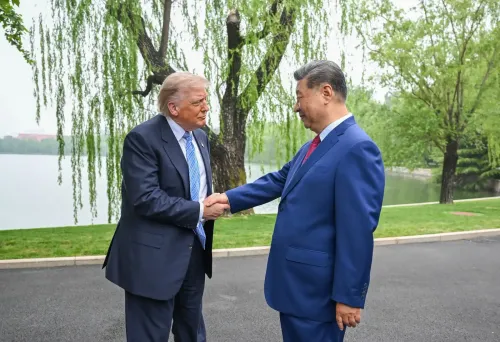
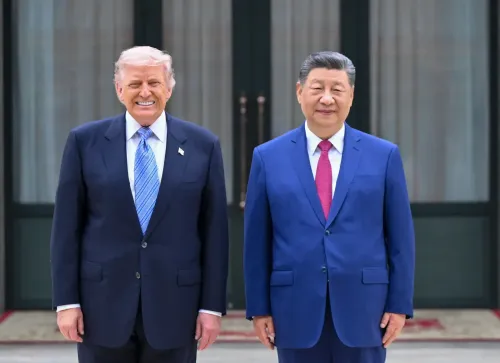
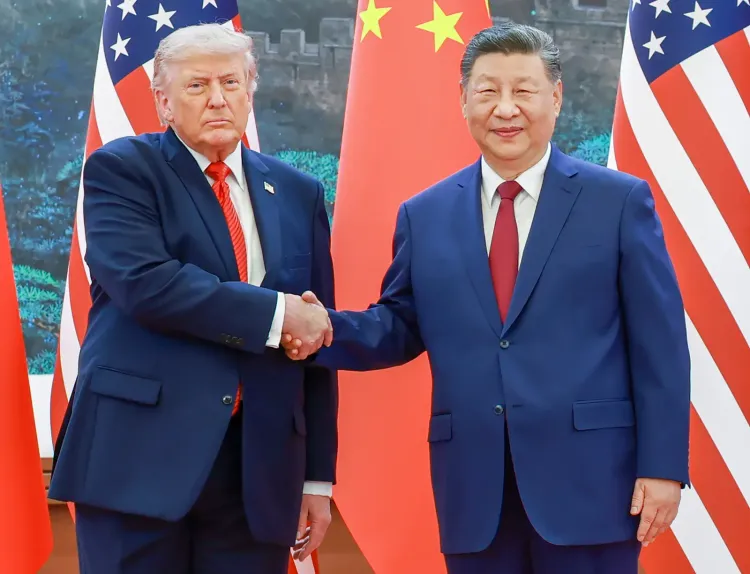
The recent summit between US President Donald Trump and Chinese President Xi Jinping has drawn sharp scrutiny after official statements from both Washington and Beijing made no mention of human rights concerns — including longstanding allegations of abuse against Uyghurs in China's Xinjiang Uyghur Autonomous Region. According to a report by The Diplomat, the omission has deepened despair among Uyghur activists who had hoped the high-level engagement would yield concrete humanitarian progress.
What the Talks Left Unsaid
Neither Washington nor Beijing indicated that human rights issues were raised during the Trump-Xi discussions. The silence is particularly striking given that, just days before Trump's visit to Beijing last month, both chambers of the US Congress — the Senate and the House of Representatives — adopted resolutions urging the President to press for the release of six individuals detained by the Chinese Communist Party (CCP). Among them was Gulshan Abbas, sister of Uyghur activist Rushan Abbas, who has been imprisoned in China for nearly eight years.
This comes amid Trump's increasingly warm public posture toward Xi, whom he has recently described as a 'friend' and a 'good man' — language that critics argue signals a deliberate deprioritisation of human rights in favour of trade and geopolitical accommodation.
Activists Speak Out
Rushan Abbas had publicly appealed for intervention ahead of the Beijing visit. In a 14 May commentary published in American newspaper The Hill, she wrote: 'I am asking the leader of the free world to look a dictator in the eye and demand the return of my sister, a soul who has been stolen by the machinery of hate,' according to The Diplomat.
Salih Hudayar, a 33-year-old activist based in Fairfax, Virginia, was more blunt. 'The fact that he met with Xi, in spite of the ongoing genocide, is itself the biggest loss for us. The prerequisite should have been, 'You end this genocide and then come sit down and talk with us,'' he said. Hudayar, who reportedly left southern Xinjiang during childhood, has been unable to contact relatives in China for nearly 10 years.
Several Uyghurs told The Diplomat they have lost confidence in Washington lobbying efforts and are increasingly seeking alternative avenues to help family members detained or placed under surveillance inside Xinjiang.
The Scale of Alleged Abuses
Since 2017, the Chinese government has reportedly imprisoned more than one million members of Turkic ethnic groups — the majority of them Uyghurs, a predominantly Muslim community concentrated in northwestern Xinjiang. According to the report, many have been held in a network of so-called 're-education camps' under the stated pretext of combating extremism, and subjected to forced labour, surveillance, family separation, religious restrictions, and sterilisation. Beijing denies these characterisations and describes the facilities as voluntary vocational training centres.
International Pressure and What Comes Next
Sophie Richardson, former China director at Human Rights Watch, called on members of Congress to withhold participation in ceremonial formalities when Xi makes a reciprocal visit to Washington in September. 'Demonstrating some real political opprobrium on the occasion of something like a state visit will be a test of whether people who are concerned about these issues are willing to go a bit further,' Richardson was quoted as saying by The Diplomat.
With Xi's Washington visit now on the horizon, rights advocates and congressional members face a renewed — and arguably more visible — opportunity to elevate the Uyghur issue in US-China diplomacy. Whether the Trump administration chooses to use it remains an open question.
Point of View
The gap between legislative intent and executive action becomes a credibility problem. The September state visit will be a harder test: symbolic dissent from Congress — boycotts, floor statements, public hearings — is low-cost but visible. If that, too, is waived in favour of protocol, the message to Beijing will be that Uyghur rights are a rhetorical fixture, not a diplomatic condition.
NationPress
24 Sept 2026
Frequently Asked Questions
What human rights concerns were omitted from the Trump-Xi summit?
Official statements from both Washington and Beijing following the Trump-Xi meeting made no mention of Uyghur human rights abuses in China's Xinjiang region. This includes the cases of six individuals — among them Gulshan Abbas, jailed for nearly eight years — whose release the US Congress had urged President Trump to seek.
Who is Gulshan Abbas and why is her case significant?
Gulshan Abbas is a Uyghur woman who has been imprisoned in China for nearly eight years and is the sister of US-based activist Rushan Abbas. Her case was among six highlighted in bipartisan resolutions passed by the US Senate and House of Representatives ahead of Trump's Beijing visit, making it a focal point of congressional pressure on the administration.
What is the scale of alleged abuses against Uyghurs in Xinjiang?
According to reports, since 2017 the Chinese government has reportedly imprisoned more than one million members of Turkic ethnic groups, mostly Uyghurs, in a network of 're-education camps' in Xinjiang. Alleged abuses include forced labour, surveillance, family separation, religious restrictions, and sterilisation. Beijing denies these characterisations.
What did Human Rights Watch say about Xi Jinping's upcoming Washington visit?
Sophie Richardson, former China director at Human Rights Watch, urged members of Congress to refrain from participating in ceremonial formalities during Xi's planned September visit to Washington. She described it as a test of whether those concerned about human rights issues are 'willing to go a bit further.'
How have Uyghur activists responded to the lack of progress?
Several Uyghurs told The Diplomat they have lost confidence in lobbying Washington and are seeking alternative avenues. Activist Salih Hudayar said the mere fact that Trump met Xi 'in spite of the ongoing genocide' was itself the biggest loss, arguing the meeting should have been conditional on China ending its crackdown.