Vance defdefends Trump's CNN, MSNBC, Politico White House access ban
Synopsis
Vice President JD Vance has framed Trump’s decision to strip CNN, MSNBC, and Politico of White House access not as censorship but as a fairness call — pointing to a claimed 92% negative coverage rate. With a Zelenskyy meeting imminent and Iran tensions simmering, the media ban may be the headline, but the substance of Vance’s remarks ranged well beyond it.
Key Takeaways
VP JD Vance on 22 September 2026 defended President Trump ’s decision to bar CNN , MSNBC , and Politico from special White House access.
Vance cited a claimed 92 per cent negative coverage rate by the three outlets as justification.
He compared the move to how Breitbart was reportedly treated by the Obama and Biden administrations.
Vance said Trump is expected to meet President Zelenskyy within days on the sidelines of the UN General Assembly in New York .
The administration is exploring state-level gas tax relief to address elevated fuel prices linked to threats against international shipping.
Criteria for restoring outlet access to the White House remain unspecified.
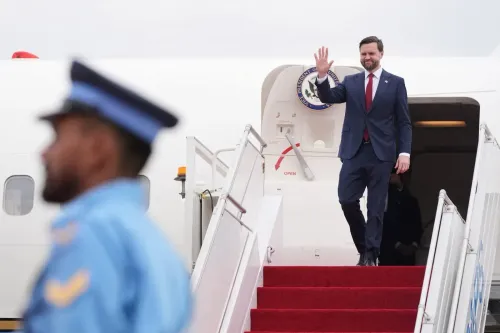
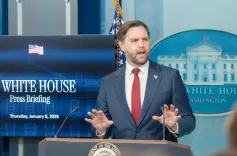
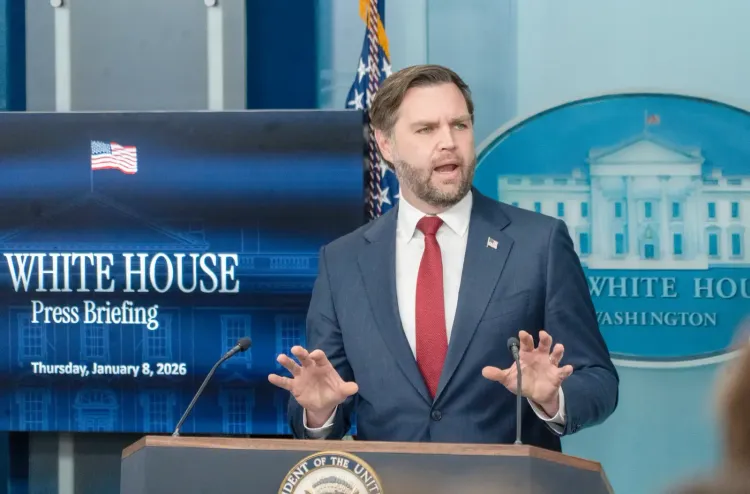
US Vice President JD Vance on 22 September 2026 defended President Donald Trump's decision to bar CNN, MSNBC, and Politico from special White House access, firmly rejecting the characterisation that the move constitutes an attack on press freedom. Vance made the remarks to reporters before departing for North Carolina, framing the ban as a matter of fairness rather than censorship.
What Vance Said About the Media Ban
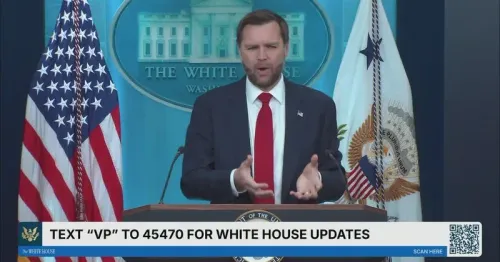
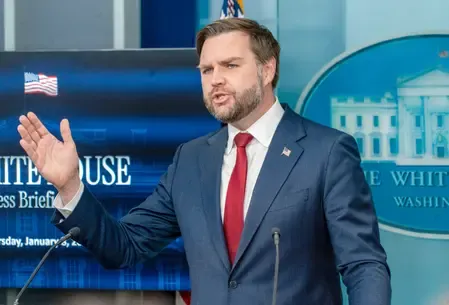
Vance was explicit in drawing a distinction between barring outlets from press briefings and restricting their right to report. 'He’s not banning media outlets,' Vance said. 'What he’s doing is saying, “We’re not gonna give you special access to the White House if you engage in what is effectively propaganda.”'
The vice president claimed that roughly 92 per cent of the three organisations’ stories on Trump and his administration were negative, arguing that such coverage did not reflect American public opinion. He drew a parallel with Breitbart’s treatment of former Presidents Barack Obama and Joe Biden, contending that those Democratic administrations had not been expected to grant the conservative outlet comparable access.
'It’s about basic fairness,' Vance said. 'They can still report. They still have the access to free speech. They’re just not gonna get an office in the White House anymore.'
Vance on Iran and the Strait of Hormuz
The vice president also weighed in on escalating tensions with Iran, saying substantial volumes of oil and gas continued to flow through the Strait of Hormuz despite what he described as daily Iranian attacks on ships. He reiterated the administration’s red line: 'What the president has said is Iran can’t have a nuclear weapon. We’re of course going to try to protect the free flow of commerce as much as we can. That’s what the United States Navy has done for the past 80 years.'
Vance declined to get ahead of President Trump on specifics but indicated that further Iran discussions were likely during the UN General Assembly in New York this week.
Russia-Ukraine War and Zelenskyy Meeting
Asked about prospects for an end to the Russia-Ukraine conflict, Vance called it the most difficult international conflict to resolve. He said Trump was expected to meet Ukrainian President Volodymyr Zelenskyy ‘either tomorrow or the day after,’ adding cautiously: ‘Do I think it’ll get solved eventually? Yes, it’s just a question of time.’
Energy Costs and Tax Relief
On elevated fuel prices, Vance attributed the rise to threats against international shipping rather than domestic policy. He said the administration was actively working to push prices down while exploring short-term measures. ‘One of the things the president has talked about is encouraging some of the states to give Americans relief from the gas taxes,’ he said.
North Carolina Campaign Stop
Vance was heading to North Carolina alongside Republican Senate candidate Michael Whatley to promote the Trump administration’s economic agenda, which he said included no tax on tips and overtime and what he described as the most significant middle-class tax cuts in 30 years. The trip underscores how the White House is using campaign events to amplify its legislative priorities ahead of the 2026 midterms.
The White House has not yet clarified the precise criteria outlets must meet to have their access restored, leaving the policy’s scope and duration an open question.
Point of View
But the underlying argument — that access is a privilege, not a right — has a defensible legal basis. What is harder to defend is the absence of any published criteria for reinstatement: without that, the ban functions less like a fairness policy and more like a political pressure tool. The Breitbart comparison is clever framing but incomplete; Breitbart was never a credentialed White House pool outlet in the same institutional sense. The broader risk is precedent: a White House that conditions access on coverage sentiment sets a template that could be used by any future administration against any outlet it dislikes.
NationPress
22 Sept 2026
Frequently Asked Questions
Why did Trump bar CNN, MSNBC, and Politico from the White House?
President Trump barred the three outlets from special White House access, with Vice President Vance framing the move as a response to what he called overwhelmingly negative and partisan coverage — claiming 92 per cent of their stories on the administration were critical. The White House has not published formal criteria for reinstatement.
Does the ban stop CNN, MSNBC, and Politico from reporting on the White House?
No. Vice President Vance explicitly said the outlets remain free to report, access public information, and speak with officials inside and outside government. The ban removes their dedicated office space and special-access credentials, not their right to cover the administration.
What did Vance say about the Russia-Ukraine war and a Zelenskyy meeting?
Vance described the Russia-Ukraine conflict as the most difficult international dispute to resolve. He said President Trump was expected to meet Ukrainian President Volodymyr Zelenskyy ‘either tomorrow or the day after’ on the sidelines of the UN General Assembly in New York.
What is the Trump administration’s position on Iran?
Vance reiterated that Iran cannot be permitted to obtain a nuclear weapon and said the US Navy would continue protecting the free flow of commerce through the Strait of Hormuz. Further discussions on Iran are expected during the UN General Assembly this week.
What economic measures did Vance highlight in North Carolina?
Vance travelled to North Carolina with Republican Senate candidate Michael Whatley to promote the Trump administration’s economic agenda, including no tax on tips and overtime and what Vance called the most significant middle-class tax cuts in 30 years.