New Zealand election 2026: National vs Labour in tight race as cost of living bites
Synopsis
Neither New Zealand's ruling National-led coalition nor the Labour-led opposition can claim a majority going into Saturday's vote — and cost of living, surging fuel prices and healthcare are driving a record advance-vote turnout. The Opportunity Party's kingmaker potential could decide who governs next.
Key Takeaways
New Zealand's general election is scheduled for Saturday, 7 November 2026 , with official results on 27 November .
Latest polling puts Labour at 30.7% and National at 26.4% , with neither bloc holding a projected parliamentary majority.
Cost of living and inflation is the top voter concern, cited by 64% of respondents; fuel prices jumped from seventh to third place.
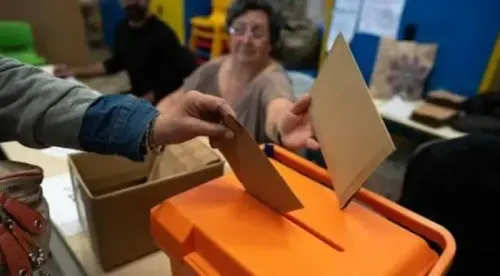
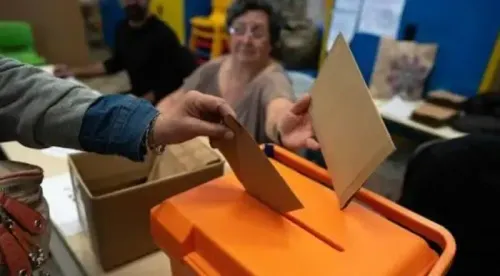
More than 913,762 advance votes were cast between 26 October and 1 November — up from 712,192 at the same stage in 2023.
The Opportunity Party at 5.1% is seen as a potential kingmaker under New Zealand's MMP electoral system.
Over 2,300 voting places will operate nationwide on election day.
New Zealand's ruling National Party and opposition Labour Party are locked in a tight contest ahead of the country's general election on Saturday, 7 November 2026, with the cost of living, healthcare, and fuel prices dominating voter concerns. The race is too close to call, with the latest polling indicating neither major bloc holds a commanding majority on its own.
Latest Poll Numbers
A poll by The Post/Freshwater Strategy, released on Friday, put Labour slightly ahead at 30.7 per cent, compared with National's 26.4 per cent. The two governing partners — ACT and New Zealand First — registered 9.8 per cent and 12 per cent, respectively.
Among the opposition bloc, the Green Party polled at 13 per cent, the Maori Party at 2 per cent, and the Opportunity Party — seen as a potential kingmaker — at 5.1 per cent. The poll projected a combined 59 seats in the 120-seat parliament for the ruling coalition, two short of the 61 seats needed to govern independently, against 55 seats for the Labour, Greens, and Maori Party grouping.
What Voters Care About
An Ipsos survey of 1,008 New Zealanders aged 18 and older found that the cost of living and inflation remained the biggest concern, cited by 64 per cent of respondents among their top three issues. Healthcare followed at 45 per cent, while fuel prices surged sharply from seventh to third place, registering 31 per cent. The fuel price jump is a notable shift, reflecting the cumulative pressure of elevated energy costs on household budgets.
This comes amid a broader global trend of cost-of-living pressures dominating democratic elections — a pattern seen across the United Kingdom, Australia, and Canada in recent cycles.
Record Advance Voting Turnout
Voter enthusiasm appears to be running high. More than 913,000 people cast their votes in the first seven days of advance voting — between 26 October and 1 November 2026 — exceeding the 712,192 recorded at the same stage of the 2023 election, according to the Electoral Commission. The figure represents approximately 24 per cent of enrolled voters, up from 19 per cent at the equivalent point in 2023.
The busiest advance voting day so far was 31 October, when more than 190,000 votes were cast. Notably, however, current turnout remains below the 1.16 million votes recorded at the same stage of the 2020 general election.
How the Election Works
More than 2,300 voting places are scheduled to open nationwide on election day. New Zealand elects its parliament under the mixed-member proportional (MMP) system, under which governments are typically formed by coalitions of two or more parties — making smaller parties such as ACT, New Zealand First, and the Opportunity Party influential beyond their raw vote share.
Official results are scheduled to be declared on 27 November 2026, with the preliminary count expected to follow the close of polling on Saturday evening.
What Happens Next
With both blocs falling short of a clear majority in polling projections, coalition negotiations could prove lengthy. The Opportunity Party's positioning as a potential kingmaker adds an element of uncertainty. All eyes will be on its final vote tally and any post-election signals about coalition preference. The formation of the next government may hinge on deals struck in the days after results are declared.
Point of View
Despite incumbency, suggests its economic management record has not fully resonated. Labour's narrow lead in vote share does not translate into a seat advantage, which means the Opportunity Party — a minor force by any conventional measure — could effectively choose the next government. That is a structural consequence of MMP, and it deserves more attention than the headline horse-race numbers.
NationPress
6 Nov 2026
Frequently Asked Questions
When is the New Zealand general election 2026?
New Zealand's general election is scheduled for Saturday, 7 November 2026, with more than 2,300 voting places open nationwide. Official results are expected to be declared on 27 November 2026.
Who is leading in the New Zealand election polls?
The latest Post/Freshwater Strategy poll puts Labour slightly ahead at 30.7 per cent, compared with National's 26.4 per cent. However, neither the ruling coalition nor the opposition bloc is projected to win an outright majority in the 120-seat parliament.
What are the biggest issues for New Zealand voters in 2026?
According to an Ipsos survey of 1,008 voters, the cost of living and inflation is the top concern for 64 per cent of respondents, followed by healthcare at 45 per cent and fuel prices at 31 per cent. Fuel prices notably jumped from seventh to third place compared with the previous survey.
How has advance voting turnout compared to previous elections?
More than 913,762 advance votes were cast in the first seven days of voting (26 October to 1 November), up from 712,192 at the same stage in 2023. This represents about 24 per cent of enrolled voters, though it remains below the 1.16 million recorded at the same point in the 2020 election.
What is the Opportunity Party's role in the New Zealand election?
The Opportunity Party, polling at 5.1 per cent, is seen as a potential kingmaker under New Zealand's mixed-member proportional system. With neither the National-led coalition nor the Labour-led bloc projected to hold a majority, the Opportunity Party's post-election coalition decision could determine who forms the next government.