New Zealand advance voting begins, 2 weeks before November 7 election
Synopsis
New Zealand's 2026 general election is already under way — advance voting opened on 26 October, two weeks before the November 7 polling day. With neither the National Party nor Labour projected to win outright, this election could hinge entirely on smaller parties and post-vote coalition deals.
Key Takeaways
Advance voting opened in New Zealand on 26 October , nearly two weeks before the November 7 general election.
207 voting places opened on day one; over 2,300 will operate on election day.
More than 220 dedicated Maori community voting places are available, including 67 bilingual sites.
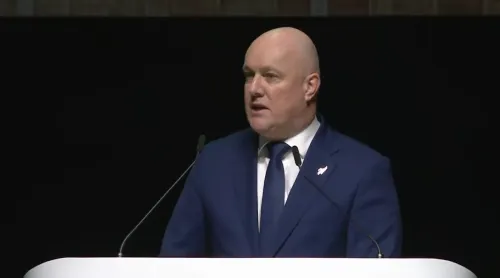
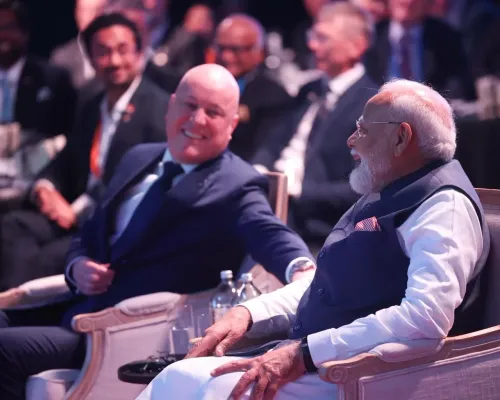
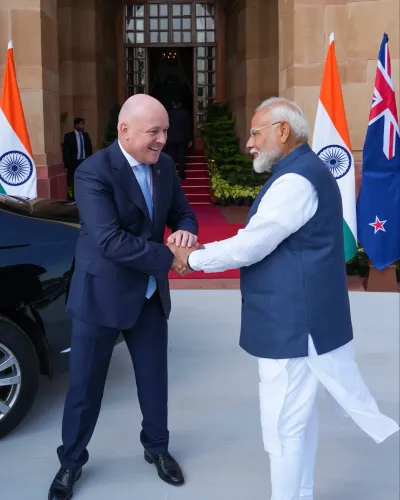
Prime Minister Christopher Luxon's National Party seeks a second term against Labour under Chris Hipkins .
Polling suggests neither major party can win a majority alone, making smaller parties potentially pivotal.
Official results are scheduled to be declared on 27 November .
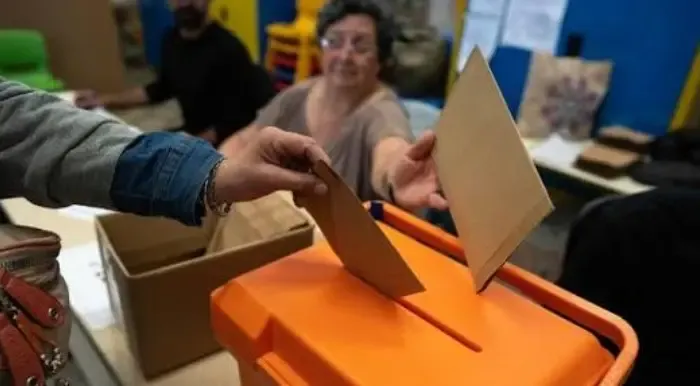
Advance voting opened across New Zealand on Monday, 26 October, giving eligible citizens nearly two weeks to cast their ballots ahead of the November 7 general election. The move marks the formal start of a closely contested electoral race in which no single major party is currently projected to secure a parliamentary majority on its own.
Voting Places and Accessibility
A total of 207 voting places opened on the first day of advance voting, with more locations set to become available in the days that follow, according to the Electoral Commission of New Zealand. On election day itself, more than 2,300 voting places are expected to operate nationwide.
Venues span community halls, shopping centres, schools, tertiary institutions, and marae — traditional Maori meeting grounds. More than 220 dedicated Maori community voting places are also operational, including 67 locations where voters may cast their ballots in either Maori or English, the commission noted.
The Political Contest
Prime Minister Christopher Luxon's centre-right National Party is seeking a second consecutive term, having taken office in 2023. It faces a challenge from the Labour Party, led by former prime minister Chris Hipkins, which is campaigning to return to power on a platform addressing voter concerns over the cost of living, economic growth, jobs, and public services.
According to available polling, neither major party is on track to secure a parliamentary majority independently, making smaller parties potentially decisive in any post-election coalition negotiations. This comes amid broader global trends of hung parliaments and multi-party coalition governments becoming the norm rather than the exception in proportional systems.
How New Zealand's Electoral System Works
New Zealand elects its parliament through a mixed-member proportional (MMP) system, under which voters cast two separate ballots — one for a political party and one for their local electorate candidate. A party generally needs at least 5 per cent of the party vote, or must win an electorate seat, to qualify for proportional representation in parliament.
This threshold allows smaller parties to enter parliament and potentially hold the balance of power, a feature that has historically shaped New Zealand coalition governments. Under this system, the government is typically formed by two or more parliamentary parties.
Enrolment Rules and Eligibility
Under changes to electoral law introduced for this election cycle, voters were required to enrol or update their details by midnight Sunday. Those who missed the deadline are no longer eligible to enrol during the voting period — a tightening of rules compared with previous elections.
Eligibility to vote extends to New Zealand citizens or permanent residents aged 18 or above who have lived in the country continuously for at least 12 months at some point in their lives, according to the commission.
What Happens Next
Election day is set for 7 November, with official results scheduled to be declared on 27 November. Given the polling landscape, post-election coalition talks between the major blocs and smaller parties are widely anticipated.
Point of View
And the MMP system means the campaign is as much about coalition arithmetic as it is about the major-party vote share. Luxon's National Party enters with incumbency advantage, but governing in a cost-of-living squeeze has eroded goodwill in predictable ways. Labour's Hipkins, who inherited a difficult brief in 2023, now has the luxury of campaigning as a challenger. The more consequential story, however, is the role of smaller parties — their final vote shares will determine who governs, and that storyline is unlikely to be settled on election night.
NationPress
26 Oct 2026
Frequently Asked Questions
When does advance voting begin in New Zealand's 2026 election?
Advance voting opened on Monday, 26 October, nearly two weeks before election day on 7 November. A total of 207 voting places were operational on the first day, with more to open progressively.
Who are the main candidates in the New Zealand general election?
The two leading figures are Prime Minister Christopher Luxon of the centre-right National Party, who is seeking a second term, and former prime minister Chris Hipkins, who leads the Labour Party and is campaigning to return to power.
How does New Zealand's MMP electoral system work?
Under the mixed-member proportional system, voters cast two ballots — one for a political party and one for a local electorate candidate. A party needs at least 5 per cent of the party vote, or a won electorate seat, to enter parliament, allowing smaller parties to hold the balance of power.
Who is eligible to vote in the New Zealand election?
New Zealand citizens or permanent residents aged 18 or above who have lived in New Zealand continuously for 12 months or more at some point in their lives are eligible. Voters were required to enrol or update details by midnight Sunday; late enrolment is no longer possible during the voting period.
When will official results of the New Zealand election be declared?
Official election results are scheduled to be declared on 27 November, roughly three weeks after election day on 7 November.