White House Launches Public Fraud Tracker Website

Synopsis
The White House has launched a public website serving as an ongoing record of fraud, waste, and corruption uncovered by Vice President JD Vance's federal task force — marking an unusually transparent escalation in the administration's government accountability drive.
Key Takeaways
The White House launched a dedicated public website to track findings from a federal anti-fraud task force.
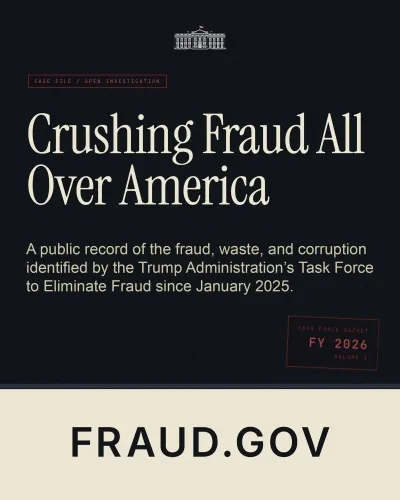
The site is described as a 'public record of the fraud, waste, and corruption' uncovered by the initiative.
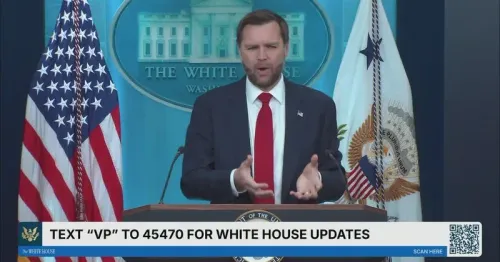
Vice President JD Vance leads the task force, which spans multiple federal agencies.
The move follows a broader pattern of administrations using public dashboards to publicise enforcement actions and recovered funds.
The site's credibility will hinge on its update frequency, case detail, and the actual recoveries it documents.
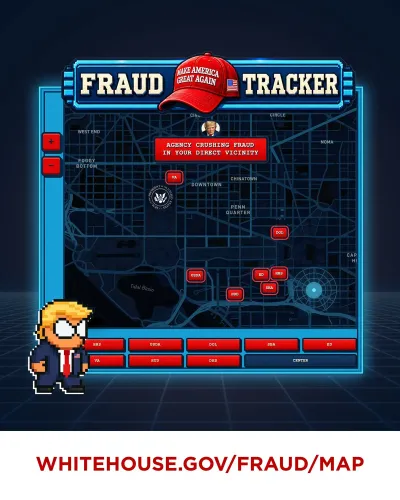
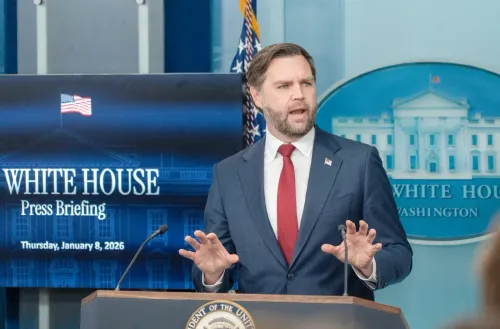
The White House has unveiled a dedicated public website to document findings from a federal anti-fraud task force led by Vice President JD Vance, positioning it as a living 'public record of the fraud, waste, and corruption' uncovered by the initiative — a direct and unusually transparent escalation in the administration's accountability push.
What the fraud website is designed to do
The site, framed as an ongoing public ledger, is intended to give American taxpayers a real-time window into enforcement actions and recoveries made by VP Vance's task force. Rather than burying findings in agency reports or inspector-general filings, the administration is centralising them in one publicly accessible location — a deliberate signal that the effort is meant to be seen, not just filed.
Presidential administrations have periodically stood up oversight bodies and public dashboards to publicise fraud recoveries. What distinguishes this launch is the explicit branding of the site as a 'fraud website' and the direct attribution to the Vice President's task force, raising the political profile of what is typically a bureaucratic function.
Vance's role and the task force's mandate
JD Vance, the Republican Vice President and former Ohio Senator elected in 2022, has been positioned as the public face of this anti-fraud drive. His task force spans federal agencies, with its mandate focused on identifying waste and abuse across government programmes — a portfolio that intersects with broader fiscal debates in Washington.
The stakes are real for American taxpayers, who are the stated beneficiaries of any recovered funds. Federal fraud — across healthcare, defence procurement, and social programmes — runs into hundreds of billions of dollars annually by government estimates, making a centralised tracker a potentially significant accountability tool if maintained rigorously.
Transparency as political strategy
Launching a public-facing website rather than an internal dashboard is a calculated move. It turns every documented case into a news cycle, and every recovered dollar into a headline the administration can point to. The risk is equally clear: a sparse or stalled tracker invites the opposite narrative — that the effort was more announcement than action.
Whether the site delivers substantive case data or functions primarily as a political communications vehicle will determine its legacy. The first batch of case summaries, task force membership, and the site's update cadence will be the earliest and most telling indicators.
Point of View
It cements a high-visibility governance role that complements his political profile ahead of future electoral cycles. The gamble is symmetrical: a well-stocked, regularly updated tracker builds credibility; a neglected one becomes a liability. Globally, this mirrors a trend of governments using transparency portals as political tools — the line between genuine oversight and performative accountability is thin, and the data will draw it.
NationPress
21 Sept 2026
Frequently Asked Questions
What is the White House fraud website launched in 2026?
The White House launched a public website in August 2026 to serve as an ongoing record of fraud, waste, and corruption cases uncovered by Vice President JD Vance 's federal anti-fraud task force.
What does JD Vance's task force do?
JD Vance 's task force is a federal initiative spanning multiple government agencies, tasked with identifying and documenting fraud, waste, and abuse in federal programmes, with findings now being published on a dedicated White House website.
Why did the White House create a public fraud tracker?
The administration created the site to give taxpayers direct visibility into enforcement actions and recoveries, centralising findings that would otherwise be buried in agency or inspector-general reports.
Who benefits from the White House anti-fraud task force?
American taxpayers are the stated beneficiaries — any funds recovered from fraud, waste, or corruption in federal programmes are returned to the public purse.
Has the US government done this before?
Yes. Prior administrations have used public dashboards and oversight bodies to publicise fraud recoveries, but the direct branding of a White House site under the Vice President's name raises its political profile significantly.