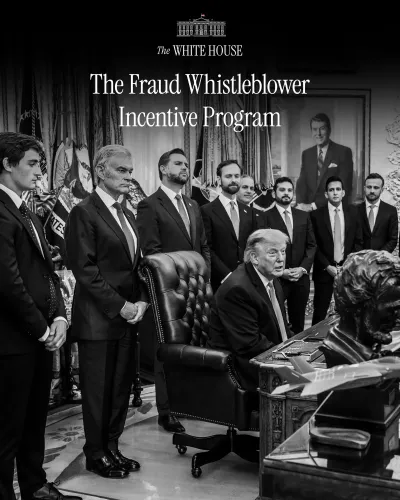
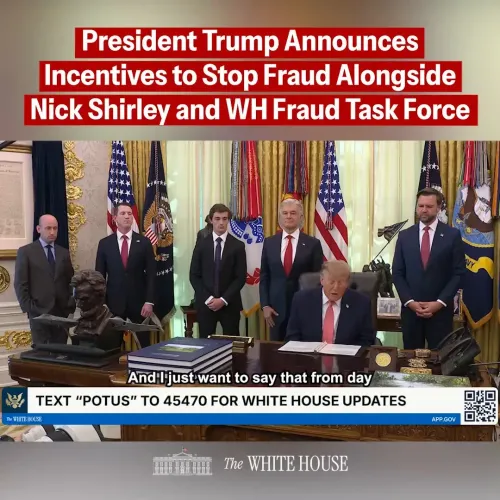
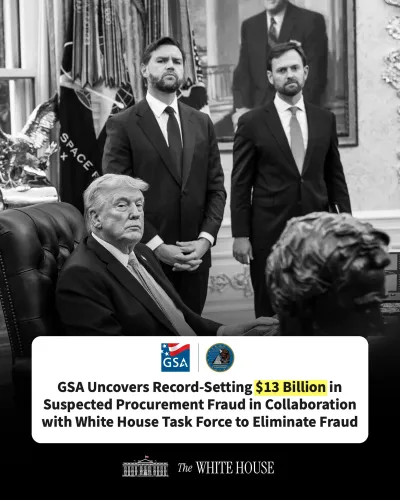
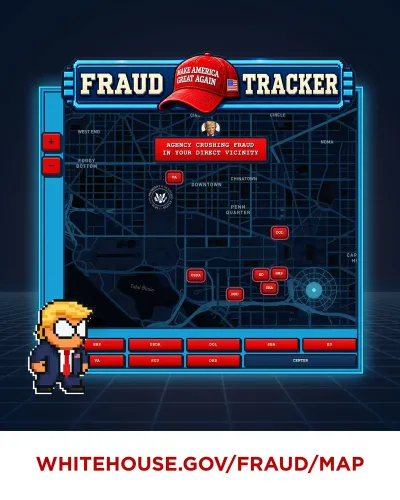
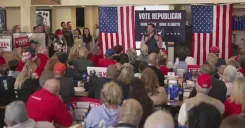
White House Declares War on Federal Fraud

Synopsis
The White House declared the Trump Administration is aggressively fighting fraud in federally funded programs, arguing that unchecked fraud destroys public trust. The post signals a continued hard-line posture on fiscal accountability, consistent with the administration's long-standing anti-waste messaging.
Key Takeaways
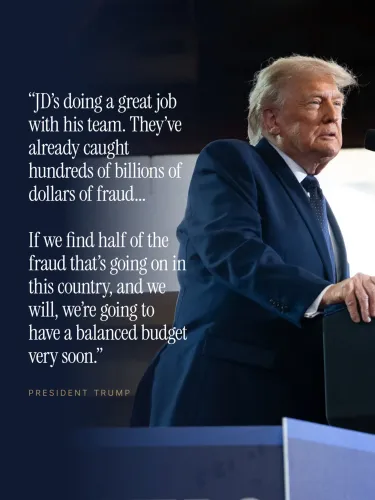
The White House posted that the Trump Administration is 'demolishing fraud at every turn' in federally funded programs.
The administration framed unchecked fraud as a direct cause of broken public trust in government institutions.
Fraud in federal spending — across entitlements, procurement, and relief programs — has been a documented, multi-administration challenge.
During Trump's first term (2017–2021) , anti-fraud efforts targeted programs including Medicare, Medicaid , and federal contracting.
Concrete outcomes will depend on agency-level audit results and any new legislative or executive oversight measures.
Public trust in government does not come free — it is built on the assurance that every tax dollar is spent as intended. The White House has drawn a sharp line, declaring that the Trump Administration is 'demolishing fraud at every turn' and that broken trust in federally funded institutions is no longer acceptable.
The Trust Deficit Driving the Push
The administration's message is blunt: fraud is not a bureaucratic footnote — it is a breach of the social contract between government and citizen. When improper payments flow unchecked through federal programs, the argument goes, ordinary American taxpayers bear the cost twice — once in dollars lost, and again in confidence eroded. The White House framed this not as a policy preference but as a foundational obligation.
Fraud in federal spending is a long-documented problem across administrations of both parties. Entitlement programs, procurement contracts, and pandemic-era relief funds have all been flashpoints for improper payments running into the hundreds of billions of dollars annually, according to longstanding federal oversight reports. The scale of the problem has made anti-fraud messaging a durable political instrument — but the Trump Administration has consistently positioned itself as uniquely aggressive in acting on it.
Rhetoric Meets the Reality of Federal Oversight
The language of 'demolishing fraud' signals more than messaging — it points to an administrative posture that prioritises inspector-general actions, agency-level audits, and tighter procurement controls. During Trump's first term (2017–2021), the administration pushed initiatives targeting improper payments in programs like Medicare, Medicaid, and federal contracting, with mixed but measurable results in certain sectors.
The broader pattern here is well-established: fiscal accountability rhetoric tends to intensify when public confidence in institutions is already fragile. The administration is betting that a hard anti-fraud stance resonates with a voter base deeply skeptical of government efficiency. Whether the rhetoric translates into verifiable, agency-level reductions in fraud metrics is the question that oversight bodies and legislators will be watching closely.
What Comes Next for Federal Accountability
The signal to watch now is whether this public posture is followed by concrete legislative proposals or executive orders targeting specific oversight mechanisms. Agency-level fraud reduction reports — the kind that carry hard numbers — will be the real test of whether the administration's claims hold up to scrutiny. In Washington, the distance between a declaration and a result is measured in audits, not announcements.
Point of View
Particularly with fiscally conservative voters. The sharpness of the language — 'demolishing fraud' — suggests this is as much a public trust campaign as a policy announcement. The real indicator of substance will be whether specific enforcement actions, legislative proposals, or verifiable fraud-reduction metrics follow this rhetorical salvo.
NationPress
25 Oct 2026
Frequently Asked Questions
What did the White House say about federal fraud?
The White House stated that the Trump Administration is 'demolishing fraud at every turn,' arguing that allowing fraud to run unchecked breaks public trust in government institutions funded by taxpayer dollars.
How big is the federal fraud problem in the United States?
Improper payments across federal entitlement programs, procurement contracts, and relief funds have historically run into hundreds of billions of dollars annually, making it a persistent challenge across multiple administrations.
What did Trump do about fraud in his first term?
During the first Trump Administration (2017–2021), anti-fraud initiatives targeted improper payments in programs such as Medicare, Medicaid, and federal contracting, with results that varied by program and agency.
Why does federal fraud matter to ordinary Americans?
Federal fraud means tax dollars are diverted from their intended purpose, reducing the effectiveness of public programs and eroding citizen confidence in government institutions.
What should we watch for after this White House announcement on fraud?
Key indicators will include agency-level fraud reduction reports, new executive orders or legislative proposals targeting oversight mechanisms, and inspector-general findings that put hard numbers behind the administration's claims.