Poland sees India as global leader, seeks closer EU-India trade ties
Synopsis
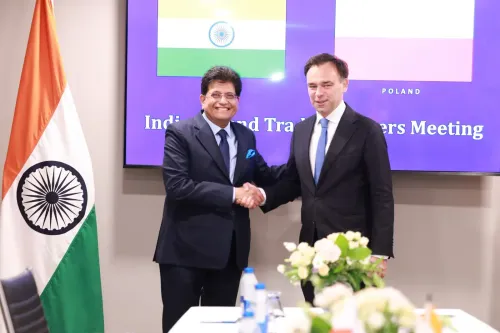
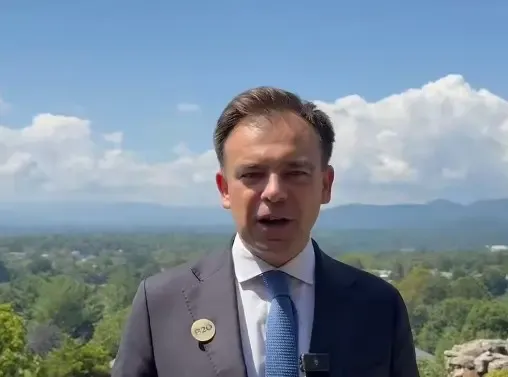
Poland's Finance and Economy Minister Andrzej Domański called India a 'global leader' at the G20 Trade Ministers' Meeting in Milwaukee, explicitly pushing for India and the EU to become far closer trade partners. With Warsaw holding the EU Council presidency and bilateral ties elevated to a Strategic Partnership in 2024, this is more than courtesy — it is a pointed European signal that India is now central to the West's trade diversification calculus.
Key Takeaways
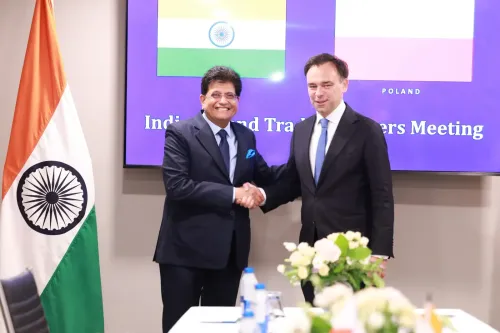
Polish Finance and Economy Minister Andrzej Domański described India as a 'global leader' on the sidelines of the G20 Trade Ministers' Meeting in Milwaukee on 1 October 2026 .
Domański called for India , Poland , and the European Union to become 'much closer trade allies' than they currently are.
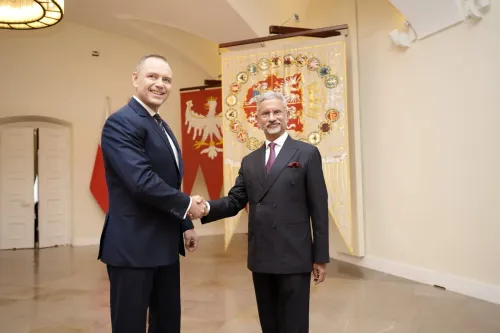
India and Poland elevated ties to a Strategic Partnership during PM Narendra Modi 's visit to Warsaw in August 2024 , with an action plan covering 2024–2028 .
The minister stressed the importance of stable, predictable trade in a volatile global environment, and linked democratic governance to easier commercial relationships.
Poland acknowledged that significant potential remains for expanding bilateral trade with India despite recent progress.
Poland's Finance and Economy Minister Andrzej Domański has described India as a global economic leader and a key partner for building stable commercial ties, calling for India and the European Union to become much closer trade partners than they are today. Domański made these remarks on the sidelines of the G20 Trade Ministers' Meeting in Milwaukee on 1 October 2026.
India a 'Global Leader', Says Polish Minister
Domański was emphatic in his praise of India's economic trajectory and democratic foundations. 'We see India as a global leader. We see India as a country of very ambitious people, like Polish people,' he said. He further noted that India's democratic system was a critical factor in Warsaw's approach: 'We see India as a democracy, which is very important and a country with which we want to build stable economic ties.'
The minister also pointed to India's stature within the G20, citing its scale and growth pace. 'India is a leader. India is not only one of the largest, one of the biggest global economies, but really also a country of high GDP growth,' he said.
Stability and Predictability at the Core
A recurring theme in Domański's remarks was the importance of predictability in trade relationships, particularly in a volatile geopolitical climate. 'We believe, we know that we live in a very, in a world where sometimes decisions are often changed. We want to act differently. We want to build strong and stable trade relations with partners, partners like India,' he said. He added that doing business with democracies tends to be structurally easier — a remark that signals Poland's broader preference for value-aligned trade partnerships.
Scope for Deeper Bilateral Ties
While acknowledging progress, Domański pointed to significant untapped potential. 'Still, our countries have lots of potential for further improvement of bilateral trade relations,' he said. On the broader India-EU framework, he noted: 'We are happy that we managed to get a consensus at the India-EU level. That being said, it's up to each member state to enhance cooperation and trade.' His comments come against the backdrop of a notably upgraded bilateral relationship — India and Poland elevated their ties to a Strategic Partnership during Prime Minister Narendra Modi's visit to Warsaw in August 2024, accompanied by an action plan covering 2024–2028 that spans political dialogue, trade, defence, technology, and energy.
Wider India-EU Context
Poland's push for closer commercial ties sits within a larger drive to deepen India-EU economic engagement. New Delhi and Brussels have been working toward expanded trade and investment links, with the India-EU free trade agreement negotiations continuing to gain momentum. Warsaw, as an increasingly influential European Union member state — particularly under its ongoing EU Council presidency — is well-placed to act as a bridge in advancing this agenda. This is the second significant India-Europe diplomatic signal in as many months, underlining growing Western European interest in India as a stable, democratic economic anchor.
What to Watch
Bilateral trade volume figures and any formal roadmap emerging from the G20 sideline meetings will be closely watched. With Poland holding the EU Council presidency, Domański's remarks carry institutional weight beyond a bilateral context — they reflect a wider European recalibration toward India as a long-term partner of consequence.
Point of View
Giving Warsaw unusual leverage over the bloc's external trade agenda. His explicit call for India and the EU to become 'much closer trade allies' is a signal that European recalibration toward India is picking up speed. The India-EU free trade agreement has been painfully slow; bilateral cheerleading from key member states like Poland is one of the few available pressure valves. What is missing from this optimism is specificity — no targets, no timelines, no mention of the structural barriers (customs complexity, regulatory divergence, services market access) that have stymied India-EU commerce for years. Warm words at G20 sidelines are necessary but insufficient.
NationPress
1 Oct 2026
Frequently Asked Questions
What did Poland's Finance Minister say about India at the G20 Trade Ministers' Meeting?
Polish Finance and Economy Minister Andrzej Domański called India a 'global leader' and said Poland wants to build stable, long-term trade ties with New Delhi. He expressed hope that India, Poland, and the EU would become 'much closer trade allies' than they are today, speaking on the sidelines of the G20 Trade Ministers' Meeting in Milwaukee on 1 October 2026.
What is the current state of India-Poland bilateral relations?
India and Poland elevated their relationship to a Strategic Partnership during Prime Minister Narendra Modi's visit to Warsaw in August 2024. The two sides adopted a joint action plan covering 2024–2028, encompassing political dialogue, trade, defence, technology, and energy, though Domański noted that significant potential for further trade expansion remains.
Why does Poland consider India important for EU trade strategy?
Poland views India as one of the world's largest and fastest-growing economies with a democratic system, making it a preferred and reliable long-term partner. With Poland holding the EU Council presidency, Domański's remarks reflect a broader European push to diversify trade partnerships and reduce dependence on less stable relationships.
What is the status of the India-EU free trade agreement?
Negotiations between India and the EU for a broader trade and investment agreement have been ongoing, with both sides seeking deeper economic engagement. Poland's advocacy for closer India-EU ties adds political momentum, though no concrete timeline or breakthrough was announced at the Milwaukee meeting.
What does Poland mean by wanting 'stable' trade relations with India?
Domański repeatedly stressed that in a world where policy decisions change rapidly, Warsaw wants to build predictable and durable commercial partnerships. He argued that democracies make for more reliable trading partners, signalling a values-based approach to Poland's — and by extension, the EU's — trade diversification strategy.