White House Promotes Trump Education Agenda via Tim and Moby Video

Synopsis
The White House on August 24, 2026 posted a Tim and Moby-style animated video asking how President Trump is revitalizing American education — the latest move in a long-running Republican push for school choice, reduced federal oversight, and state-level control of K-12 schooling.
Key Takeaways
The White House posted a Tim and Moby animated video on August 24, 2026 promoting President Trump's education agenda.
Trump's first term ( 2017–2021 ) prioritised school choice, charter schools, and tax-credit scholarships via the Education Freedom Scholarships program.
The administration under Betsy DeVos rescinded Obama-era accountability rules in 2018 , giving states greater flexibility under the Every Student Succeeds Act .
Department of Education , founded in 1979 , has been a repeated target of Republican restructuring proposals.
The use of an accessible animated format signals a strategy to reach parents and students directly, bypassing conventional policy channels.
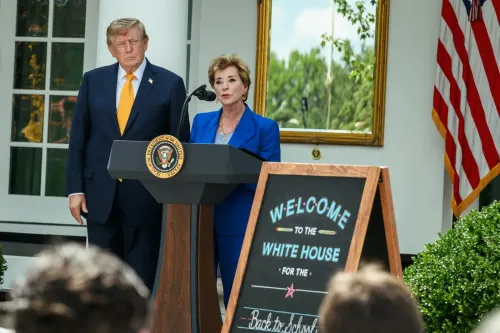
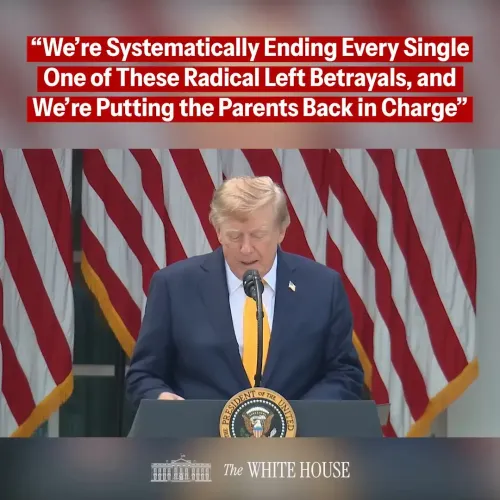
The White House is taking its education message to an unconventional classroom — the animated world of Tim and Moby. On Monday, August 24, 2026, the official White House account on X shared a video asking how President Donald Trump is 'revitalizing American education,' using the popular educational animation format to pitch the administration's K-12 vision directly to families and students.
The post links to a video framed around the Tim and Moby format — a well-known educational media style that breaks down complex topics for younger audiences. By deploying this format, the White House is signalling a deliberate effort to reach parents, students, and educators on platforms and in registers they already trust.
Trump's Long-Running Push to Reshape K-12 Education
The administration's education agenda has deep roots. During his first term (2017–2021), President Trump — alongside then-Secretary of Education Betsy DeVos — championed expanded school choice, tax-credit scholarship programs, and a rollback of federal oversight in favour of state and local control. The centrepiece legislative push was the Education Freedom Scholarships program, designed to funnel support toward private and charter school options for families who felt underserved by traditional public schooling. The administration also moved to rescind Obama-era accountability rules under the Every Student Succeeds Act in 2018, handing states wider flexibility in how they measure and report student performance. Vocational and career-technical education received renewed emphasis alongside academic tracks — a nod to working-class families seeking practical pathways for their children.The Federal Department in the Crosshairs
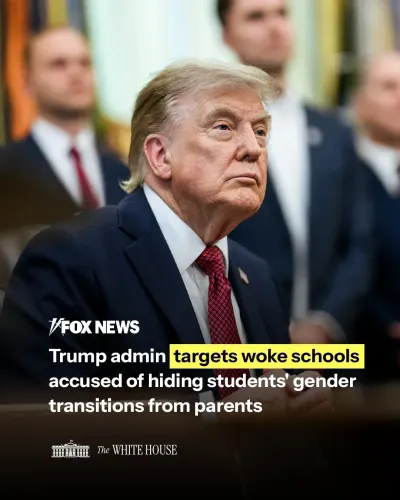
Underpinning all of this is a long-standing Republican argument: the U.S. Department of Education, established in 1979, represents federal overreach into a domain that the Constitution leaves to states. Proposals to restructure or even eliminate the department have circulated in Republican circles for decades, and the Trump administration has repeatedly tested the boundaries of federal education authority. Any FY2027 budget requests or new legislative proposals on school choice will be the clearest signal of how far the second term intends to push. Using an animated explainer to carry that message is itself a strategy — accessible, shareable, and designed to bypass traditional policy debate and speak directly to the kitchen-table concerns of American parents.Point of View
Or remains largely a messaging and regulatory operation, will define the real legacy of this education push.
NationPress
9 Oct 2026
Frequently Asked Questions
What is the White House Tim and Moby education video about?
The White House shared a video on August 24, 2026 using the Tim and Moby animated format to explain how President Trump says he is revitalizing American education, focusing on themes of school choice and reduced federal control.
What is Trump's education policy in his second term?
While specific second-term initiatives from 2026 are not yet part of the verified public record, Trump's education agenda has historically centred on expanding school choice, charter schools, tax-credit scholarships, and reducing the role of the federal Department of Education.
What is the Education Freedom Scholarships program?
The Education Freedom Scholarships program was a Trump first-term proposal designed to provide tax-credit scholarships to help families pay for private schooling, vocational training, or other alternatives to traditional public schools.
What is Trump's stance on the US Department of Education?
Trump and Republican allies have long argued the Department of Education, created in 1979, represents federal overreach; proposals to restructure or eliminate it have been a recurring feature of Republican education platforms.
What is school choice and why does Trump support it?
School choice refers to policies that allow public funding to follow students to the school of their family's choosing — including charter, private, or religious schools. Trump supports it as a way to give parents, especially in lower-income communities, more control over their children's education.