White House Touts Micron's Fresh US Investment in AI Push
Synopsis
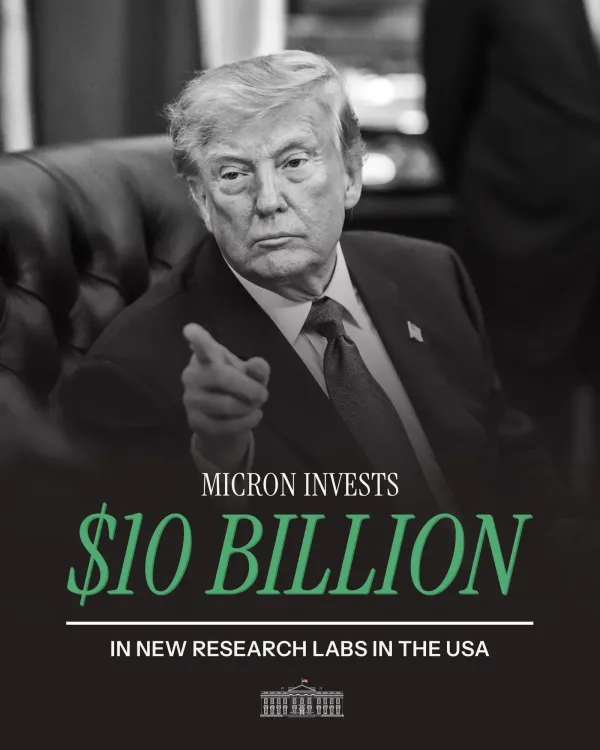
The White House announced on August 27, 2026 that Micron Technology is again investing in the United States, backing President Trump's push to reshore critical AI and advanced computing technologies and create tens of thousands of American jobs.
Key Takeaways
The White House announced on August 27, 2026 that Micron Technology is making a fresh investment in the United States.
Micron is a leading producer of DRAM and NAND memory chips essential for AI and advanced computing systems.
The investment is framed as supporting President Trump 's mission to create 'tens of thousands of American jobs' and reshore critical technologies.
US policy on semiconductor self-sufficiency dates to at least the 2019 Executive Order on Maintaining American Leadership in Artificial Intelligence .
The specific dollar value, facility locations, and job numbers tied to this announcement have not been independently confirmed.
Further milestones to watch include facility groundbreakings, federal incentive packages, and export-control updates on advanced memory chips.
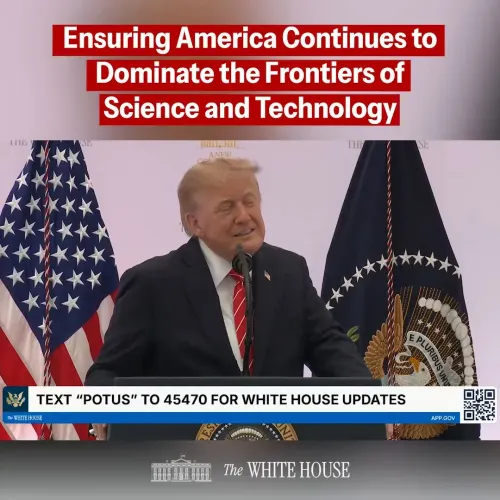
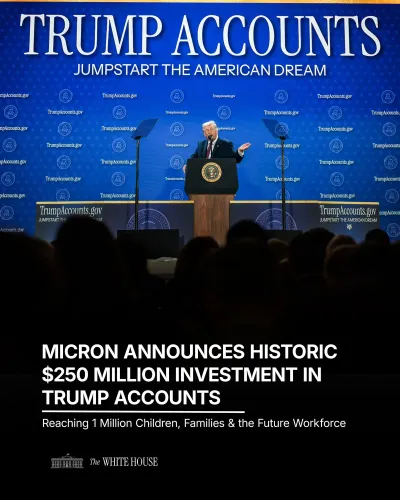
A semiconductor giant is doubling down on American soil — and the White House wants the world to notice. On Thursday, August 27, 2026, the official White House X account announced that Micron Technology is again investing in the United States, framing the move as a direct contribution to President Donald Trump's drive to reshore critical technologies and generate tens of thousands of American jobs.
The post declared the administration's ambition plainly: 'Keeping America at the forefront of AI and Advanced Computing.' Micron's renewed capital commitment, the White House said, aligns with the President's mission to bring 'critical technologies BACK to the United States.'
Why Micron's Memory Chips Matter for AI
Micron Technology is one of the world's leading producers of DRAM and NAND memory chips — the components that sit at the heart of AI accelerators, data centres, and advanced computing systems. Without high-bandwidth memory, the large language models and inference engines powering the AI race simply cannot run at scale. That makes Micron not just a chipmaker, but a strategic asset in the broader contest for AI supremacy. The company's decision to reinvest domestically fits a pattern that has accelerated across multiple US administrations: coaxing semiconductor capital back from Asia to reduce dependence on overseas fabrication, particularly amid intensifying strategic competition with China and the ever-present concentration risk around Taiwan.Reshoring as National Security Policy
The policy roots run deep. A 2019 Executive Order on Maintaining American Leadership in Artificial Intelligence directed federal agencies to prioritise US innovation in AI and related technologies — an early marker of the bipartisan consensus that semiconductor self-sufficiency is a national-security imperative, not merely an economic preference. The Trump administration has leaned hard into that logic, treating private-sector investment announcements as proof points for a broader industrial strategy. Tying Micron's expansion to job creation gives the White House a tangible, voter-legible win: factories, payrolls, and supply-chain security wrapped in a single headline. The specific scale of this latest Micron commitment — exact dollar figures, facility locations, and hiring timelines — has not been independently confirmed, and the White House post did not detail those figures.What Comes Next for US Chip Capacity
Investors and policy-watchers will now track whether this announcement is followed by a formal groundbreaking, federal incentive packages, or updated export-control guidance on advanced memory chips. The administration has previously used such moments to signal broader regulatory moves — and in the high-stakes world of AI hardware, the gap between an announcement and a production line is where the real story lives. For India, which has been building its own semiconductor ambitions and watching US chip-policy shifts closely for their downstream effect on technology supply chains and bilateral trade, the trajectory of American reshoring carries direct strategic relevance. The race for AI hardware dominance is being run in fabs, not just boardrooms — and the White House is making clear it intends to finish first.Point of View
The message is that Washington intends to use both policy incentives and public communications to accelerate domestic chip capacity. The open question is whether announcement velocity translates into fabrication-line reality — the gap between a White House post and a finished fab has historically been wide.
NationPress
12 Oct 2026
Frequently Asked Questions
Why is Micron investing in the United States again?
Micron is reinvesting in the US as part of a broader push, backed by the White House, to reshore semiconductor manufacturing and reduce dependence on overseas chip production, particularly in the context of AI and advanced computing demand.
What does Micron Technology make?
Micron Technology is one of the world's leading producers of DRAM and NAND memory chips, which are critical components in AI accelerators, data centres, and advanced computing systems.
How does Micron's investment relate to Trump's policy agenda?
The White House framed Micron's investment as directly supporting President Trump's mission to create tens of thousands of American jobs and bring critical technologies back to the United States.
What is the US policy background on AI and semiconductor leadership?
A 2019 Executive Order on Maintaining American Leadership in Artificial Intelligence directed federal agencies to prioritise US innovation in AI and related technologies, establishing a bipartisan policy foundation that subsequent administrations have built upon.
How does this US semiconductor push affect India?
India, which is developing its own semiconductor ambitions, watches US chip-policy shifts closely because they affect global technology supply chains, component availability, and the broader strategic environment for bilateral tech trade.