White House Backs US Farmers and Ranchers
Synopsis
The White House posted on October 27, 2026, reaffirming the Trump administration's backing for American farmers and ranchers — echoing a rural-economy priority that defined the first term through direct payments and the 2018 Farm Bill.
Key Takeaways
The White House posted on October 27, 2026 , declaring the Trump administration backs America's farmers and ranchers.
During Trump's first term, the Commodity Credit Corporation provided direct payments to farmers hurt by trade-war tariffs.
The Agricultural Improvement Act of 2018 reauthorized crop insurance, conservation funding, and commodity support programs.
Presidential statements backing agriculture are a consistent feature across administrations but carry particular political weight in rural heartland states.
Key next steps include Congressional action on farm bill reauthorization and new USDA budget or program announcements.
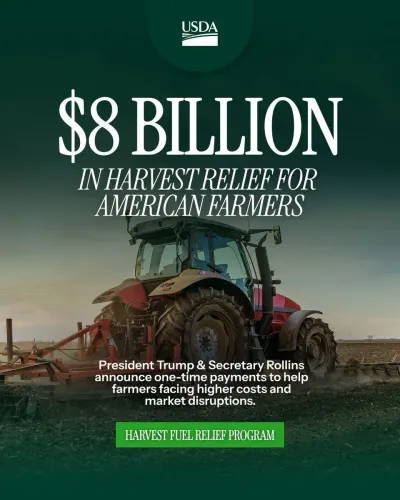
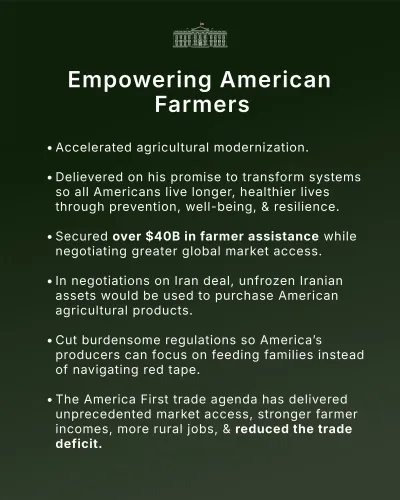
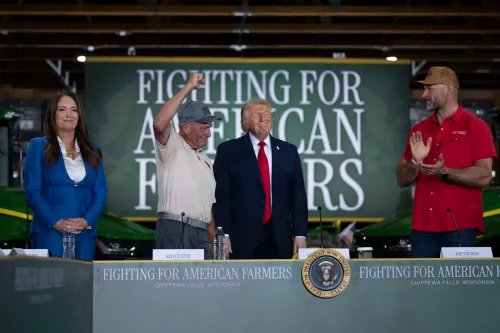
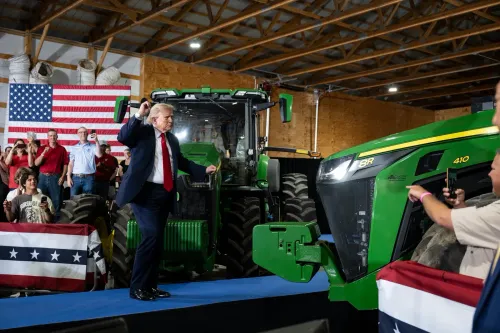
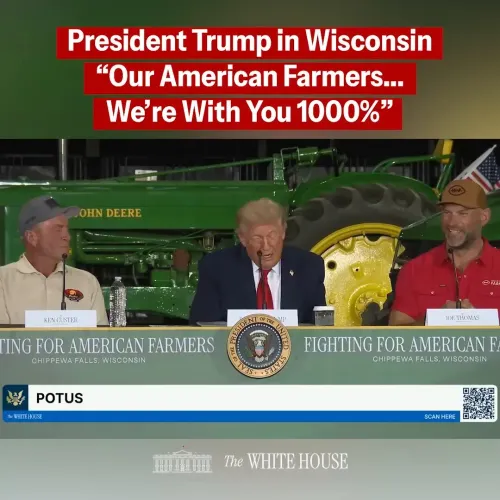
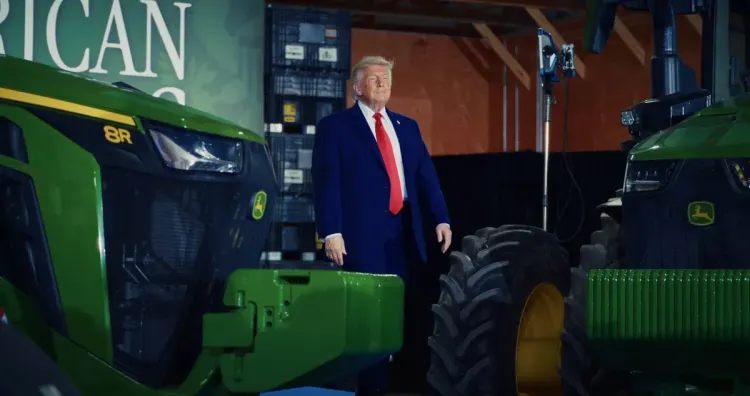
American agriculture is back at the centre of the White House's messaging. The White House posted on X on Tuesday, October 27, 2026, signalling the Trump administration's continued alignment with the country's farming and ranching communities.
The post — brief but deliberate — reads: 'THE TRUMP ADMINISTRATION BACKS AMERICA'S FARMERS & RANCHERS.' In Washington's political grammar, that kind of all-caps declaration is rarely accidental. It is a flag planted in the rural heartland.
A Long-Running Alliance Between Trump and Rural America
The relationship between the Trump White House and American agriculture runs deep. During his first term, Donald Trump deployed the Commodity Credit Corporation (CCC) to channel billions in direct payments to farmers after retaliatory tariffs from trade partners — particularly China — squeezed commodity markets. The logic was simple: Washington imposed the pain, Washington would cushion the blow. The landmark Agricultural Improvement Act of 2018, signed during Trump's first term, reauthorized sweeping farm support programs including crop insurance subsidies, conservation funding, and commodity price supports — a legislative scaffolding that American farmers and ranchers depend on through every growing season.Why the Signal Matters Now
Presidential affirmations of agricultural support are a staple of any administration, but the timing and frequency of such declarations carry weight. Rural constituencies — the backbone of America's corn belt, cattle ranches, and wheat fields — have historically responded strongly to visible White House engagement. A post like this, amplified through official channels, is both a policy statement and a political one. Farm bill reauthorization cycles, USDA budget negotiations, and ongoing global trade pressures mean that farming communities are always watching for concrete follow-through behind the rhetoric. The next steps — Congressional action on farm bill renewal and any fresh USDA program announcements — will determine whether this message is backed by dollars and legislation.Point of View
A coalition that proved decisive in presidential elections. Beyond symbolism, the administration's first-term record — combining Commodity Credit Corporation payments with the 2018 Farm Bill — gives the rhetoric a policy foundation. The real test in this second term will be whether that support translates into a renewed or expanded farm bill, especially as global trade dynamics and climate-linked crop pressures mount. For India-based observers, the posture is also a trade-policy signal: a Washington that champions domestic farmers often reaches for tariff tools, which ripple through global commodity markets.
NationPress
27 Oct 2026
Frequently Asked Questions
What has the Trump administration done for American farmers?
During Trump's first term, the administration used the Commodity Credit Corporation to make direct payments to farmers affected by trade-war retaliatory tariffs, and signed the Agricultural Improvement Act of 2018, which reauthorized major crop insurance, conservation, and commodity support programs.
What is the US Farm Bill and when is it due for renewal?
The Farm Bill is a sweeping piece of US legislation that funds crop insurance, conservation programs, and commodity supports for American farmers. It requires periodic reauthorization, and Congressional action on the next renewal is a key item to watch in 2026.
Why does the White House post about farmers and ranchers?
Presidential statements affirming agricultural support are a political and policy staple — they signal priority on rural economies, reinforce ties with farming constituencies, and often precede or accompany concrete legislative or budgetary action through the USDA.
How do US farm policies affect global commodity markets?
US agricultural policy, including tariffs and domestic support programs, can shift supply and pricing for globally traded commodities like corn, soybeans, wheat, and beef, affecting import-dependent countries including India.
What is the USDA's role in supporting American farmers?
The United States Department of Agriculture administers farm support programs, crop insurance schemes, conservation funding, and commodity price supports that together form the financial safety net for American farmers and ranchers.