White House Hails Christopher Columbus as a Hero on Columbus Day
Synopsis
The White House marked Columbus Day 2026 by calling Christopher Columbus 'a hero,' making a pointed political statement amid the long-running American debate over whether to celebrate or replace the federal holiday with Indigenous Peoples' Day.
Key Takeaways
The White House posted a Columbus Day message on October 12, 2026 , declaring Christopher Columbus 'a hero' in the current administration.
Columbus Day is a federal U.S. holiday observed on the second Monday of October, commemorating Columbus's arrival in the Americas on October 12, 1492 .
The phrase 'In this Administration' signals a deliberate contrast with predecessors who leaned toward recognising Indigenous Peoples' Day instead.
Several U.S. states and cities — including Washington D.C. and Los Angeles — have officially replaced Columbus Day with Indigenous Peoples' Day.
The use of the word 'hero' is a moral endorsement, not merely a historical acknowledgment, amplifying the political stakes of the message.
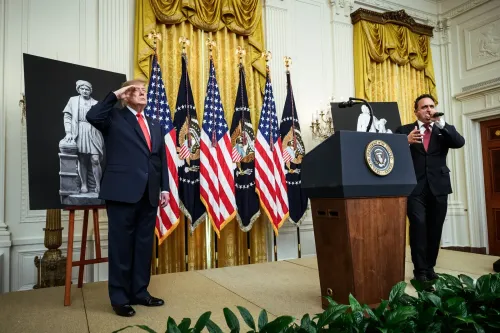
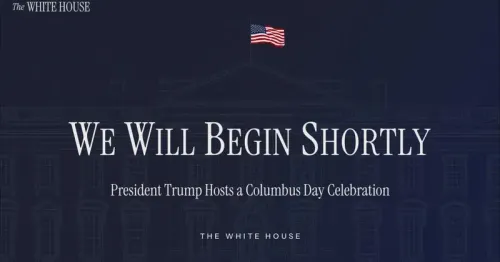
A federal holiday, a centuries-old explorer, and a very deliberate political statement — the White House made its position unmistakable on Monday, October 12, 2026, declaring Christopher Columbus a hero and wishing Americans a Happy Columbus Day.
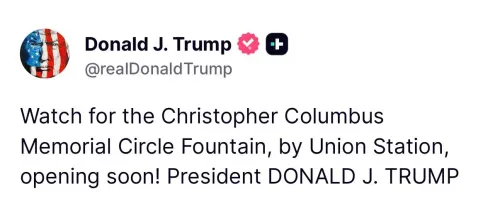
The official White House account posted: 'In this Administration, Christopher Columbus is a hero! Happy Columbus Day!' — a short message carrying significant cultural weight in the ongoing American debate over how the nation commemorates its colonial past.
Columbus Day vs. Indigenous Peoples' Day: The Fault Line
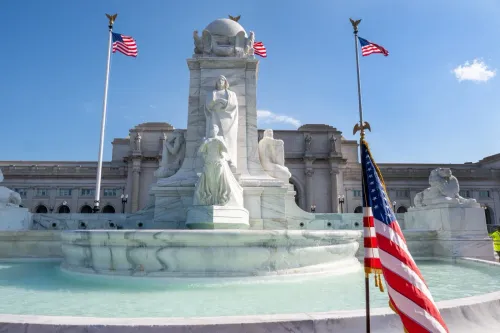
For decades, Columbus Day — observed every second Monday of October — has sat at the centre of a fierce cultural and political divide in the United States. The holiday, a federal observance since 1937, commemorates Christopher Columbus's arrival in the Americas on October 12, 1492. Italian-American communities have long championed it as a celebration of their heritage and contributions to the United States. But a growing number of states, cities, and advocacy groups have replaced or supplemented it with Indigenous Peoples' Day, arguing that celebrating Columbus glosses over the violence, displacement, and colonisation that followed his voyages. Cities like Washington D.C., Los Angeles, and states including Alaska, Vermont, and New Mexico have made the switch official.A Pointed Political Choice
The White House's framing — 'In this Administration' — is the operative phrase. It is not a passive acknowledgment of a calendar date; it is a conscious positioning. By front-loading 'this Administration,' the post signals a deliberate departure from predecessors who either soft-pedalled Columbus Day messaging or emphasised Indigenous Peoples' Day alongside it. The choice to call Columbus 'a hero' doubles down on that signal. Heroism implies moral endorsement, not merely historical acknowledgment — and in today's political climate, that word choice will be heard clearly on both sides of the debate.Why Indians Are Watching
For Indian audiences, the U.S. culture-war dimension of Columbus Day may feel distant, but the underlying question — how nations reckon with colonial histories — resonates deeply. The American debate mirrors conversations in India about how colonial-era monuments, place names, and commemorations are treated. The White House's emphatic embrace of Columbus signals that the current U.S. administration leans firmly toward triumphalist readings of exploration history rather than revisionist or reconciliatory ones, a posture that shapes the broader cultural diplomacy the administration projects internationally. The debate is not going quiet anytime soon. And with the White House now on record calling Columbus a hero, the second Monday of October just got a lot louder.Point of View
' the executive office draws an explicit contrast with the previous era's more equivocal approach to the holiday, aligning firmly with Italian-American heritage communities and cultural-conservative constituencies who resist the Indigenous Peoples' Day reframing. The choice of 'hero' over neutral language like 'explorer' or 'discoverer' suggests the administration sees the Columbus debate as a front in a broader battle over American historical memory — one it intends to fight, not finesse. For observers tracking U.S. soft power and cultural diplomacy, this is a data point about how the current administration intends to narrate American identity at home and abroad.
NationPress
12 Oct 2026
Frequently Asked Questions
What is Columbus Day and why is it celebrated in the US?
Columbus Day is a U.S. federal holiday observed on the second Monday of October, marking Christopher Columbus's arrival in the Americas on October 12, 1492. It has been a federal holiday since 1937 and is particularly significant to Italian-American communities.
Why did the White House call Christopher Columbus a hero in 2026?
The White House post on October 12, 2026 declared Columbus a hero as a deliberate political statement, using the phrase 'In this Administration' to signal a firm cultural stance in favour of the traditional Columbus Day narrative over the Indigenous Peoples' Day alternative.
What is Indigenous Peoples' Day and how is it different from Columbus Day?
Indigenous Peoples' Day is an alternative or replacement observance adopted by several U.S. states and cities that honours Native American communities and their histories, as opposed to celebrating Columbus, whose voyages led to widespread colonisation and displacement of indigenous peoples.
Which U.S. states have replaced Columbus Day with Indigenous Peoples' Day?
States including Alaska, Vermont, and New Mexico, and cities like Washington D.C. and Los Angeles, have officially replaced or supplemented Columbus Day with Indigenous Peoples' Day.
Why does the Columbus Day debate matter outside the United States?
The Columbus Day debate reflects a broader global conversation about how nations reckon with colonial histories, making it relevant in countries like India that have their own ongoing discussions about colonial-era monuments, commemorations, and historical narratives.