White House Claims US Lead in Super Intelligence Race

Synopsis
The White House declared on 30 September 2026 that 'America leads the future of Super Intelligence,' reinforcing Washington's strategic posture in frontier AI amid sustained competition with China and years of federal investment in advanced AI research and chip export controls.
Key Takeaways
The White House posted on 30 September 2026 that 'America leads the future of Super Intelligence.' The claim builds on the 2023 Executive Order on the Safe, Secure, and Trustworthy Development and Use of Artificial Intelligence , a landmark federal framework for frontier AI.
US agencies including DARPA and the National Science Foundation have long funded foundational AI research alongside the private sector.
Export controls on advanced semiconductors have been a key US tool to preserve computational advantage over rivals, particularly China .
The precise policy trigger or programme behind the 'Super Intelligence' declaration has not been confirmed.
Further executive actions or new multilateral AI governance initiatives remain on watch as potential next steps.
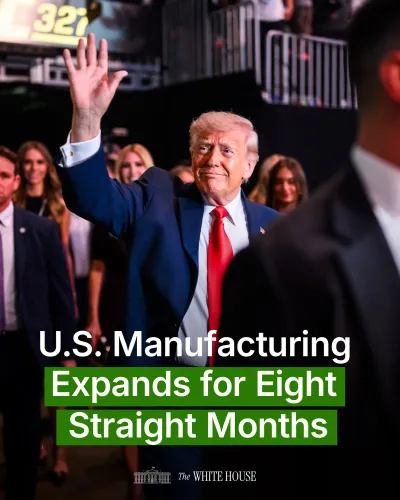
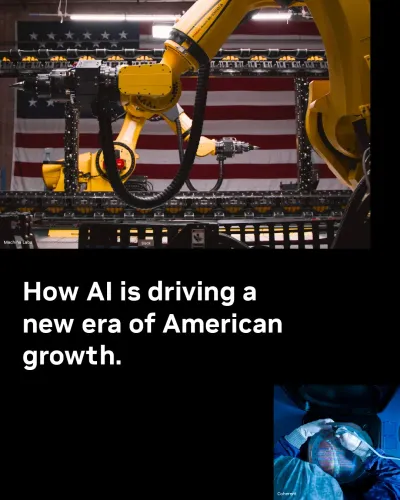
The race to the top of the artificial intelligence frontier has a new rallying cry from the world's most powerful address. The White House posted a pointed declaration on Wednesday, 30 September 2026, asserting that 'America leads the future of Super Intelligence' — a statement short on specifics but long on strategic signal.
A Two-Word Claim With Decades of Policy Behind It
The phrase 'Super Intelligence' — broadly understood as AI systems that surpass human cognitive ability across all domains — has moved from academic philosophy into the center of great-power competition. The assertion from the White House lands against a backdrop of sustained federal investment: from DARPA and the National Science Foundation funding foundational research, to the sweeping Executive Order on the Safe, Secure, and Trustworthy Development and Use of Artificial Intelligence signed in 2023, which set federal benchmarks for advancing and governing frontier AI.
The US has also paired that domestic push with hard-edged export controls on advanced semiconductors — a calculated move to deny rivals the computational horsepower needed to keep pace at the frontier. The underlying logic: whoever commands the chips commands the models, and whoever commands the models commands what comes next.
Where China Fits — and Why This Post Is a Shot Across the Bow
The statement lands squarely within a pattern of Washington framing frontier AI as a strategic competition, not merely a commercial one. China has made its own headline-grabbing advances in large language models and autonomous systems, and successive US administrations — regardless of party — have treated the technology gap as a national-security variable. A public declaration of leadership from the official White House account is part posture, part policy signal: it tells allies, investors, and rivals where Washington's ambitions are pointed.
What 'Super Intelligence' means precisely in this context — and whether any specific programme, breakthrough, or executive action triggered the post — has not been confirmed. The declaration, for now, is a flag planted: loud, intentional, and certain to reverberate through boardrooms from San Francisco to Beijing.
What Comes After the Claim
The post leaves the most consequential questions open. Will a formal executive action follow — new safety standards, a fresh funding tranche, or a multilateral governance framework? The global AI community, Indian tech policymakers watching their own AI Mission, and competing state actors will all be parsing the next move from Washington carefully. A flag planted is only as meaningful as the ground it actually holds.
Point of View
With chip export controls and federal R&D funding as the twin levers. For India, which is advancing its own national AI Mission, Washington's assertiveness clarifies the stakes and the implicit pressure on every nation to pick a lane. The absence of specifics is itself telling: in geopolitical signalling, the flag sometimes matters more than the details of the ground beneath it.
NationPress
30 Sept 2026
Frequently Asked Questions
What did the White House say about Super Intelligence?
The White House posted on 30 September 2026 that 'America leads the future of Super Intelligence,' asserting US dominance in the development of advanced artificial intelligence.
What is Super Intelligence in AI?
Super Intelligence generally refers to an AI system that surpasses human cognitive ability across all domains — it remains a frontier concept that has moved from academic theory into active geopolitical and policy discourse.
What is the US policy on artificial intelligence?
The US has backed AI development through DARPA, the National Science Foundation, and a landmark 2023 Executive Order on AI safety and capability, while using semiconductor export controls to limit rivals' access to advanced computing hardware.
How does the US AI race with China affect India?
As the US and China compete for frontier AI supremacy, India — developing its own national AI strategy — faces pressure to align with or navigate between the two blocs, affecting technology access, chip supply chains, and research partnerships.
Will the US introduce new AI laws after this announcement?
No specific legislation or executive action has been confirmed in connection with this post; analysts are watching for further executive orders, new federal funding announcements, or multilateral AI governance proposals from Washington.