WHCA dinner: Press freedom defence delivered to Trump at rescheduled event
Synopsis
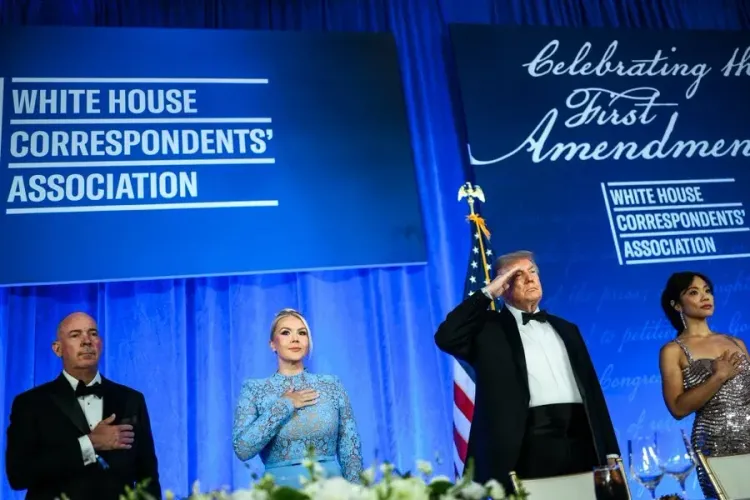
Months after an armed attack forced a postponement, the White House Correspondents' dinner finally took place — and outgoing WHCA chief Weijia Jiang used the moment to draw a sharp line for Trump: criticising the press is fair game, but undermining it is what the founders explicitly sought to prevent. The rescheduled event carried a weight that the traditional roast-and-scholarship-fundraiser rarely does.
Key Takeaways
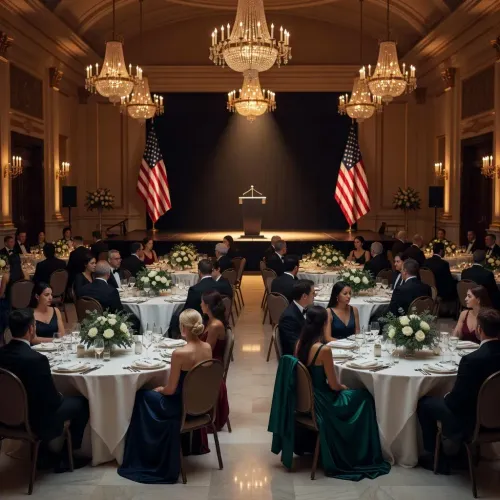
The White House Correspondents' Association (WHCA) held its rescheduled annual dinner on Friday in Washington , months after an armed attack forced the original event's postponement.
Outgoing WHCA President Weijia Jiang drew a direct distinction for President Trump between criticising the press — which she called healthy — and trying to undermine it, which she said the founders sought to prevent.
Jiang recalled witnessing Trump and his cabinet gathering information during the April crisis, describing it as a shared responsibility between government and press to inform the public.
Incoming WHCA President Jackie Heinrich thanked Trump for attending and pledged to pursue facts 'without fear or favour.' Secret Service Officer Victor Gonzalez , wounded during the April attack, was among those honoured at the event.
The WHCA , founded in 1914 , uses the annual dinner primarily to raise scholarship funds for aspiring journalists.
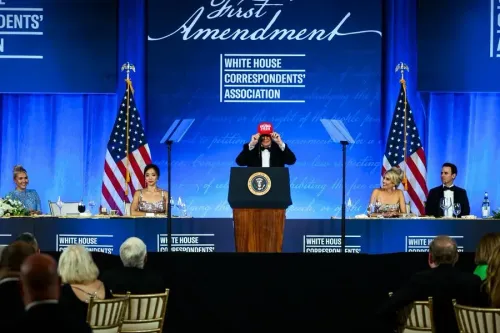
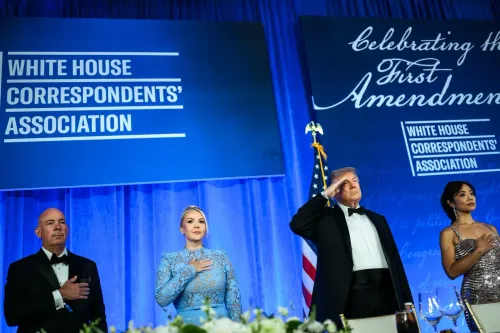
The White House Correspondents' Association (WHCA) used its rescheduled annual dinner on Friday in Washington to mount a pointed defence of the First Amendment, telling President Donald Trump directly that while holding journalists accountable is legitimate, systematically undermining press freedom strikes at a foundational pillar of American democracy.
Outgoing President's Remarks
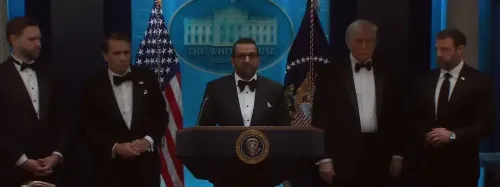
Outgoing WHCA President Weijia Jiang addressed the gathering before introducing Trump, framing the historically tense relationship between the White House and the press corps as one ultimately anchored in constitutional guarantees that serve the public interest.
'There is a difference — an existential difference — between criticising the press and trying to undermine it,' Jiang said. 'One is healthy, and it makes all of us better. The other is exactly what the founders hoped to prevent.'
Speaking to Trump in notably direct terms, she cast the back-and-forth between presidents and reporters as intrinsic to democratic governance. 'When we ask questions, you push back. You give us answers, and we push back. You have always been a deal guy. Well, that's the deal. The First Amendment is a done deal,' she said, before inviting the room to 'raise a glass to what makes ours a beautiful country.'
Shadow of the April Attack
The dinner had originally been scheduled for April but was postponed after an armed attack disrupted the event. Jiang addressed that episode directly, saying it had strengthened rather than shaken the resolve of journalists to carry on. 'That night tested all of us and revealed something worth fighting for,' she said, noting that reporters, photographers and television crews continued gathering and transmitting information even amid the emergency.
She also recalled observing Trump and members of his cabinet working to gather and relay information during the crisis — a moment she described as an unexpected parallel between the roles of government and press. 'I got a rare glimpse of something few of us ever see in real time. President Trump was huddled with members of his cabinet, asking questions, finding the best way to share the answers with everyone, which is our job description too,' she said.
Earlier in her address, Jiang drew a broader lesson from the violence: 'The attempt on President Trump's life last April was a sobering reminder that democracy is not immune to violence, and the freedoms that we cherish can never be taken for granted.'
Incoming President and Honourees
Incoming WHCA President Jackie Heinrich thanked Trump for attending and reaffirmed the organisation's commitment to pursuing facts 'without fear or favour.' 'We're grateful to have President Trump here tonight taking part in this tradition that recognises the essential role of a free press in our democracy,' she said.
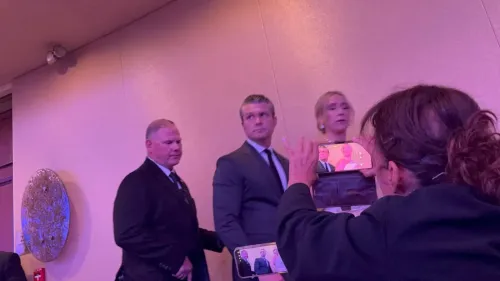
The evening also honoured Secret Service Officer Victor Gonzalez, who was wounded while confronting the gunman during the April attack, alongside journalists, photographers and media organisations recognised for outstanding reporting.
Trump's Response
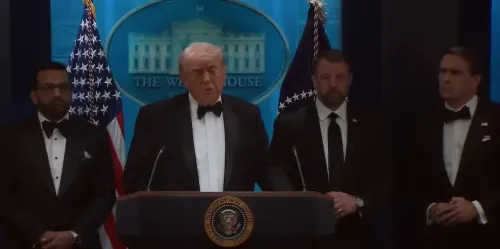
Trump, in his own remarks, praised the Secret Service, condemned political violence and acknowledged that friction between presidents and journalists was a normal feature of public life. He also, according to reports, criticised sections of the media and made jokes about reporters during his speech.
About the WHCA
Founded in 1914, the White House Correspondents' Association represents journalists who cover the US presidency. Its annual dinner primarily raises scholarship funds for aspiring journalists and has long served as a rare occasion where the White House press corps and the sitting president share a stage, despite often adversarial day-to-day relations. This year's rescheduled event carried added weight given the security incident that had forced the postponement.
Point of View
But the rescheduled 2025 edition — held in the shadow of an actual shooting — gave Weijia Jiang's remarks an unusual moral weight. Her framing was precise: not a blanket defence of journalists, but a constitutional argument that distinguishing between criticism and suppression is not a matter of opinion but of founding principle. What mainstream coverage may underplay is that Trump's attendance itself was a strategic choice — one that normalises the tradition even as his administration has pursued policies that press freedom advocates say do the opposite. The real question the dinner leaves unanswered is whether shared-stage civility translates into any change in the day-to-day conditions under which White House reporters actually work.
NationPress
25 Jul 2026
Frequently Asked Questions
Why was the White House Correspondents' Dinner rescheduled in 2025?
The original dinner was interrupted by an armed attack, forcing organisers to postpone the event. The rescheduled dinner took place on Friday, several months after the April incident.
What did WHCA President Weijia Jiang say to President Trump?
Jiang drew a sharp distinction between criticising the press, which she called healthy and productive, and attempting to undermine it, which she said was 'exactly what the founders hoped to prevent.' She also told Trump that the First Amendment was 'a done deal.'
Who is Jackie Heinrich and what role does she play?
Jackie Heinrich is the incoming President of the White House Correspondents' Association. At the dinner she thanked Trump for attending and reaffirmed the WHCA's commitment to reporting facts 'without fear or favour.'
Who was honoured at the rescheduled WHCA dinner?
Secret Service Officer Victor Gonzalez, who was wounded while confronting the gunman during the April attack, was among those honoured. Journalists, photographers and media organisations recognised for outstanding reporting were also acknowledged.
What is the White House Correspondents' Association?
Founded in 1914, the WHCA represents journalists who cover the US presidency. Its annual dinner primarily raises scholarship funds for aspiring journalists and serves as a rare occasion where the White House press corps and the sitting president share a stage.