CM Bhajan Lal Highlights Rajasthan's Investment Push
Synopsis
Rajasthan CM Bhajan Lal Sharma on 25 July 2026 highlighted the state's investment-friendly reforms, citing the RAJ NIVESH digital platform, single-window clearances, and double-engine governance as drivers of industrial growth and employment creation under the 'Developed Rajasthan' vision.
Key Takeaways
Rajasthan CM Bhajan Lal Sharma posted on 25 July 2026 about the state's improving investment climate.
The RAJ NIVESH digital platform and a single-window system are being used to simplify and make investment processes transparent.
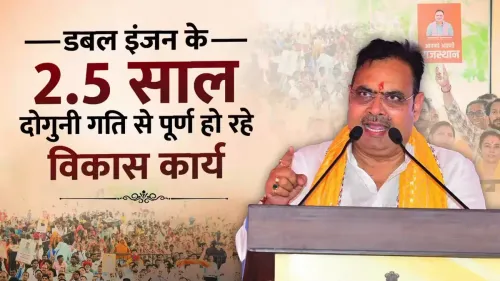
The 'double-engine government' framework — aligned BJP governments at state and centre — is cited as a structural enabler of faster policy delivery.
The reforms target investors, expanding industries, and youth seeking new employment opportunities.
The broader goal is the realisation of Viksit Rajasthan ('Developed Rajasthan'), framing investment growth as central to the state's long-term economic vision.
Similar single-window and digital investment models have been adopted in Gujarat and Madhya Pradesh , reflecting a BJP-wide governance pattern.
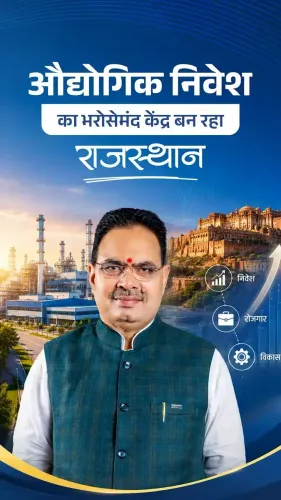
Rajasthan Chief Minister Bhajan Lal Sharma on Saturday, 25 July 2026, highlighted the state's growing investment climate, crediting coordinated central and state governance for creating conditions that are attracting industries and generating employment across Rajasthan.
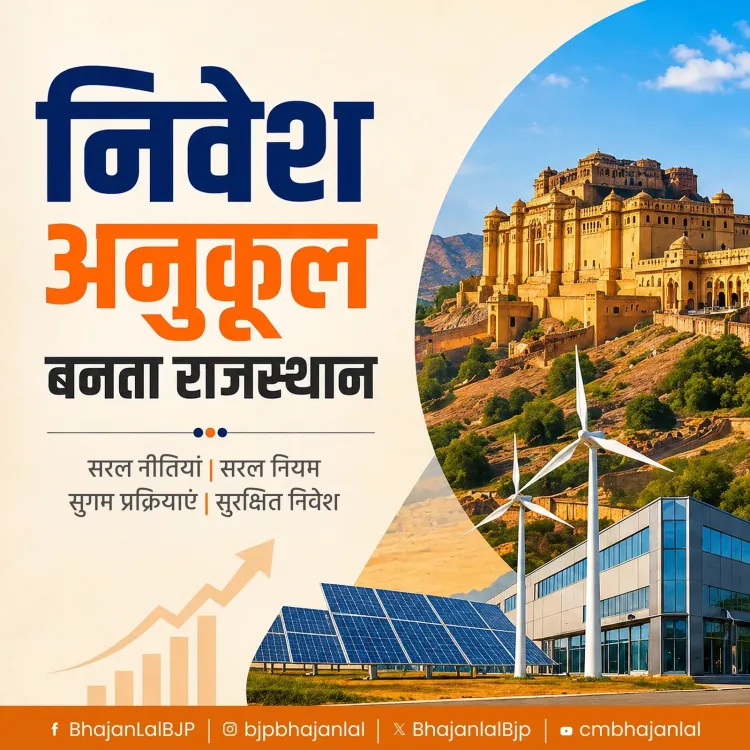
In his post, the Chief Minister stated: 'डबल इंजन सरकार के प्रयासों से राजस्थान में निवेश के लिए अनुकूल वातावरण तैयार हुआ है' — 'The efforts of the double-engine government have created a favourable environment for investment in Rajasthan.' He pointed to policy reforms, new investment policies, the RAJ NIVESH digital platform, and a single-window system as the primary instruments simplifying and making processes transparent for investors.
Context
The BJP-led government in Rajasthan, which took office in December 2023, has consistently framed its economic agenda around investment facilitation and ease of doing business. The concept of a 'double-engine government' — where the ruling party at the state level is aligned with the party in power at the centre — is presented as a structural advantage that allows faster clearances and coordinated policy implementation.
Sharma's post comes as the state continues to position itself as a competitive investment destination, with reforms aimed at reducing bureaucratic friction for both domestic and foreign capital.
Policy Backdrop
The RAJ NIVESH platform is a state-level digital initiative designed to bring investment-related approvals and processes onto a single interface, reducing the need for investors to navigate multiple departments. Alongside this, the single-window system is intended to consolidate regulatory clearances, a model that has been adopted by several other BJP-governed states including Gujarat and Madhya Pradesh.
These state-level efforts align with the national Make in India initiative launched in 2014, which sought to improve India's manufacturing base and attract capital by streamlining regulatory frameworks. Rajasthan's push fits within a broader cooperative federalism model where state governments are expected to operationalise central policy goals through local institutional reforms.
Stakeholders and Impact
The primary beneficiaries of these reforms, as outlined by the Chief Minister, are investors, established industries looking to expand, and youth seeking new employment opportunities. Sharma specifically noted that growing investor confidence and industrial expansion are generating fresh employment avenues, directly linking investment policy to job creation.
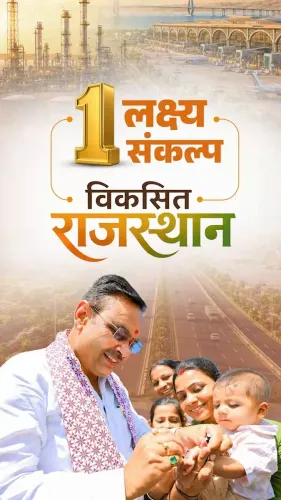
For industries already operating in Rajasthan, the simplification of processes through digital platforms and single-window clearances reduces compliance costs and approval timelines. The state's ambition, described in the post as 'विकसित राजस्थान' ('Developed Rajasthan'), frames this investment growth as central to a longer-term vision of economic transformation.
What's Next
Attention will now turn to measurable outcomes: actual investment inflows, the volume of project approvals processed through the RAJ NIVESH platform, and any forthcoming state investment summits that could serve as formal showcases for Rajasthan's reformed business environment. The government's ability to convert stated policy intent into verifiable economic data will be the key test of this narrative.
As Rajasthan competes with other industrially active states for capital allocation, the pace of institutional reform and investor sentiment on the ground will determine how far the 'Developed Rajasthan' vision advances in the near term.
Point of View
With digital infrastructure and process reform as the proof points. The invocation of 'double-engine government' is as much a political branding exercise as a governance claim, tying state performance directly to the BJP's national identity. This pattern — digital platforms, single-window systems, ease-of-doing-business rankings — has become the standard playbook across BJP-governed states, making differentiation between them increasingly a matter of execution rather than design. The real test for Rajasthan will come when investment summit commitments are measured against actual on-ground disbursements and job numbers.
NationPress
25 Jul 2026
Frequently Asked Questions
What is the RAJ NIVESH platform in Rajasthan?
RAJ NIVESH is a digital platform introduced by the Rajasthan government to streamline investment approvals and processes, allowing investors to interact with multiple departments through a single online interface.
What did CM Bhajan Lal Sharma say about investment in Rajasthan?
CM Bhajan Lal Sharma stated on 25 July 2026 that the double-engine government's efforts have created a favourable investment environment in Rajasthan through policy reforms, the RAJ NIVESH platform, and a single-window clearance system.
What is the 'double engine government' concept in BJP politics?
'Double engine government' is a BJP term referring to states where the same party governs both at the state and central levels, which the party argues enables faster and more coordinated implementation of development and investment policies.
What is 'Viksit Rajasthan' or Developed Rajasthan?
'Viksit Rajasthan' is the Rajasthan government's long-term development vision, under which investment growth, industrial expansion, and job creation are framed as essential milestones toward building a developed state economy.
How is Rajasthan attracting investment under the BJP government?
The BJP government in Rajasthan, which took office in December 2023, has pursued investment attraction through policy reforms, a single-window clearance system, and the RAJ NIVESH digital platform, in line with similar models in Gujarat and Madhya Pradesh.