White House declares only two genders as official US policy
Synopsis
The White House declared on 6 November 2026 that official US government policy recognises only two genders — male and female — signalling a sweeping reversal of Biden-era gender-identity guidance across all federal agencies.
Key Takeaways
The White House posted on 6 November 2026 that it is 'the official policy of the United States government that there are only two genders: male and female.' The declaration directly reverses the approach set by Executive Order 13988 , signed by President Biden in January 2021 , which directed agencies to cover gender identity under sex-discrimination protections.
Federal agencies are now expected to align their guidance, forms, and enforcement with a binary biological definition of sex.
Key policy areas affected include Title IX enforcement in schools, federal identification documents, and federally funded healthcare programmes.
Legal challenges from advocacy groups and affected individuals are widely anticipated in federal courts.
In a terse, unambiguous declaration, the White House announced on Friday, 6 November 2026 that recognising only two genders — male and female — is now the official position of the United States government. The statement, posted on X, leaves no room for interpretation: federal agencies are expected to align.
A policy pendulum that keeps swinging
This declaration is not the first time Washington has used an executive proclamation to redraw the boundaries of gender policy — but it is among the most direct. US federal policy on sex and gender definitions has long tracked the political weather in Washington. Under President Biden, Executive Order 13988 — signed in January 2021 — directed federal agencies to interpret sex-discrimination protections broadly enough to encompass gender identity, reshaping rules across healthcare, education, and federal employment.
The current statement inverts that framework entirely. By anchoring policy in a binary biological definition, the White House signals that every federal agency — from the Department of Education to the Social Security Administration — must now recalibrate its guidance, forms, and enforcement posture accordingly.
Where the rubber meets the road: Title IX, ID documents, healthcare
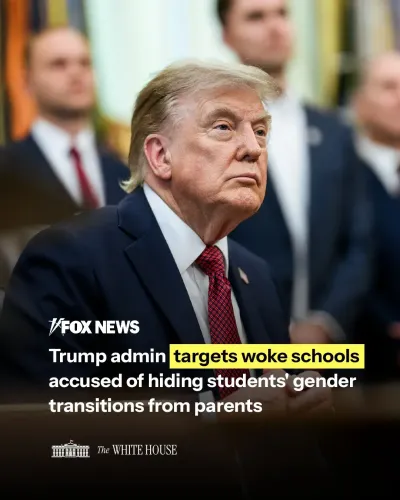
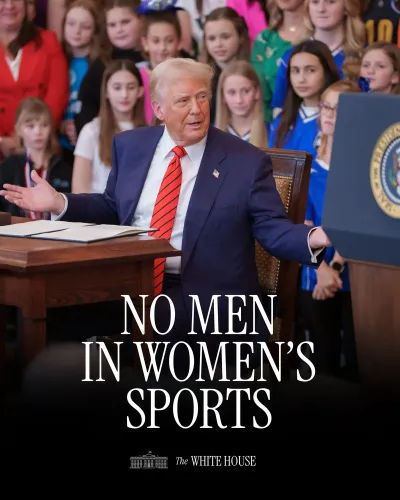
The real-world stakes are significant. Title IX, the federal statute barring sex discrimination in schools receiving federal funding, has been a flashpoint in this debate for years — with competing administrations issuing contradictory guidance on whether transgender students are covered. A blanket two-gender policy sets the stage for fresh guidance that could affect school sports, bathrooms, and disciplinary procedures across thousands of institutions.
Federal identification documents — passports, Social Security records — and eligibility rules for federally funded healthcare programmes are equally in the crosshairs. Advocacy groups on both sides of the debate are certain to mobilise swiftly, and legal challenges in federal courts are a near-certainty.
The pattern behind the proclamation
What makes this moment notable is its brevity. The White House distilled a sweeping policy position into a single sentence on a social-media platform — a governing style that compresses complex regulatory intent into a shareable directive. That compression matters: federal agencies, states, and litigants will now spend considerable time and legal energy translating eleven words into binding administrative action.
The question now is not what the policy says — that is crystalline — but how fast, and how uniformly, the machinery of the federal government moves to enforce it.
Point of View
Blunt proclamations on gender to put federal bureaucracies on notice and to energise their base simultaneously. The brevity is strategic — it pre-empts nuanced debate and forces opponents into a reactive, legalese-heavy posture. What the statement does not do is specify the implementing mechanism, which means the genuine policy battle will play out agency by agency, court case by court case, in the months ahead.
NationPress
7 Nov 2026
Frequently Asked Questions
What did the White House say about gender policy?
The White House stated on 6 November 2026 that it is the official policy of the United States government that there are only two genders: male and female.
How does this change US gender policy?
It reverses the Biden administration's Executive Order 13988 of January 2021, which had directed federal agencies to interpret sex-discrimination protections to include gender identity. The new stance returns federal policy to a binary biological definition.
Which areas of US law will be affected by this gender policy?
Key areas include Title IX enforcement in schools, federal identification documents such as passports and Social Security records, and eligibility criteria for federally funded healthcare programmes.
Can this White House gender policy be challenged in court?
Yes. Advocacy groups and affected individuals are expected to file legal challenges in federal courts, as has happened with every major shift in US gender policy over the past decade.
Does this policy affect India or Indian citizens?
Directly, no — but Indian nationals holding US visas, green cards, or studying in US schools under federal funding may eventually be affected by how federal agencies implement this policy in areas like identification and campus rules.