White House Declares: US Elections for Citizens Only
Synopsis
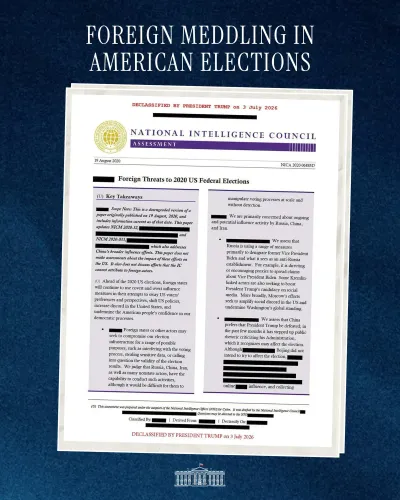
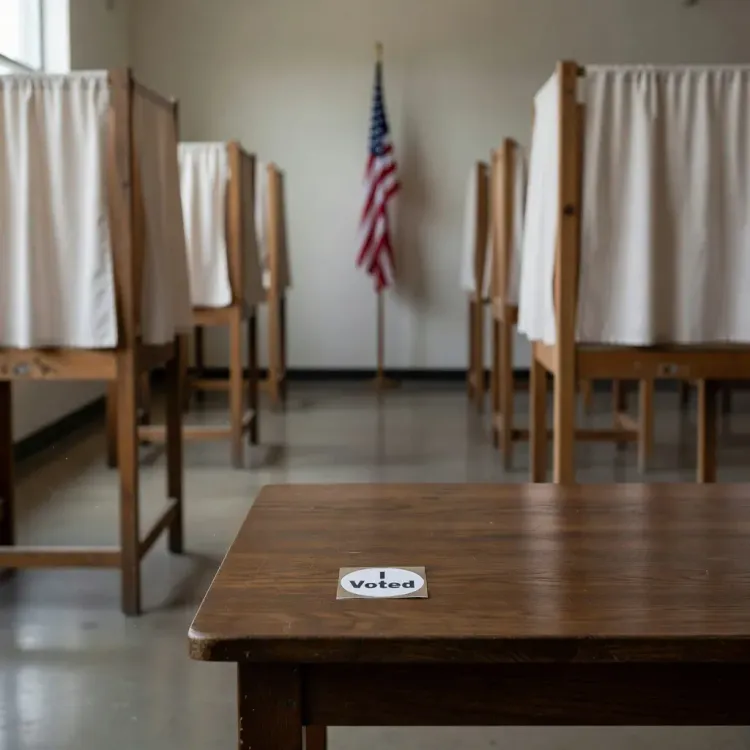
The White House on August 1, 2026 declared 'American elections should be for American citizens only,' restating a federal legal principle while signalling renewed executive focus on citizenship verification and local non-citizen voting rules.
Key Takeaways
The White House posted on August 1, 2026 that American elections should be restricted to US citizens.
Federal law has barred non-citizens from voting in federal elections since the Illegal Immigration Reform and Immigrant Responsibility Act of 1996 .
A small number of US localities permit non-citizens to vote in municipal races only — a separate and contested legal space.
The post signals possible executive or legislative action on citizenship verification on voter rolls .
The statement is political in register, not merely legal — designed to mobilise public opinion on immigration and election integrity.
A four-word declaration from the highest office in the United States landed on Saturday, August 1, 2026 — and it carried the full weight of a political statement: The White House posted, 'American elections should be for American citizens only.'
A principle as old as federal law — and as contested as ever
The statement is not legally novel. Federal law under the Illegal Immigration Reform and Immigrant Responsibility Act of 1996 already makes it unlawful for non-citizens to vote in federal elections — a prohibition that has been on the books for three decades. What the White House post does is plant that principle squarely in the current political moment, signalling that citizenship verification in elections remains an active priority at the executive level.
Where the real debate lives: local non-citizen voting
The sharper tension in American election law is not at the federal level but in a handful of localities that have, over the years, permitted non-citizens to vote in municipal races — school board elections, city council seats, local referendums. These arrangements exist in a narrow legal grey zone, distinct from federal and state elections. The White House statement, while not naming any specific jurisdiction, lands squarely in that debate. Possible legislative or executive measures targeting citizenship verification on voter rolls — or directly challenging local non-citizen voting rules — are now firmly in view.
Why this post travels beyond US borders
For audiences in India and across the democratic world, the statement touches a question that resonates universally: who counts as a legitimate participant in a nation's democratic process? The US debate over non-citizen voting, however narrow in legal scope, feeds into a broader global conversation about immigration, belonging, and the boundaries of civic rights. The White House choosing to restate this principle publicly — rather than through a policy memo — signals it is meant to mobilise opinion, not just restate statute.
With elections and immigration enforcement already dominating the American political landscape in 2026, this post is unlikely to be a standalone moment. Watch for executive orders, proposed legislation, or federal guidance on voter roll audits in the weeks ahead.
Point of View
Full stop') is a communications choice: it invites broad agreement on a principle while leaving room to target specific policies, such as local non-citizen voting or voter roll audits, without naming them. For observers of US democratic backsliding debates, the significance lies not in what the post says legally, but in what executive actions it may be previewing.
NationPress
2 Aug 2026
Frequently Asked Questions
Can non-citizens vote in US elections?
Non-citizens are barred by federal law from voting in US federal elections under the Illegal Immigration Reform and Immigrant Responsibility Act of 1996. A small number of localities have separately allowed non-citizens to participate in municipal races only.
Why did the White House post about citizen-only elections?
The White House posted on August 1, 2026 reaffirming that American elections should be for citizens only, signalling that citizenship verification in elections remains an executive priority, potentially ahead of legislative or regulatory action.
Which US cities allow non-citizens to vote?
A small number of US localities have permitted non-citizen voting in municipal elections such as school board or city council races. These arrangements are distinct from state and federal elections and remain legally contested.
What is the Illegal Immigration Reform and Immigrant Responsibility Act of 1996?
It is a US federal law enacted in 1996 that, among other provisions, made it explicitly unlawful for non-citizens to vote in federal elections, establishing the legal baseline that governs American elections today.
What executive actions on voter rolls could follow this White House post?
Analysts are watching for possible executive orders or legislation targeting citizenship verification on voter rolls, or federal challenges to local rules that permit non-citizen participation in municipal races.