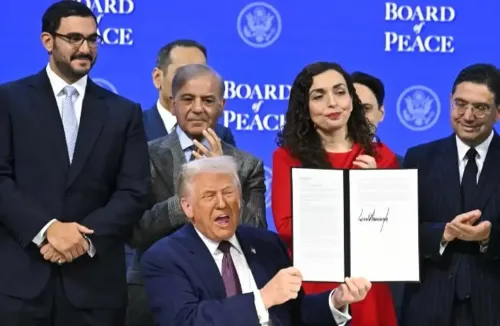
White House Hails 'Historic' Gaza Disarmament Deal

Synopsis
The White House announced on 1 August 2026 that the Board of Peace reached a historic agreement for the complete disarmament of Hamas and all armed groups in Gaza, calling it a monumental step toward lasting peace and security. Implementation details and international oversight remain unspecified.
Key Takeaways
The White House announced on 1 August 2026 that the Board of Peace reached a 'historic agreement' for the complete disarmament of Hamas and all other armed groups in Gaza.
Hamas has governed the Gaza Strip since 2007 and is a Palestinian Sunni-Islamic militant organisation.
The Gaza Strip is home to approximately two million Palestinians and borders Israel and Egypt.
The 1993 Oslo Accords previously attempted to establish security arrangements limiting armed factions — without lasting success.
Key implementation details — ratification by Israel and Palestinian authorities, enforcement mechanisms, and oversight arrangements — have not yet been publicly disclosed.
Middle East peace initiatives have repeatedly included disarmament language; enforcement architecture has historically determined whether such agreements hold.
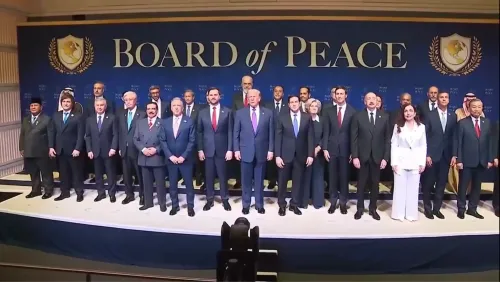
A declaration that could reshape the Middle East landed on Friday, 1 August 2026, as The White House announced that a body called the Board of Peace had reached what it described as a 'historic agreement for the complete disarmament of Hamas and all other armed groups in Gaza' — language as sweeping as any heard in decades of failed peace efforts.
What the Board of Peace announced
The White House post described the agreement as 'a monumental step toward lasting peace and security,' framing it in the maximalist terms typically reserved for watershed diplomatic moments. The declaration names Hamas — the Palestinian Sunni-Islamic militant organisation that has governed the Gaza Strip since its 2007 takeover — as a primary target of the disarmament commitment, alongside all other armed groups operating in the territory.
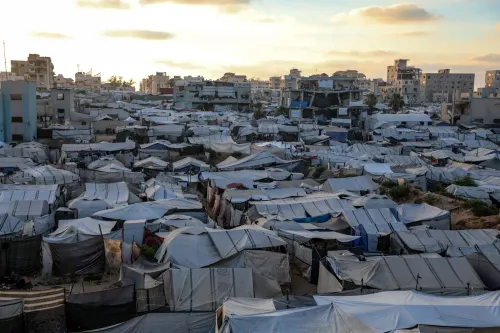
The Gaza Strip is a narrow coastal enclave bordering Israel and Egypt, home to approximately two million Palestinians, and has been the epicentre of repeated armed conflicts. Any genuine disarmament of its armed factions would represent a structural transformation of the conflict, not merely a ceasefire.
Why disarmament language has failed before
The history of Middle East peace initiatives is littered with demilitarisation clauses that never took hold. The 1993 Oslo Accords established a framework for Palestinian self-rule alongside security arrangements explicitly designed to limit armed factions — yet Hamas not only survived but consolidated control over Gaza by 2007. Successive ceasefires have included similar disarmament language, each time without durable enforcement.
The pattern is consistent: declarations precede monitoring and enforcement mechanisms, and it is those mechanisms — who designs them, who funds them, who has the authority to act when they are breached — that determine whether an agreement holds or collapses. None of those details have yet been made public.
The critical unknowns ahead
The announcement raises as many questions as it answers. The identity and mandate of the Board of Peace itself has not been elaborated upon in the post. Whether Israel and Palestinian authorities have formally ratified the agreement, what international oversight architecture will enforce disarmament, and what timeline governs compliance are all open questions that will define whether this moment is a turning point or another declaration that dissolves on contact with reality.
For the roughly two million residents of Gaza and the citizens of Israel who have lived under the shadow of recurring conflict, the stakes of those answers could not be higher.
The world has heard sweeping Gaza disarmament language before — the measure of this agreement will be entirely in what comes next.
Point of View
A complete disarmament of Hamas and all Gaza armed groups would mark the most structurally significant shift in the Israeli-Palestinian conflict since the Oslo Accords — a bar that has eluded every administration for three decades. The White House framing is maximalist, but the absence of any detail on the Board of Peace's mandate, ratification status, or enforcement mechanism is precisely where previous agreements have unravelled. For India, which maintains ties with both Israel and the Palestinian Authority and has consistently called for a two-state solution, a durable Gaza settlement would ease a persistent pressure point in its West Asia diplomacy. The announcement's credibility will be tested within days as implementation specifics — or their absence — come into focus.
NationPress
15 Sept 2026
Frequently Asked Questions
What is the Board of Peace that announced the Gaza disarmament deal?
The White House referred to a body called the 'Board of Peace' as having reached the agreement, but no further details about its composition, mandate, or legal standing have been publicly disclosed as of this announcement.
What does the Gaza disarmament agreement mean for Hamas?
The agreement calls for the complete disarmament of Hamas and all other armed groups in Gaza. Hamas has governed the Gaza Strip since 2007 and is a Palestinian Sunni-Islamic militant organisation; whether and how it will comply depends on implementation details not yet made public.
Has Gaza disarmament been attempted before?
Yes. The 1993 Oslo Accords included security arrangements intended to limit armed factions in Palestinian territories, and multiple subsequent ceasefires have contained similar disarmament language — none resulted in durable demilitarisation of Gaza.
Has Israel accepted the Gaza disarmament deal?
The White House announcement did not specify whether Israel or Palestinian authorities have formally ratified the agreement. Ratification and international oversight arrangements are among the critical unknowns that will determine the deal's viability.
What happens next after the Gaza disarmament announcement?
Analysts and observers will be watching for implementation details, formal ratification by relevant parties including Israel and Palestinian authorities, and the establishment of any international monitoring or enforcement mechanism in the coming weeks.