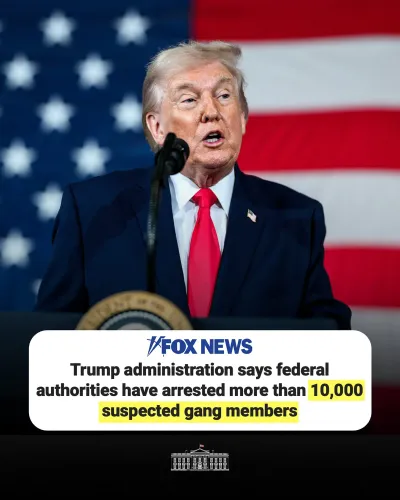
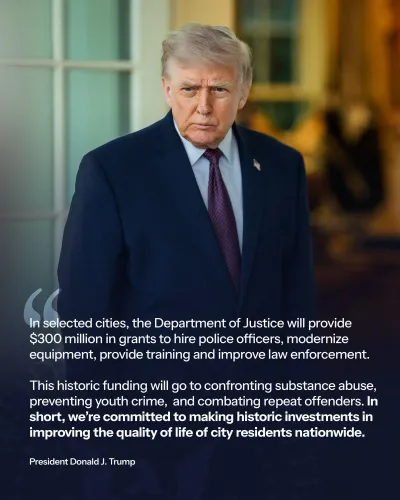
White House Launches 'Operation Summer Heat 2.0' Law Enforcement Drive
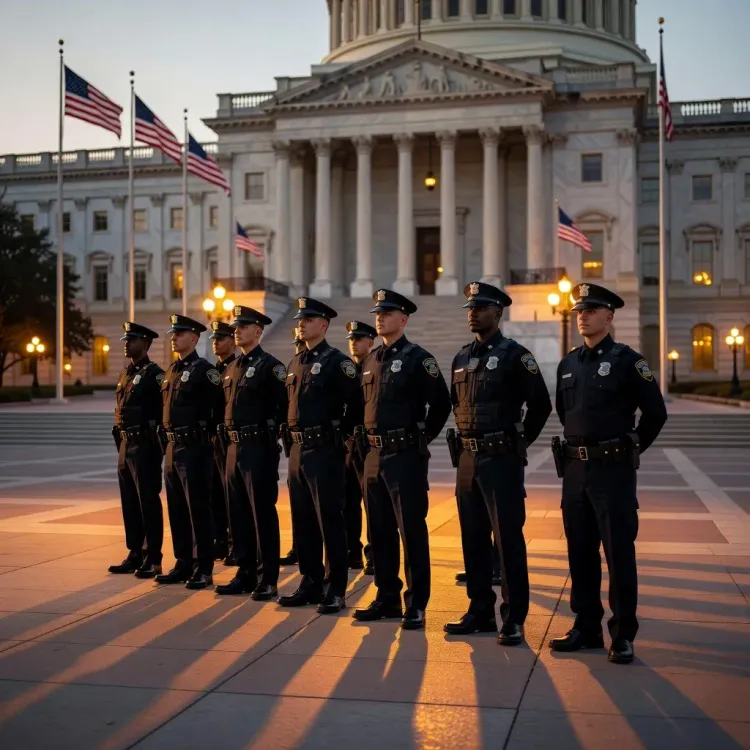
Synopsis
The White House announced 'Operation Summer Heat 2.0' on October 2, 2026, framing it as President Trump's federal law enforcement drive to reverse what the administration calls years of rampant crime under the Biden Administration, with agencies directed to stop at nothing to keep Americans safe.
Key Takeaways
Operation Summer Heat 2.0 was announced by The White House on October 2, 2026 .
The operation is framed as President Trump's effort to restore law and order across the United States.
The White House explicitly blamed the Biden Administration for what it called 'rampant crime' in recent years.
Federal law enforcement agencies are directed to 'stop at nothing' to keep Americans safe, per the announcement.
The 'sequel' naming convention suggests this follows an earlier federal enforcement campaign under the same banner.
No specific operational targets, cities, or participating agencies were named in the public announcement.
A new federal law enforcement operation is underway in the United States. The White House announced Operation Summer Heat 2.0 on Friday, October 2, 2026, framing it as President Trump's push to restore law and order after what the administration characterises as years of rising crime under the previous government.
What Operation Summer Heat 2.0 signals
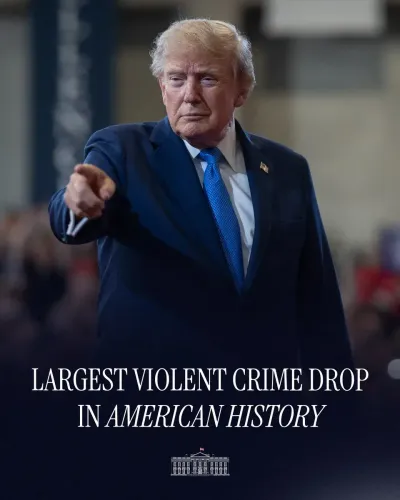
The White House post declared that 'law enforcement will stop at nothing to keep Americans safe,' positioning the operation as a direct response to crime trends the Trump administration attributes to the Biden era. The name itself — a sequel designation — suggests this is a continuation or escalation of an earlier federal enforcement push, though specific operational details were not disclosed in the announcement.
Federal crime sweeps operating under branded names have been a recurring tool of the Trump administration, typically involving coordinated action across agencies such as the FBI, DEA, ATF, and US Marshals Service, often targeting violent crime, gang activity, and drug trafficking in cities across America.
The political framing around crime and the Biden record
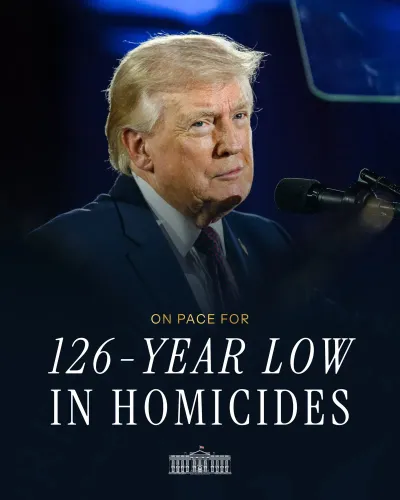
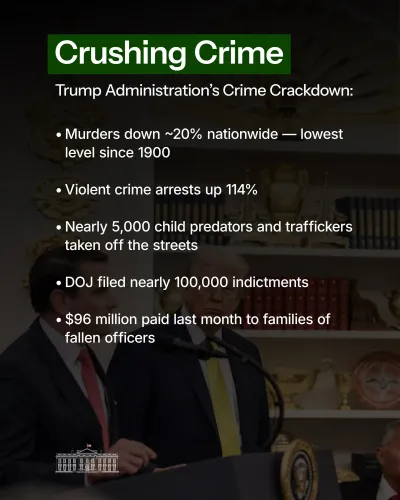
The announcement carries an unmistakably political charge. By explicitly naming the Biden Administration as the source of 'rampant crime,' the White House is reinforcing one of President Trump's central campaign-era arguments — now being prosecuted as governing policy. Crime data has been a contested battlefield in American politics, with both parties claiming the numbers support their narrative.
What is clear is that the administration intends this operation to serve as both a law enforcement action and a public signal: that the federal government under Trump is in an active, aggressive posture on public safety — a message aimed squarely at an American public for whom crime consistently ranks among top domestic concerns.
What this means beyond US borders
For India and other US partners, large-scale American domestic law enforcement operations carry indirect relevance — particularly on matters of cross-border narcotics trafficking, extradition cooperation, and the broader tone of American governance that shapes diplomatic and security partnerships. A US administration that loudly prioritises internal security often signals parallel toughness in international crime-fighting cooperation as well.
The full scope of Operation Summer Heat 2.0 — which cities, which agencies, which targets — is yet to be publicly detailed. But the announcement itself makes the intent unmistakable: the Trump White House wants Americans, and the world, to know the crackdown has a name, a flag, and a mandate.
Point of View
The White House converts a law enforcement action into a running political argument. For observers tracking US domestic policy, the key question is whether the operation delivers measurable outcomes or primarily serves as a recurring messaging vehicle ahead of the administration's broader legislative agenda on immigration and criminal justice.
NationPress
2 Oct 2026
Frequently Asked Questions
What is Operation Summer Heat 2.0?
Operation Summer Heat 2.0 is a federal law enforcement initiative announced by the White House on October 2, 2026, aimed at reducing crime across the United States under the Trump administration's direction.
Which agencies are involved in Operation Summer Heat 2.0?
The White House announcement did not name specific agencies, but large-scale federal crime operations of this nature typically involve the FBI, DEA, ATF, and US Marshals Service working in coordination.
Why is Trump launching this operation now in 2026?
The administration cited what it calls 'rampant crime' under the Biden Administration as the rationale, positioning the operation as a corrective measure and a demonstration of tough-on-crime governance.
Is Operation Summer Heat 2.0 new or a continuation?
The '2.0' designation suggests it is a sequel or escalation of an earlier operation under the same name, implying this is part of a sustained federal enforcement strategy rather than a one-time action.
How does a US law enforcement operation like this affect India?
While primarily a domestic US initiative, large federal crime drives can affect India indirectly through cross-border narcotics cooperation, extradition agreements, and the broader tone of US security diplomacy with partner nations.