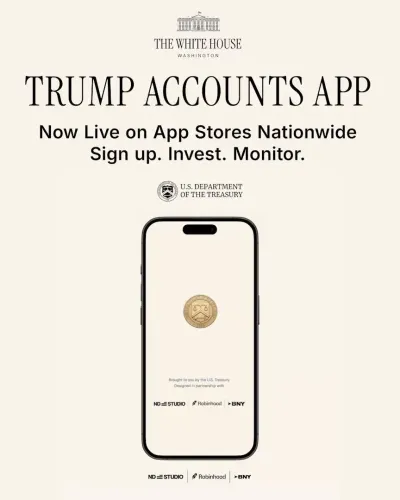
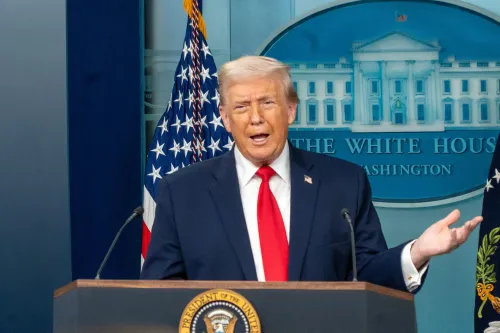
White House Launches 'Trump Accounts' With $1,000 for Newborns
Synopsis
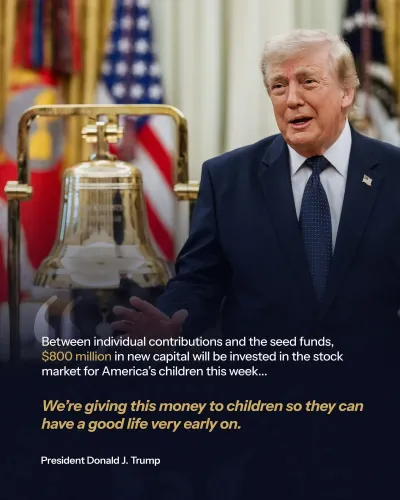
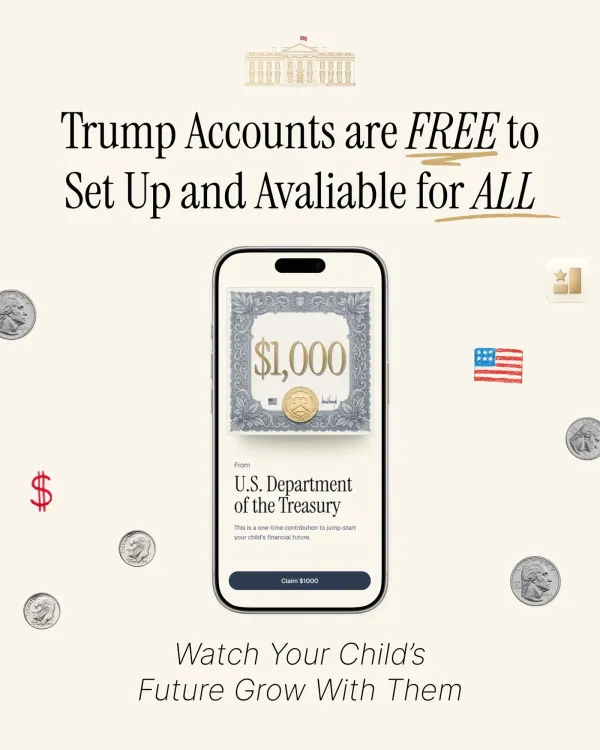
The White House has launched 'Trump Accounts', a US Treasury programme giving $1,000 to children born between January 1, 2025 and December 31, 2028, provided they hold a valid Social Security Number. The announcement positions the grant as a financial head-start for a new generation of Americans.
Key Takeaways
The White House announced 'Trump Accounts' on July 7, 2026 , a new federal child-benefit programme.
Children born between January 1, 2025 and December 31, 2028 with a valid SSN are eligible.
Each eligible child receives a $1,000 seed payment from the United States Treasury .
The programme follows Trump's first-term child tax credit expansion under the Tax Cuts and Jobs Act of 2017 .
Details on account mechanics, enrolment process, and congressional funding are yet to be officially released.
The 2028 birth-window ties the programme's reach directly to the current presidential term.
The White House announced on Tuesday, July 7, 2026, that a new federal initiative called 'Trump Accounts' is now active, offering a $1,000 seed payment from the United States Treasury to eligible children born between January 1, 2025 and December 31, 2028.
Context
The White House post states: 'Trump Accounts are here, and there's no reason not to cash in. If your child was born from Jan. 1, 2025 - Dec. 31, 2028 and they have a valid SSN, they are eligible to receive $1,000 from the United States Treasury to jumpstart their future.' The announcement positions the program as a direct financial head-start for children born during a four-year window that aligns with President Donald Trump's second term.
Eligibility hinges on two conditions: the child must have been born within the specified date range and must hold a valid Social Security Number (SSN). No income cap or parental means-test is mentioned in the announcement. The program is administered through the United States Treasury, the Cabinet department responsible for federal disbursements and tax policy.
Policy Backdrop
The concept of seeding government-backed savings accounts for children is not new in American policy discourse. Both Republican and Democratic administrations have floated child investment vehicles as tools to address intergenerational wealth gaps and support family formation. The Tax Cuts and Jobs Act of 2017, signed during Trump's first term, doubled the child tax credit to $2,000 per qualifying child, signalling an ongoing focus on child-centred fiscal policy under the Trump brand.
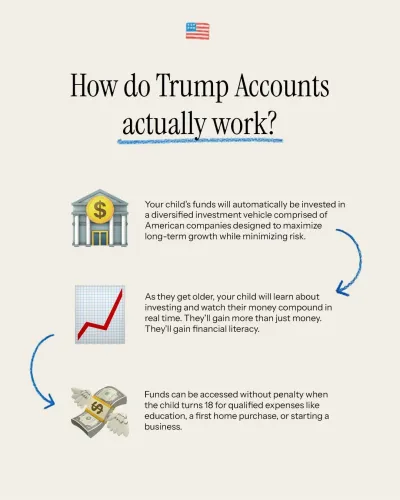
'Trump Accounts' follows a broader pattern of branding signature domestic programmes under a single presidential identity, making the initiative immediately recognisable to the public. The $1,000 grant is described as a means to 'jumpstart' a child's financial future, suggesting the funds may be structured as a savings or investment vehicle rather than a direct cash transfer — though the White House post does not specify account mechanics.
Stakeholders and Impact
The primary beneficiaries are new parents and children born across the 2025–2028 cohort, a group that could number in the tens of millions over four years given average annual US birth figures. Families who have already had children since January 1, 2025 are immediately eligible to claim the benefit, provided SSN documentation is in order.
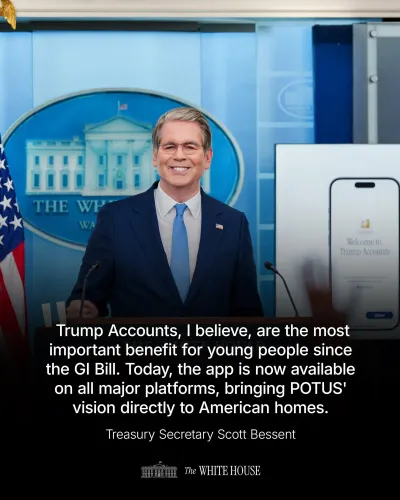
For Indian-American families and other immigrant communities in the United States, SSN eligibility requirements will be a critical filter. Children born in the US automatically receive citizenship, and SSNs are typically issued at birth through hospital registration programmes, making the barrier relatively low for most newborns. The United States Treasury will oversee verification and disbursement processes, details of which are expected in forthcoming guidance.
What's Next
Key outstanding questions include how families formally enrol, how the $1,000 is held or invested, whether congressional appropriations underpin the full four-year programme, and what happens to the accounts as children age. Treasury guidance on account setup and SSN verification is expected to follow the announcement.
The 2028 birth-window deadline means the programme's reach will be closely tied to the political calendar, and any extension or modification would likely require fresh legislative or executive action. Observers will watch whether the initiative evolves into a broader child-savings framework or remains a one-time seed grant tied to the current administration.
Point of View
000 seed grant fits within a bipartisan tradition of child savings proposals, but the tight 2025–2028 birth window ensures the programme's legacy is inseparable from Trump's second term. For the administration, it serves a dual purpose: a tangible deliverable for young families and a durable talking point heading into future electoral cycles. How Treasury structures the accounts — whether as locked savings vehicles or accessible funds — will determine whether this becomes a lasting wealth-building tool or a symbolic gesture.
NationPress
7 Jul 2026
Frequently Asked Questions
What are Trump Accounts and who is eligible?
'Trump Accounts' is a new US federal programme that deposits $1,000 from the United States Treasury into an account for children born between January 1, 2025 and December 31, 2028 who have a valid Social Security Number.
How do I apply for a Trump Account for my child?
The White House announcement confirms the programme is active, but detailed enrolment steps are expected in forthcoming United States Treasury guidance. Parents should watch for official Treasury communications on account setup and SSN verification.
Does my child need to be a US citizen to get the $1,000 Trump Account?
The announcement requires a valid Social Security Number (SSN) . Children born in the United States are typically eligible for SSNs at birth, but the White House has not specified additional citizenship or residency conditions beyond SSN possession.
Is the Trump Accounts $1,000 a cash payment or a savings account?
The White House describes it as a payment to 'jumpstart' a child's future, but has not confirmed whether the $1,000 is a direct cash transfer or held in a dedicated savings or investment account. Treasury guidance is awaited.
How does the Trump Account compare to the child tax credit?
The child tax credit , expanded to $2,000 per child under the Tax Cuts and Jobs Act of 2017 , is an annual tax benefit for parents. Trump Accounts appear to be a one-time $1,000 seed grant for children born in the 2025–2028 window, though full programme details are pending.