White House Marks July 4 Eve With Star-Spangled Banner Verse
Synopsis
The White House marked the eve of Independence Day 2026 by posting the opening verse of The Star-Spangled Banner, evoking the 1814 origins of the US national anthem and the flag's survival at Fort McHenry — a routine but resonant patriotic tradition ahead of 4 July celebrations.
Key Takeaways
The White House posted the opening stanza of The Star-Spangled Banner on 3 July 2026 , the eve of Independence Day .
Francis Scott Key wrote the poem after witnessing the British bombardment of Fort McHenry, Baltimore , in September 1814 during the War of 1812 .
The anthem was officially adopted by Congress and signed into law by President Herbert Hoover on 3 March 1931 .
The post is part of a long-standing executive branch tradition of sharing founding-era patriotic texts around 4 July .
Public ceremonies, fireworks, and presidential statements are expected on Independence Day, 4 July 2026 .
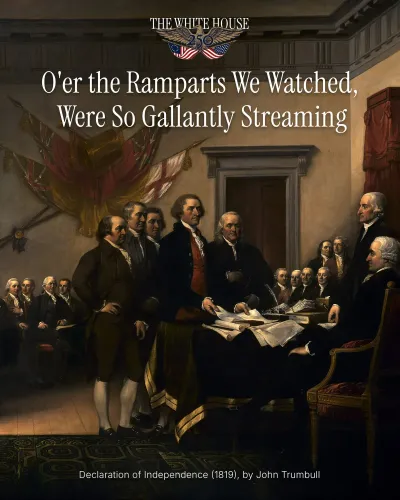
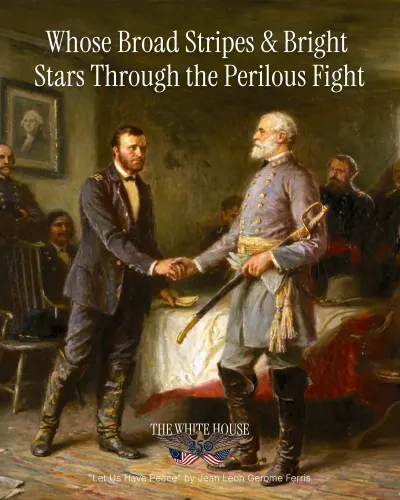
The White House, the official communications account of the Executive Office of the President of the United States, posted the opening verse of The Star-Spangled Banner on Friday, 3 July 2026, the eve of Independence Day, in a patriotic tribute ahead of the nation's annual celebration.
Context
The post carries the opening stanza of the United States national anthem, beginning with the iconic lines: 'O say can you see, by the dawn's early light, / What so proudly we hailed at the twilight's last gleaming.' The verse evokes the imagery of the American flag enduring through battle, a symbol central to the country's founding narrative.
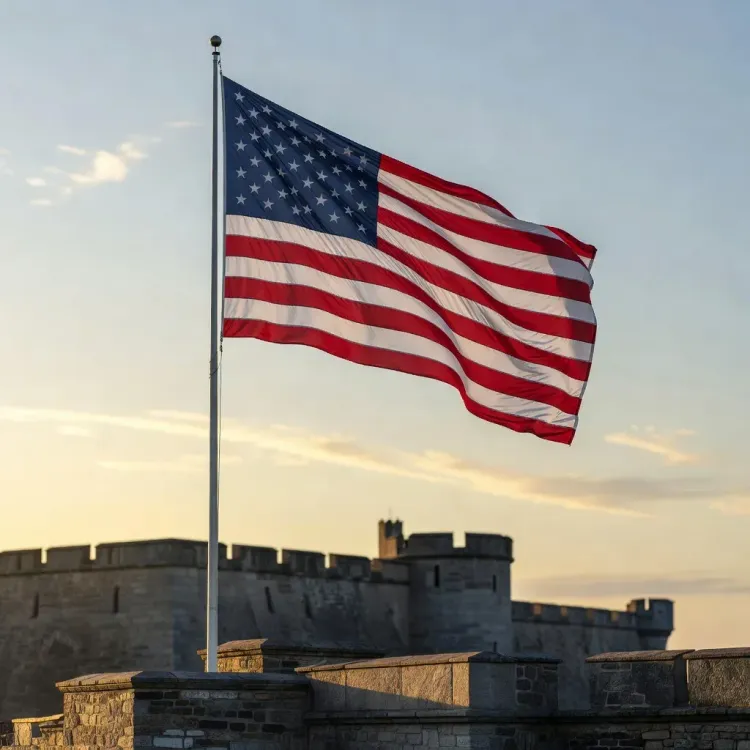
The lyrics were originally penned by Francis Scott Key, an American lawyer and amateur poet, after he witnessed the British naval bombardment of Fort McHenry in Baltimore Harbor in September 1814 during the War of 1812. Key watched through the night as the fort withstood a 25-hour attack, and the sight of the flag still flying at dawn moved him to write the poem that would become the anthem.
Policy Backdrop
The poem was formally adopted as the official national anthem of the United States by an act of Congress signed by President Herbert Hoover on 3 March 1931, replacing earlier unofficial patriotic songs. Before that designation, the anthem had been used ceremonially by the military for decades.
It is an established practice for official executive branch accounts to post excerpts or full versions of the national anthem and other founding-era texts around Independence Day on 4 July, which commemorates the 1776 adoption of the Declaration of Independence. Such posts are part of routine patriotic messaging and carry no direct legislative or diplomatic content.
Stakeholders and Impact
American citizens and veterans are the primary audience for such tributes, for whom the anthem carries deep historical and emotional resonance. The imagery of the flag surviving 'the rocket's red glare, the bombs bursting in air' is widely read as a tribute to military sacrifice across generations.
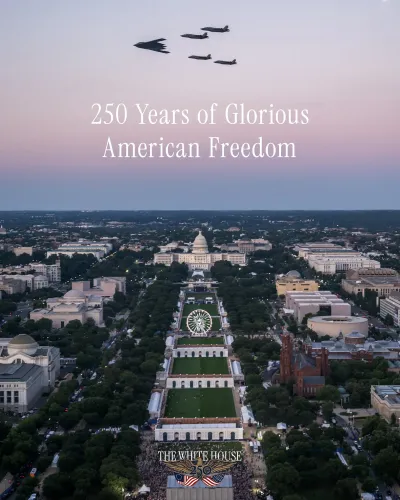
Fort McHenry in Baltimore, Maryland, the physical site that inspired the anthem, remains a national monument and historic shrine and typically sees heightened visitor activity around Independence Day. Public ceremonies, fireworks displays, and official gatherings at sites including the National Mall in Washington DC are customary on 4 July.
What's Next
The 4 July 2026 Independence Day observances are expected to include public ceremonies, fireworks, and additional official statements from the White House and other government offices. The posting of the anthem verse on the eve of the holiday signals the start of the official patriotic messaging cycle that traditionally culminates in presidential addresses and national celebrations on the day itself.
Point of View
Using one of the most recognisable texts in American civic life to frame the holiday season. Such posts cost nothing politically but carry outsized resonance with a broad, cross-partisan audience that includes veterans, active military families, and everyday citizens for whom the anthem is a touchstone. The choice of the anthem's first verse — with its imagery of survival through bombardment — also subtly reinforces themes of national resilience that administrations across party lines have invoked during periods of domestic or geopolitical tension. As the 250th anniversary of American independence approaches in 2026, patriotic messaging from the executive branch is likely to intensify in both frequency and scale.
NationPress
3 Jul 2026
Frequently Asked Questions
Why did the White House post the Star-Spangled Banner on 3 July 2026?
The White House posted the opening verse of the national anthem on 3 July 2026 as part of routine patriotic messaging ahead of Independence Day on 4 July, a long-standing tradition for official executive branch accounts.
Who wrote the Star-Spangled Banner and why?
Francis Scott Key, an American lawyer and poet, wrote the lyrics after witnessing the British naval bombardment of Fort McHenry in Baltimore Harbor in September 1814 during the War of 1812. He was moved by the sight of the American flag still flying at dawn after a 25-hour attack.
When did the Star-Spangled Banner become the US national anthem?
The Star-Spangled Banner was officially designated the United States national anthem by an act of Congress signed by President Herbert Hoover on 3 March 1931.
What is Fort McHenry and why is it significant?
Fort McHenry is a star-shaped historic fort in Baltimore Harbor, Maryland, that withstood a 25-hour British naval attack in September 1814. Its survival directly inspired the imagery in the national anthem.
What events are planned for US Independence Day 2026?
Independence Day on 4 July 2026 is expected to include public ceremonies, fireworks displays, and official presidential statements, with major events traditionally held at the National Mall in Washington DC.