White House Honors 13 Troops Killed in 2021 Kabul Airport Attack
Synopsis
On the fifth anniversary of the Abbey Gate bombing, the White House named the 13 US service members killed by an ISIS-K suicide attack at Kabul airport on August 26, 2021 — the deadliest day for American forces in a decade, occurring during the chaotic final withdrawal from Afghanistan.
Key Takeaways
13 US service members were killed in the Abbey Gate bombing at Kabul airport on August 26, 2021 .
The attack was carried out by ISIS-K via a suicide bomber targeting evacuation crowds at the airport perimeter.
All named troops were members of the United States Marine Corps (USMC) , killed during the final US withdrawal from Afghanistan.
The blast also killed more than 170 Afghan civilians , making it one of the deadliest single incidents of the two-decade war.
The White House posted the roll call of names on the anniversary, continuing a pattern of official annual commemorations for the fallen.
The broader policy legacy of the 2021 Afghanistan withdrawal remains under ongoing congressional review.
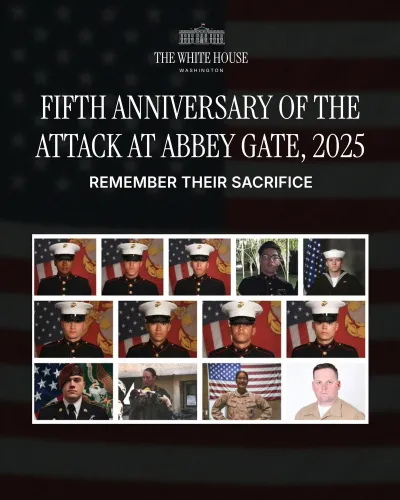
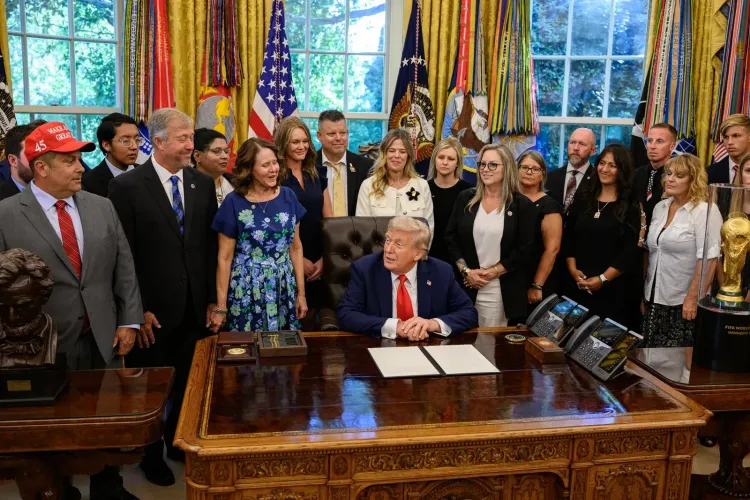
Five years to the day, their names are spoken again. The White House marked the anniversary of the Abbey Gate bombing on August 26 by posting a solemn roll call of the 13 US service members killed in the ISIS-K suicide attack at Hamid Karzai International Airport, Kabul — a moment that became the bloodiest single day for American forces in a decade.
The post names those who died: Staff Sergeant Darin T. Hoover, USMC; Sergeant Johanny Rosario Pichardo, USMC; Sergeant Nicole L. Gee, USMC; Corporal Hunter Lopez, USMC; Corporal Daegan W. Page, USMC; Corporal Humberto A. Sanchez, USMC — and seven others whose names follow in the linked tribute. All were United States Marines or Army soldiers assigned to support the final, chaotic evacuation of American citizens and Afghan allies from a city that had fallen to the Taliban days earlier.
The Day Abbey Gate Fell Silent
On August 26, 2021, as thousands of desperate evacuees pressed against the perimeter of Kabul's airport, an ISIS-K bomber detonated an explosive device at the Abbey Gate checkpoint. The blast killed 13 US troops and wounded dozens more, while also taking the lives of more than 170 Afghan civilians in one of the deadliest attacks of the entire two-decade war. The service members ranged in age from their late teens to their early thirties — many on their first or second deployments.
Sergeant Nicole L. Gee had posted a photograph holding an Afghan infant just days before she was killed — an image that circulated widely and came to define the human face of the evacuation. Corporal Hunter Lopez was the son of two California sheriff's deputies. Each name on the list carried a story; each story carried a family now marked forever by that afternoon.
A Withdrawal That Still Divides Washington
The Abbey Gate attack arrived at the tail end of Operation Allies Refuge, the US military's emergency airlift that evacuated more than 124,000 people in roughly two weeks. The operation was extraordinary in scale — and chaotic in execution. The Taliban's rapid seizure of Kabul on August 15, 2021, outpaced nearly every public projection, collapsing the Afghan government and triggering scenes of desperation at the airport that were broadcast across the world.
The policy decisions surrounding the withdrawal — the timeline, the intelligence failures, the fate of left-behind equipment — have been the subject of sustained congressional scrutiny. But on August 26 each year, official Washington sets that debate aside, at least publicly, to do what the White House post does today: say the names.
For military families and veterans' communities, the annual remembrance is more than ceremony. It is a demand that the cost of those final days not be absorbed into abstraction — that 13 specific people, with ranks and hometowns and photographs, remain visible in the national memory long after the policy arguments have moved on.
Point of View
The White House signals institutional continuity of honour regardless of which administration holds office — a deliberate posture of solemn consensus over a deeply contested policy episode. For veterans' advocacy groups and military families, the gesture carries real weight; for critics of the withdrawal's execution, it also sustains a standing reminder of what they argue were avoidable failures. The tension between tribute and accountability is unlikely to resolve as long as the circumstances of August 2021 remain a live political fault line in Washington.
NationPress
11 Oct 2026
Frequently Asked Questions
Who were the 13 US soldiers killed at Kabul airport in 2021?
The 13 US service members killed in the Abbey Gate bombing on August 26, 2021 were all military personnel supporting the evacuation at Kabul's Hamid Karzai International Airport. Named in the White House post are Staff Sergeant Darin T. Hoover, Sergeant Johanny Rosario Pichardo, Sergeant Nicole L. Gee, Corporal Hunter Lopez, Corporal Daegan W. Page, and Corporal Humberto A. Sanchez — all USMC — along with seven additional service members.
What was the Abbey Gate bombing?
The Abbey Gate bombing was an ISIS-K suicide attack on August 26, 2021, at a crowded checkpoint outside Kabul's international airport during the US military's final evacuation of Afghanistan. It killed 13 American troops and more than 170 Afghan civilians, making it the deadliest single attack on US forces in over a decade.
Why did the White House post about the Kabul bombing in 2026?
August 26, 2026 marks the fifth anniversary of the Abbey Gate attack. The White House post is part of an established pattern of annual official commemorations naming the 13 service members killed that day, keeping their memory in the public record.
What was the US withdrawal from Afghanistan in 2021?
The US withdrawal from Afghanistan in August 2021, known as Operation Allies Refuge, was a military airlift that evacuated more than 124,000 people after the Taliban seized Kabul on August 15. The operation ended on August 30, 2021, concluding a two-decade US military presence in the country.
Who was Sergeant Nicole Gee?
Sergeant Nicole L. Gee was a US Marine killed in the Abbey Gate bombing on August 26, 2021. She became widely recognised after a photograph of her cradling an Afghan infant during the evacuation circulated globally in the days before her death.