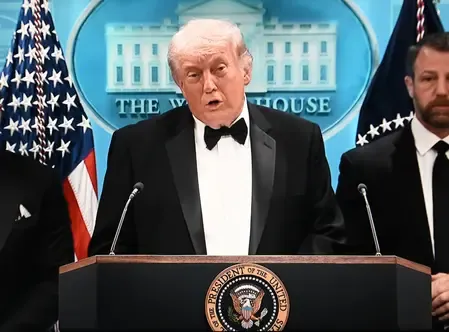
White House Press Secretary Leavitt Briefs Media, Jul 16
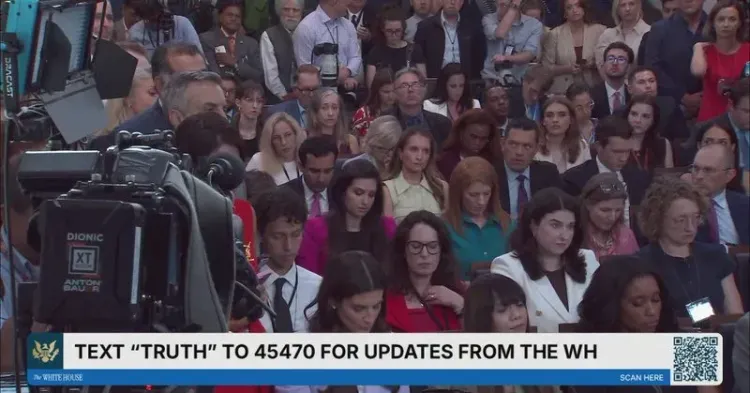
Synopsis
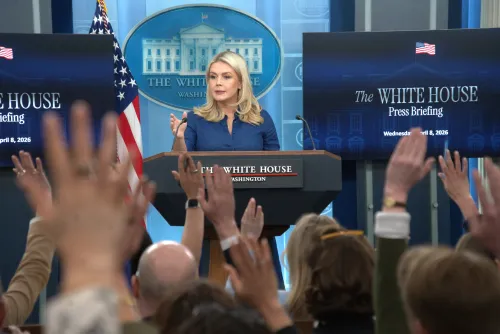
White House Press Secretary Karoline Leavitt briefed members of the media on July 16, 2026, in a routine on-the-record session. The briefing continues the Trump administration's established practice of direct executive communications and will be parsed for signals on near-term US policy priorities.
Key Takeaways
Karoline Leavitt , White House Press Secretary, conducted a media briefing on July 16, 2026 .
The briefing is part of the administration's regular on-the-record communications with the press corps.
Leavitt previously served as national press secretary for the Trump 2024 presidential campaign.
White House press briefings serve as the executive branch's primary formal channel for addressing policy, legislation, and current events.
Follow-up executive or agency actions referenced in the briefing will be closely tracked by lawmakers and foreign governments.
The White House announced on Thursday, July 16, 2026, that Press Secretary Karoline Leavitt conducted an on-the-record briefing for members of the media, continuing the administration's regular cadence of direct communications with the press corps.
Context
White House press briefings are the executive branch's primary on-the-record channel for addressing policy developments, legislative priorities, and current events. The practice spans decades and every modern administration, used consistently to shape the daily news cycle and respond to questions from the assembled press corps.
Karoline Leavitt previously served as national press secretary for Donald Trump's 2024 presidential campaign, following earlier stints as a congressional candidate and a staffer in the first Trump White House. Her appointment to the role of Press Secretary in the current administration continues a pattern of elevating campaign-era communications staff to senior executive positions.
Policy Backdrop
Daily or near-daily press briefings were a signature feature of the first Trump administration from 2017 to 2021, with the practice serving as a direct pipeline between the executive branch and the public. The current administration has maintained this tradition, using briefings to respond to breaking developments and lay out the president's policy positions in real time.
Such briefings carry particular weight when major legislative or executive actions are in motion, as reporters use the forum to press officials for clarity on timelines, implementation, and the administration's stance on contested issues.
Stakeholders and Impact
The primary audience for White House press briefings includes the Washington press corps, whose questions set the agenda for national coverage, and by extension the broader American public and international observers tracking United States government policy. For Indian audiences, briefings often touch on trade, defence partnerships, immigration, and geopolitical positioning that directly affect India-US bilateral ties.
Statements made on the record during a briefing carry the formal weight of administration policy, distinguishing them from background guidance or off-the-record conversations, and can trigger immediate market or diplomatic reactions.
What's Next
Observers will monitor any follow-up statements, executive orders, or agency actions aligned with topics raised during the July 16 briefing. Congressional committees and foreign governments routinely parse the transcript of such sessions for signals on the administration's near-term priorities. The next scheduled briefing will be watched for continuity or shifts in tone on issues flagged during today's session.
Point of View
A strategy honed during the 2024 campaign. For a second-term White House, maintaining a disciplined briefing schedule is as much about projecting institutional normalcy as it is about substance. The choice to broadcast the session live on X underscores the administration's preference for direct-to-public distribution, bypassing traditional editorial filters. Globally, including in New Delhi, diplomatic and trade watchers will mine the transcript for any signals on tariffs, visa policy, or strategic partnerships.
NationPress
17 Jul 2026
Frequently Asked Questions
Who is Karoline Leavitt and what is her role at the White House?
Karoline Leavitt is the White House Press Secretary, responsible for conducting on-the-record briefings and serving as the administration's primary spokesperson to the media. She previously served as national press secretary for Donald Trump's 2024 presidential campaign.
What happens at a White House press briefing?
A White House press briefing is a formal, on-the-record session where the Press Secretary addresses reporters' questions on current events, administration policy, and legislative priorities. Statements made here carry the official weight of executive branch policy.
When did the July 16 2026 White House briefing take place?
The briefing by Press Secretary Karoline Leavitt took place on Thursday, July 16, 2026, and was announced via the official White House account on X.
How do White House press briefings affect India?
Topics discussed at White House briefings — including trade tariffs, immigration, defence cooperation, and geopolitical positioning — can directly affect India-US bilateral relations, making them closely followed by Indian diplomats, businesses, and policymakers.
Where can I watch the Karoline Leavitt press briefing from July 16 2026?
The White House shared a live broadcast link via its official X account on July 16, 2026, making the briefing accessible to the public in real time.