Is Gaza Really Entering ‘Phase Two’ of Trump's Peace Plan?
Click to start listening
Synopsis
The White House has declared that Gaza is advancing into ‘phase two’ of Trump's peace strategy, marking a significant moment in regional diplomacy. With all but one hostage returned, officials are quietly strategizing the next steps for peace. Discover the implications of this shift in an area long fraught with conflict.
Key Takeaways
- Gaza is entering phase two of Trump's peace plan.
- All hostages have been returned, except one.
- Plans include establishing a Board of Peace and a Palestinian government.
- Negotiations have been conducted quietly to ensure careful progression.
- India's interest in the region highlights the global implications of US policy shifts.
Washington, Dec 12 (NationPress) The White House announced that Gaza is progressing toward “phase two” of President Donald Trump’s peace initiative, as officials participate in “discreet planning” for the next stage of diplomatic efforts following the return of all hostages except one.
During her regular news briefing, White House Press Secretary Karoline Leavitt referred to the evolving situation as “a success,” highlighting that ten months into Trump’s term, “you’re inquiring about a peace initiative in Gaza because that's a tangible reality on the ground at this moment.” She attributed this progress to “this President's leadership.”
“All hostages have returned — with the exception of one deceased hostage,” she noted, adding that US negotiators are now focused on “phase two of the peace agreement,” which encompasses establishing a “Board of Peace,” coordinating with the ISF, and creating a Palestinian “technocratic government.”
Leavitt mentioned that negotiations have been intentionally kept low-key. “They are aiming to be thoughtful and methodical… The Gaza Strip has been a goal pursued for 70 years,” she stated. “We aspire for a sustainable and lasting peace.”
When asked whether the US would send officials to forthcoming discussions with European and Ukrainian leaders concerning the Russia-Ukraine conflict, Leavitt expressed that Trump is “extremely frustrated with both parties,” and a decision is yet to be made.
She also refrained from labeling a conversation between Vladimir Putin and Venezuela’s Nicolás Maduro as a concern. “I don’t believe that would raise any alarms for the President,” she remarked.
India has a deep-rooted interest in maintaining stability in the Middle East, which houses millions of Indian workers and serves as a crucial energy import source. Changes in US policy towards Gaza and the broader region impact diplomatic strategies across Asia, especially India’s efforts to balance relationships with Israel, the Palestinian Authority, and Gulf nations.
India is a robust supporter of peace in the area and has sustained strong historical ties with essential players in the Middle East, including both Israel and Palestine.
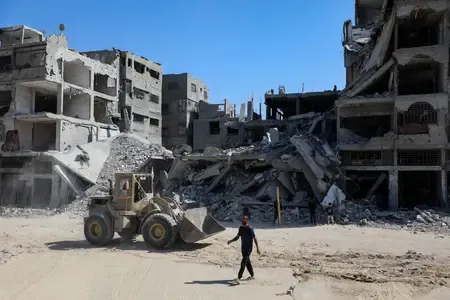
Decades of attempts to forge a lasting peace in Gaza have often stumbled due to shifting regional dynamics, Iranian influence, and internal Palestinian discord complicating diplomatic efforts. Washington remains pivotal in shaping governance and security frameworks post-conflict.
Point of View
It’s crucial to approach this evolving situation in Gaza with a neutral lens. The intricate dynamics at play, including varying international interests and long-standing conflicts, necessitate careful reporting. We must remain focused on the facts while recognizing the hopes and challenges faced by those involved in the peace process.
NationPress
14/12/2025
Frequently Asked Questions
What is the current status of hostages in Gaza?
All hostages have been returned, except for one deceased individual.
What are the next steps in Trump's peace plan for Gaza?
The next phase involves forming a 'Board of Peace', collaborating with the ISF, and establishing a technocratic Palestinian government.
How does India view the situation in Gaza?
India has a vested interest in Middle Eastern stability and supports ongoing peace efforts, maintaining strong ties with both Israel and Palestine.
What challenges does the peace process in Gaza face?
The peace process is complicated by shifting regional alliances, Iranian influence, and internal divisions among Palestinians.
Is the US involved in upcoming international discussions about the Russia-Ukraine war?
Currently, no decision has been made regarding US officials attending those meetings, as President Trump expresses frustration with both sides.