White House Says Oil Flowing, Prices Down Under Trump
Synopsis
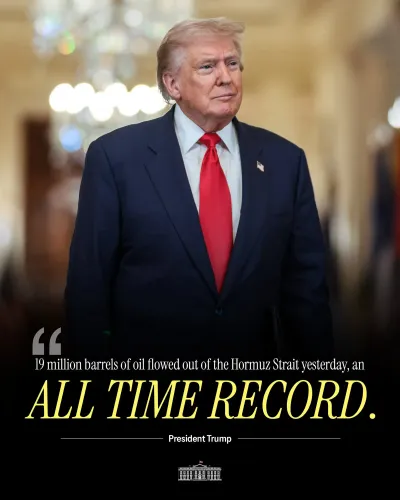
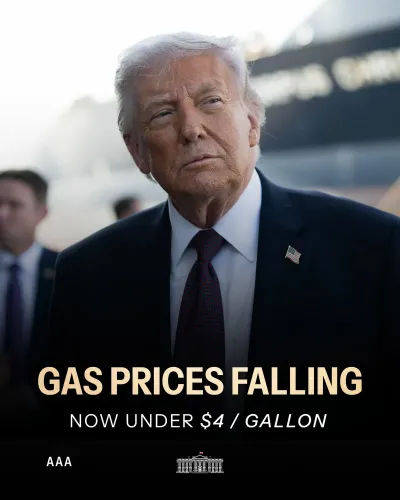
The White House on 23 June 2026 posted that oil is flowing and prices are down, crediting President Donald Trump. The message ties US energy output to geopolitical stability, echoing the 'energy dominance' doctrine of Trump's first term and signalling a continued push to frame supply expansion as both economic relief and foreign policy leverage.
Key Takeaways
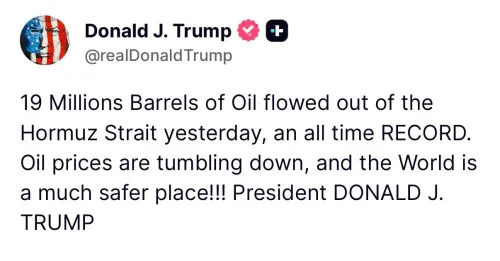
The White House posted on 23 June 2026 claiming oil is flowing, prices are down, and the world is safer under President Trump .
The message reflects the administration's 'energy dominance' doctrine, which links expanded domestic oil supply to geopolitical stabilisation.
The United States became a net energy exporter for the first time since 1952 in 2019 following deregulation during Trump's first term.
The post implicitly references OPEC+ diplomacy and Middle East security, including the legacy of the 2020 Abraham Accords .
For India , which imports approximately 85 per cent of its crude needs, sustained lower global oil prices would ease inflation and fiscal pressure.
Specific price levels and production figures cited in the post remain unverified pending EIA data and OPEC+ quota decisions.
The White House, the official communications account of the Executive Office of the President of the United States, posted on X on Tuesday, 23 June 2026, asserting that oil is flowing, prices are down, and the world is safer — crediting President Donald Trump with the outcomes.
Context
The post, reading 'Oil is flowing, prices are down, the world is a safer place. TRUST IN TRUMP,' links energy market conditions directly to presidential leadership. It reflects a long-standing White House communications strategy of tying domestic fuel prices to foreign policy outcomes and executive decision-making.
The message comes amid an ongoing effort by the Trump administration — now in its second term — to frame energy abundance as both an economic relief measure for American consumers and a tool of geopolitical leverage. The framing echoes the 'energy dominance' doctrine that defined much of the first Trump term between 2017 and 2021.
Policy Backdrop
The United States became a net energy exporter for the first time since 1952 in 2019, following a wave of deregulation of fossil fuel production during Trump's first term. That milestone was accompanied by repeated high-level outreach to OPEC+ members to raise output and moderate global crude prices.
Between 2018 and 2020, the administration also pursued a maximum-pressure sanctions campaign against Iran, aimed at curtailing Tehran's oil exports and curbing its regional influence. The Abraham Accords of 2020 — normalisation agreements between Israel and several Arab states — were also presented by the administration as a stabilising diplomatic achievement in the Middle East.
The current post draws on all three threads: supply expansion, producer-nation diplomacy, and regional security — compressing them into a single political message timed for domestic consumption.
Stakeholders and Impact
For India, which imports roughly 85 per cent of its crude oil requirements, global oil price movements carry direct consequences for inflation, the current account deficit, and retail fuel prices. A sustained period of lower crude benchmarks would ease pressure on the Reserve Bank of India and provide fiscal headroom to the central government.
American oil producers, OPEC+ member states, and energy-importing economies across Asia and Europe are all stakeholders in the conditions the White House is describing. However, the specific price levels and production figures implied by the post cannot be independently verified from available data at this time.
Middle Eastern allies of Washington — several of whom are party to the Abraham Accords — also figure into the 'safer world' framing, as the administration has consistently linked diplomatic normalisation in the region to reduced conflict risk and more stable energy markets.
What's Next
Analysts and market observers will look to monthly petroleum status reports from the US Energy Information Administration (EIA) and upcoming OPEC+ production quota decisions for data that either supports or complicates the White House's characterisation. Any shift in Iran sanctions enforcement or a new round of Middle East diplomacy could also alter the supply-and-security calculus the administration is projecting.
For New Delhi, the trajectory of US energy policy and its downstream effect on global crude benchmarks will remain a closely watched variable as India navigates its own energy security priorities and bilateral relationship with Washington.
Point of View
Consumer prices, and regional security into a single line of presidential credit. It revives the 'energy dominance' frame that was central to Trump's first term and signals the administration intends to run on it again as a governing achievement. For energy-importing nations like India, the subtext matters: a Washington that treats oil output as geopolitical currency is one that will use supply access and price pressure as tools in bilateral negotiations. The post's brevity is deliberate — it is designed for viral resonance, not policy detail, which means the burden of scrutiny falls on independent data releases in the weeks ahead.
NationPress
24 Jun 2026
Frequently Asked Questions
Why is the White House saying oil prices are down in June 2026?
The White House is crediting President Trump's energy and foreign policy agenda — including expanded domestic production and OPEC+ diplomacy — for lower global oil prices, though specific figures have not been independently verified.
What is Trump's energy dominance policy?
Trump's 'energy dominance' doctrine, developed during his first term (2017-2021), prioritises deregulation of US fossil fuel production, pressure on OPEC+ to raise output, and using energy supply as a tool of geopolitical influence.
How do falling US oil prices affect India?
India imports roughly 85 per cent of its crude oil, so lower global benchmark prices reduce the country's import bill, ease inflation, narrow the current account deficit, and give the government more fiscal flexibility.
What are the Abraham Accords and why are they relevant here?
The Abraham Accords are 2020 normalisation agreements between Israel and several Arab states brokered during Trump's first term. The White House links them to Middle East stability, which it connects to more secure and predictable energy markets.
What should I watch to verify the White House's oil claims?
Monthly petroleum status reports from the US Energy Information Administration (EIA) and upcoming OPEC+ production quota decisions will provide data to assess whether supply and price conditions match the White House's characterisation.