White House says Trump achieved the 'impossible' for future generations
Synopsis
The White House declared on 26 September 2026 that President Trump had achieved something rivals called impossible — handing the next generation ownership of America's future — without naming a specific policy, pairing the claim with a video post.
Key Takeaways
The White House posted on 26 September 2026 that President Trump had given the next generation 'ownership of America's future.' The post described the achievement as 'an idea deemed impossible by others,' reinforcing Trump's signature outsider-versus-establishment narrative.
No specific policy, legislation, dollar figure, or implementation timeline was named in the text of the post.
A video was attached to the post; White House follow-up briefings are expected to identify the referenced initiative.
Trump's White Houses — across both administrations — have routinely framed executive actions in long-term generational terms.
For India, shifts in Washington's domestic policy posture carry downstream implications for trade, technology, and diaspora affairs.
A bold claim landed from the highest address in Washington on Saturday, 26 September 2026: the White House declared that President Donald Trump had handed the next generation ownership of America's future — delivering something rivals had written off as impossible.
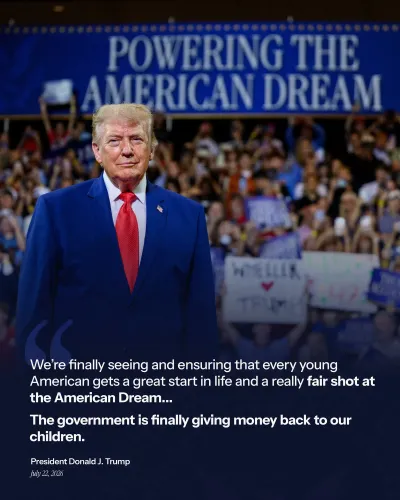
The official White House account posted: 'Giving the next generation ownership of America's future. An idea deemed impossible by others, achieved by President Trump.' The message was paired with a video, though no specific policy, legislation, or event was named in the caption itself.
The language of generational ownership
The framing is deliberate and familiar. Trump's White House — across both his administrations — has consistently cast executive actions in generational terms, presenting policy wins not merely as today's headline but as a legacy secured for Americans not yet old enough to vote. The phrase 'ownership of America's future' signals a rhetorical shift from transactional governance to something closer to a founding-era promise.
Describing the achievement as something 'deemed impossible by others' is equally calculated: it positions the administration against an unnamed establishment consensus, reinforcing the outsider-versus-system narrative that has defined Trump's political brand since 2015.
What the post does — and does not — say
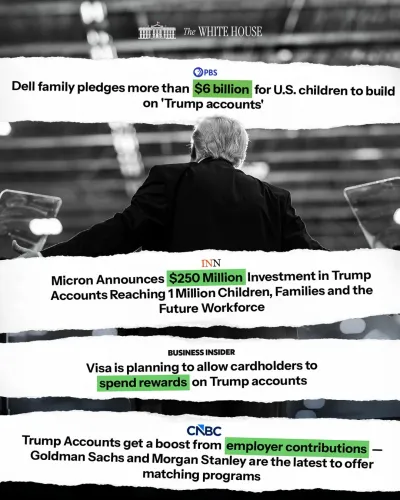
Notably, the White House post names no concrete policy, no dollar figure, no legislation, and no implementation date. The accompanying video is the primary carrier of detail, but the text stands as a standalone proclamation. That ambiguity is itself a communications choice: a broad claim invites a broad audience to project their own priorities onto it.
White House briefings and follow-up statements are expected to flesh out what specific initiative the post references — and what the administration means by 'ownership' in practical terms.
Why India is watching Washington's generational pivot
For Indian audiences, the signal matters beyond American domestic politics. Washington's framing of long-term national investment — whether in infrastructure, technology, fiscal policy, or strategic alliances — directly shapes the environment in which India's own tech sector, trade negotiators, and diaspora community operate. A White House pivoting rhetorically toward youth and futurity tends to announce policy moves that ripple through global supply chains and bilateral agreements.
The proof, as always, will be in the specifics. A claim this sweeping demands a policy to match it.
Point of View
Light on specifics, designed to set a narrative before the policy details arrive. Across both Trump administrations, this pattern has typically preceded a formal announcement within days, making the next White House briefing a key moment to watch. For geopolitical observers, the 'generational ownership' framing echoes a broader conservative realignment around long-term national sovereignty — a theme with direct relevance to US positions on trade, technology transfer, and strategic alliances that intersect with Indian interests. The absence of a named policy is not an oversight; it is the headline holding space for the substance to follow.
NationPress
26 Sept 2026
Frequently Asked Questions
What did the White House announce about Trump and future generations?
On 26 September 2026, the White House declared that President Trump had achieved giving the next generation 'ownership of America's future' — something the post described as 'an idea deemed impossible by others.' No specific policy was named in the caption.
What policy is Trump's White House referring to in the September 2026 post?
The White House post did not name a specific policy, legislation, or initiative. A video was attached, and follow-up White House statements are expected to clarify the referenced achievement.
Why does the White House use 'generational' language in Trump's announcements?
Framing policy in generational terms is a long-standing presidential communications strategy. For Trump's White House specifically, it reinforces the narrative that his administration delivers not just short-term wins but lasting national transformation.
How does this White House announcement affect India?
Washington's generational policy pivots — whether in fiscal policy, technology, or trade — shape the global environment in which India's economy, tech sector, and diaspora community operate. Details of the referenced policy will determine its direct bilateral relevance.
Is this a new White House communications pattern under Trump?
No. The White House under Trump has consistently used broad, forward-looking proclamations paired with video content, typically followed by more detailed policy briefings. The September 2026 post fits that established pattern.